

Crossing the forty-year mark, many of us begin to notice subtle shifts in our bodies and minds. The morning pep might give way to growing fatigue, focusing requires more effort, and recovery after even minor exertion takes longer. These aren’t just random signs of aging; they’re indications of deeper, cellular-level processes at play. At the heart of these changes is NAD+ (nicotinamide adenine dinucleotide) – a vital coenzyme present in literally every cell of our body. It acts as the principal conductor in an orchestra where every note signifies energy production, DNA repair, and the fine-tuning of numerous biological functions.
NAD+ serves as the essential fuel for our mitochondria, those “powerhouses” that energize all our life processes. While its reserves might seem limitless in youth, its production naturally declines with age, significantly impacting our overall well-being. This is why NAD+ is important after 40.
The decline in NAD+ after 40 doesn’t happen overnight. It’s a gradual, yet steady process that begins much earlier but becomes most noticeable in middle age. Scientific research indicates that with each passing decade, the concentration of this valuable coenzyme in our tissues and organs decreases, directly affecting the efficiency of metabolic pathways. Factors like chronic stress, an unbalanced diet, a sedentary lifestyle, and environmental toxins exacerbate this decline. Understanding the reasons behind this reduction allows us to proactively address the need to maintain NAD+ levels during this crucial period of life. Its importance is underscored by key aspects:
- Supporting cellular energy balance.
- Actively participating in DNA repair processes.
- Regulating the function of sirtuins – proteins linked to longevity, highlighting why NAD+ is important after 40.
NAD+: The Cellular Engine and Generator of Vitality
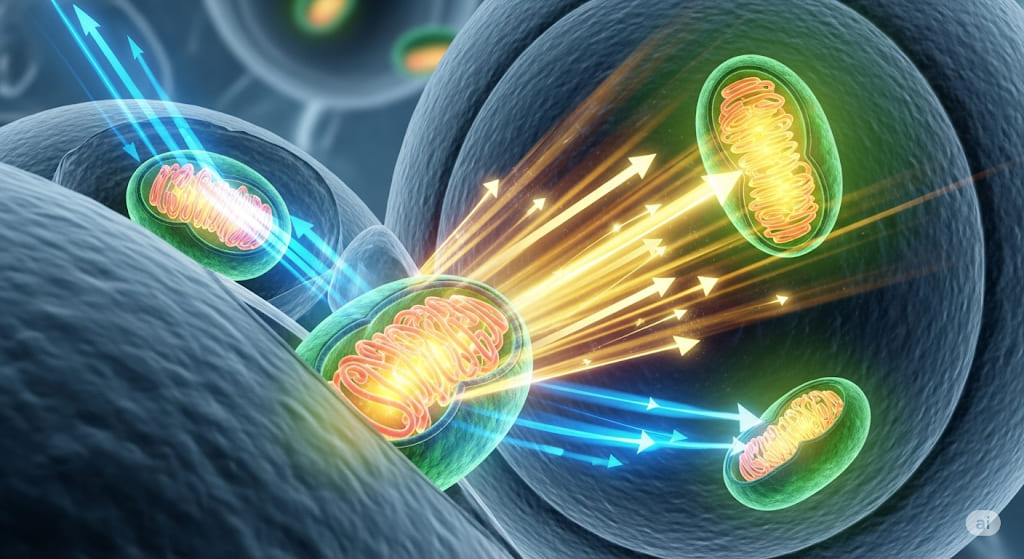
NAD+ isn’t merely one component among many in a cell; it’s a true engine, converting food into usable energy. It acts as a key electron carrier within the mitochondria, facilitating the continuous chain of reactions known as cellular respiration. Thanks to NAD+, glucose and fatty acids are efficiently broken down, releasing the energy vital for every bodily function – from muscle contraction to brain activity. When NAD+ levels deplete, the efficiency of these processes drops, leading to feelings of fatigue, decreased stamina, and a general loss of vitality. This becomes particularly noticeable after 40, when metabolic slowing and reduced cellular energy potential become more pronounced.
Maintaining high NAD+ levels allows mitochondria to operate at full capacity, providing the body with ample ATP – the universal cellular energy currency. This is another crucial reason why NAD+ is important after 40.
Beyond simply participating in energy production, NAD+ also regulates its distribution and optimal utilization. It interacts with various enzyme systems that control metabolic pathways, allowing the body to adapt to changing energy demands. For instance, during intense physical activity or under stress, the need for NAD+ significantly increases. A sufficient supply of this coenzyme enables cells to quickly respond to such challenges, maintaining internal balance and preventing cellular damage. Its presence is critically important for the smooth functioning of all bodily systems, especially under increased demands and natural age-related changes. The importance of NAD+ for cellular energy metabolism is evident in:
- Efficient ATP production, ensuring vital activity.
- Maintaining optimal mitochondrial health and function.
- Flexible regulation of energy pathways, adapting to the body’s needs, underscoring why NAD+ is important after 40.
Guardian of the Genetic Code: NAD+ and DNA Repair
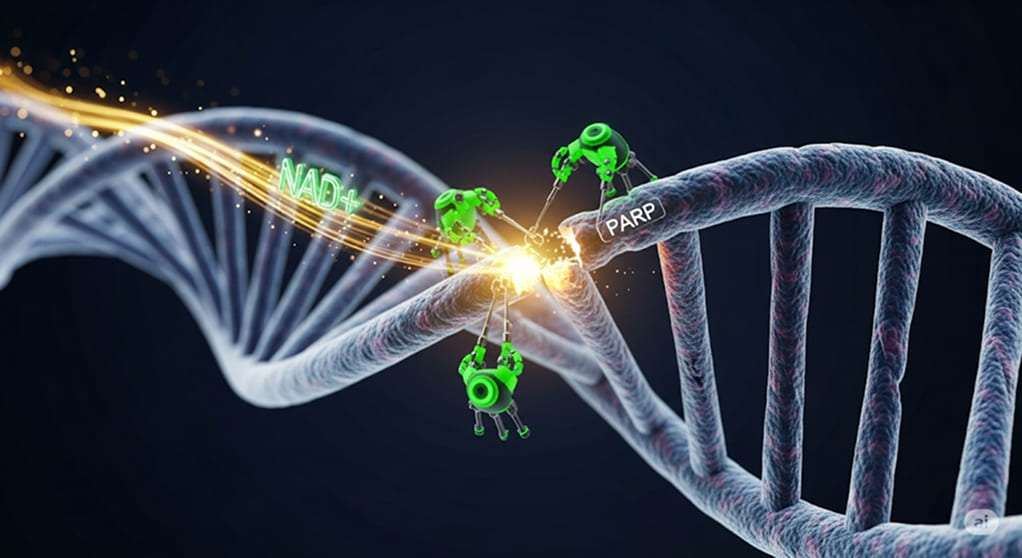
One of the most vital functions of NAD+ is its direct involvement in the processes of DNA repair. Every day, our cells face countless damages to their genetic material, whether from internal factors like free radicals formed during metabolism, or external stressors such as UV radiation, toxins, and chemicals. If left unaddressed, these damages can lead to mutations, cellular dysfunction, and ultimately, the development of various diseases, including cancer. Enzymes responsible for DNA repair, particularly poly-ADP-ribose-polymerases (PARPs), are critically dependent on the presence of NAD+ for their activity.
They utilize NAD+ as a “building block” to repair damaged DNA segments, thereby preserving genome integrity and preventing the accumulation of genetic errors. This critical role highlights why NAD+ is important after 40.
With age, the cells’ ability to effectively repair DNA noticeably declines, which is partly linked to a drop in NAD+ levels. This process helps explain why, as we get older, we become more vulnerable to age-related diseases and why the risk of cancer increases. Maintaining sufficient NAD+ levels helps activate and sustain the activity of PARP enzymes, leading to faster and more efficient elimination of DNA damage. This not only slows down the aging process but also reduces the risk of many age-related ailments, ensuring the stability of genetic material in every cell. Thus, NAD+ acts as a tireless guardian of our genetic information, and its role in DNA repair encompasses:
- Activation of key enzymes responsible for DNA repair, such as PARPs.
- Continuous protection of the genome from mutations and harmful influences.
- Maintaining cell vitality and functionality at an optimal level, further explaining why NAD+ is important after 40.
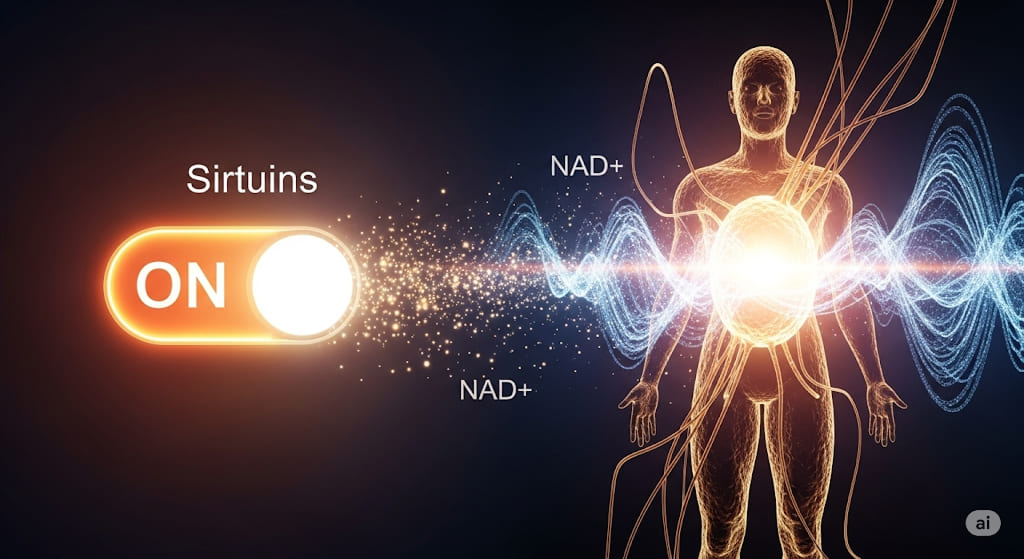
NAD+ and Sirtuins: The Secret to Longevity and Healthy Aging
The relationship between NAD+ and sirtuins is one of the most intriguing areas in modern aging research. Sirtuins are a family of proteins that play a crucial role in regulating numerous cellular processes directly linked to longevity and healthy aging. They participate in metabolism, DNA repair, modulation of inflammatory responses, and the body’s reaction to stress. However, sirtuins are NAD+-dependent enzymes, meaning their activity is directly contingent on the presence of NAD+. When NAD+ levels in cells decrease, sirtuin activity also falls, leading to impaired function and accelerated aging processes.
This is precisely why NAD+ is important after 40 – maintaining optimal NAD+ levels becomes a key factor in activating sirtuins and ensuring their effective work, thereby slowing down age-related changes.
Activating sirtuins through NAD+ brings a wide range of beneficial effects to the body. For example, sirtuins significantly improve metabolic function, increasing cellular sensitivity to insulin and regulating fat metabolism. This helps prevent the development of metabolic syndrome and type 2 diabetes, conditions that become increasingly prevalent with age. They also play an important role in maintaining cardiovascular and nervous system health, protecting cells from oxidative stress and inflammation. Given that these systems become particularly vulnerable after 40, maintaining high sirtuin activity through sufficient NAD+ levels becomes incredibly important for preserving health and quality of life. The significance of NAD+ for sirtuins is demonstrated by:
- Activation of key enzymes that regulate longevity processes.
- Improved metabolic health and increased insulin sensitivity.
- Robust protection of cells from damage and inflammatory processes, underscoring why NAD+ is important after 40.

Clear Mind, Sharp Brain: How NAD+ Impacts Cognitive Function
The brain is one of the most “energy-hungry” organs in our body, and its efficient operation directly depends on a stable and ample supply of energy. NAD+ plays a critically important role in maintaining neuron health and their ability to function normally. It is absolutely essential for the production of ATP, which fuels all complex cognitive processes, including our memory, ability to concentrate, attention, and learning capacity. With age, especially after 40, a decline in NAD+ levels can lead to a reduction in the energetic potential of neurons. This manifests as impaired cognitive function, slowed thought processes, and a general loss of mental clarity.
Maintaining high NAD+ levels can be a powerful tool for slowing these age-related changes, supporting optimal brain function, and preserving its sharpness.
Furthermore, NAD+ actively participates in neuroprotection, shielding neurons from damage caused by oxidative stress, inflammation, and the accumulation of toxic proteins like beta-amyloid, which is associated with the development of neurodegenerative diseases including Alzheimer’s. Adequate NAD+ levels contribute to more efficient mitochondrial function in nerve cells, which is critically important for their survival and seamless operation. Improving the brain’s energy metabolism through NAD+ optimization can not only slow down age-related cognitive decline but potentially enhance it, contributing to more active and productive mental activity in mature age. The role of NAD+ in brain function includes:
- Robust support for energy metabolism in neurons, ensuring their activity.
- Effective protection of nerve cells from various damages.
- Significant improvement in cognitive functions, such as memory and concentration, which highlights why NAD+ is important after 40.
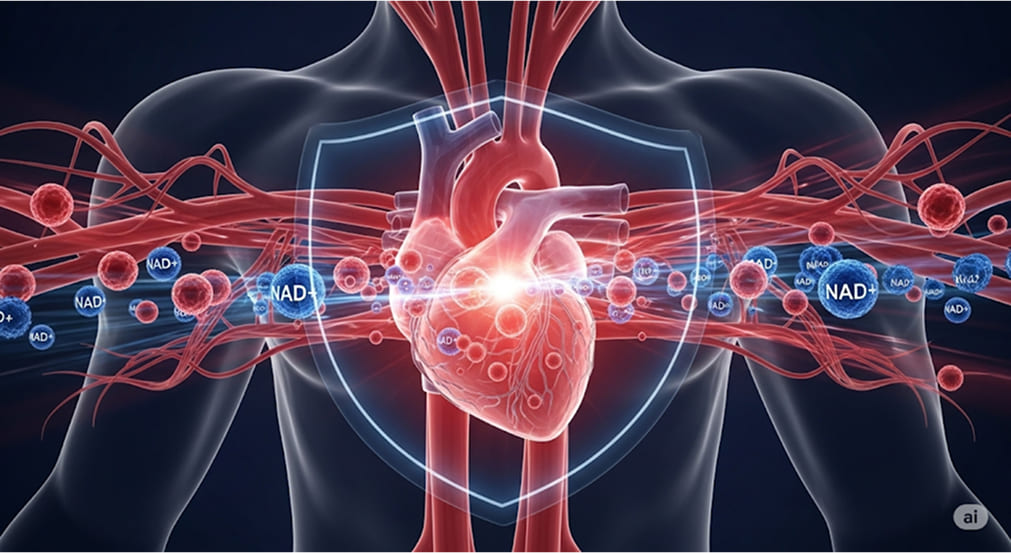
A Healthy Heart: NAD+ and Cardiovascular System Health
Cardiovascular health is of paramount importance for overall well-being, especially after 40, when the risk of developing cardiovascular diseases significantly increases. NAD+ plays a pivotal role in maintaining the stable function of the heart and blood vessels, as it is essential for energy production in myocardial cells and for preserving the integrity of the vascular wall. The heart muscle is one of the most energy-demanding organs, and any decrease in its energy potential can negatively affect its contractile ability. Sufficient NAD+ levels ensure the efficient functioning of mitochondria in cardiomyocytes, which supports the strength and rhythm of heart contractions, and also contributes to the heart’s adaptation to changing loads and stress.
Beyond its energy function, NAD+ significantly influences the condition of blood vessels. It participates in regulating the tone of blood vessels by affecting the production of nitric oxide, which promotes their relaxation and improves blood flow. With age, vascular elasticity declines, and they become stiffer, often leading to increased blood pressure. Maintaining optimal NAD+ levels helps preserve vascular elasticity, reduces inflammation in their walls, and protects them from damage caused by oxidative stress. This helps prevent the development of atherosclerosis, hypertension, and other cardiovascular diseases, which, unfortunately, are among the leading causes of mortality in mature age. The significance of NAD+ for the cardiovascular system includes:
- Providing robust energy support for the heart’s uninterrupted function.
- Maintaining the necessary elasticity of blood vessels.
- Effective protection against oxidative stress and inflammatory processes in the vessels, further emphasizing why NAD+ is important after 40.
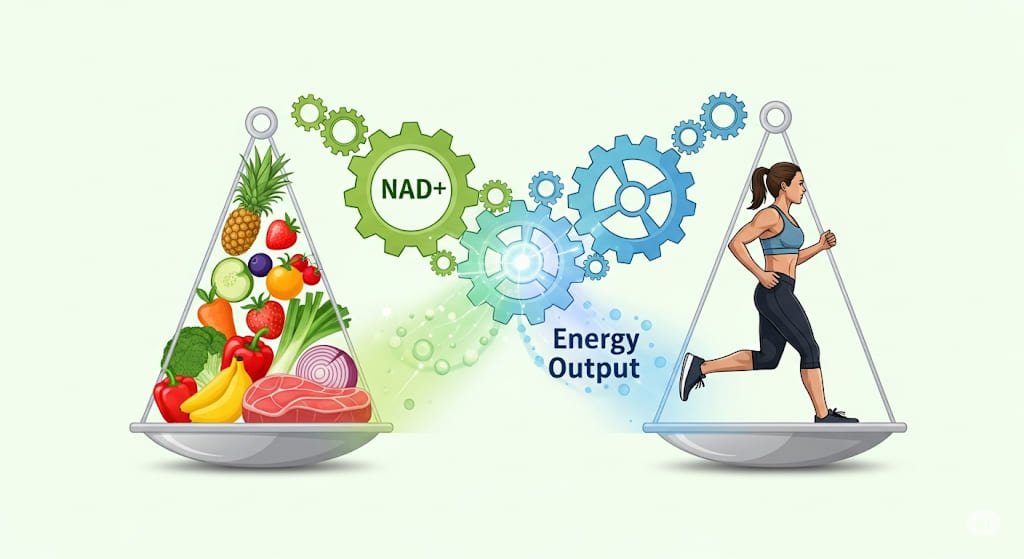
NAD+: An Ally in the Fight for Healthy Metabolism and Ideal Weight
Metabolism, or the body’s chemical processes, unfortunately, slows down significantly after 40, which often leads to steady weight gain and makes weight control challenging, even if one’s lifestyle remains consistent. NAD+ is a central regulator of metabolic pathways, influencing how the body utilizes glucose and fats for energy. It is absolutely essential for activating enzymes involved in the breakdown of carbohydrates and fats, as well as for maintaining healthy cellular insulin sensitivity. When NAD+ levels decline, cells become less efficient at utilizing nutrients, which can lead to their accumulation as undesirable fat deposits and the development of insulin resistance, a precursor to type 2 diabetes. This provides another compelling reason why NAD+ is important after 40.
Maintaining optimal NAD+ levels contributes to improved metabolic flexibility, allowing the body to more efficiently switch between using fats and carbohydrates as energy sources. This is particularly crucial for weight control, as enhanced fat metabolism promotes more active fat burning rather than its accumulation. Furthermore, NAD+ plays an important role in regulating appetite and feelings of satiety through its impact on the hypothalamus and other centers controlling eating behavior. Improving metabolism and maintaining a healthy weight through NAD+ optimization not only enhance appearance and self-esteem but also significantly reduce the risk of developing chronic diseases associated with obesity, such as cardiovascular diseases, diabetes, and certain types of cancer. Key aspects of NAD+’s influence on metabolism include:
- Significantly improving the body’s efficiency in utilizing glucose and fats.
- Increasing cellular insulin sensitivity.
- Effective support for a healthy weight and optimal body composition, demonstrating why NAD+ is important after 40.
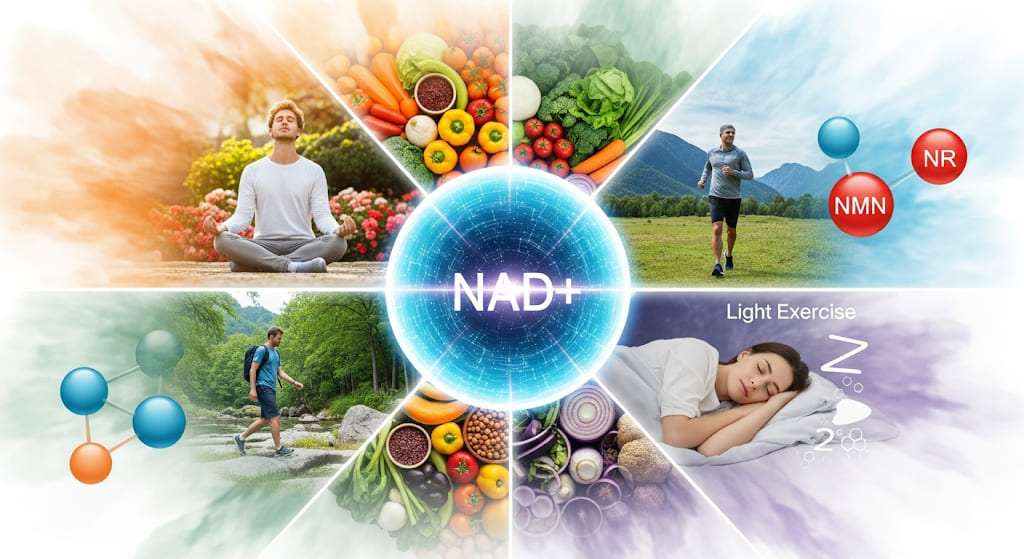
Strategies for Maintaining NAD+ After 40: An Investment in Your Future
Understanding the critical importance of NAD+ for the aging process and overall health after 40 naturally leads us to the question: how can we actively maintain its levels in the body? There are several proven approaches that can effectively help. First and foremost is a well-considered lifestyle. Regular physical activity, especially a combination of moderate and high-intensity training, is a powerful stimulant for NAD+ production and increased mitochondrial activity. A proper, balanced diet, rich in foods containing NAD+ precursors (e.g., niacin, tryptophan), as well as antioxidants and other beneficial nutrients, also plays a crucial role.
Equally important are minimizing chronic stress, ensuring sufficient and quality sleep, and abandoning harmful habits such as smoking and excessive alcohol consumption, as these deplete NAD+ reserves. This holistic approach clarifies why NAD+ is important after 40.
However, given the natural decline of NAD+ with age, many individuals turn to additional strategies to compensate for this deficiency and provide extra support. Various forms of NAD+ precursors exist, such as nicotinamide riboside (NR) and nicotinamide mononucleotide (NMN), which have shown efficacy in increasing NAD+ levels in cells in several studies. These compounds are easily absorbed by the body and serve as “building blocks” for NAD+ synthesis. But before starting any supplement regimen, it’s extremely important to consult with a qualified specialist. They can help choose the optimal dosage and form, and ensure there are no contraindications.
A comprehensive approach, including a healthy lifestyle and, if necessary, targeted supplementation, can be a powerful tool for effectively maintaining NAD+ levels and slowing down the aging process, giving you more energy and vitality. Ways to maintain NAD+ levels include:
- An active lifestyle, regular physical activity, and a balanced diet.
- Effective stress management and ensuring adequate, restorative sleep.
- Considering NAD+ precursor supplements (NR, NMN) after consulting with a specialist, offering practical steps why NAD+ is important after 40.