

The fast pace of modern life often leads to sleep deprivation and poor sleep quality, which negatively affects overall well-being, productivity, and health. Sleep biohacking is a systematic approach to improving your night’s rest by optimizing your lifestyle, using supplements, and leveraging technology. The goal of this approach is not just to increase the number of hours you sleep, but also to enhance its quality, making your sleep more restorative and profound. By understanding key principles and applying proven methods, you can significantly improve your condition.
Effective sleep biohacking begins with recognizing the importance of every element that influences your circadian rhythms and sleep quality. This includes not only selecting the right supplements but also optimizing your environment and making behavioral changes. To achieve maximum results, you need to take a comprehensive approach, experimenting to find the optimal solutions for your body. It’s crucial to remember that everyone is unique, and what works for one person might not work for another. This is the core of personalized sleep biohacking.
- Sleep biohacking as a systematic approach.
- The importance of improving sleep quality, not just quantity.
- A comprehensive approach: supplements, environment, and behavior.

Magnesium: The Foundation for Deep Sleep
Magnesium is one of the most crucial minerals involved in over 300 biochemical reactions in the body, many of which directly affect sleep. It plays a key role in the nervous system, helping you relax and reduce stress levels, which is critical for falling asleep and maintaining deep sleep. Magnesium deficiency is often linked to insomnia, anxiety, and muscle cramps that can interrupt sleep. Taking a magnesium supplement can help improve the quality of your sleep, reduce nighttime awakenings, and promote overall relaxation, which is a fundamental part of effective sleep biohacking.
The form of magnesium you choose matters, as different compounds have varying bioavailability. For example, magnesium citrate is well-absorbed and often used to enhance sleep, while magnesium glycinate combines the benefits of magnesium with glycine, an amino acid known for its calming properties. Magnesium threonate, on the other hand, is known for its ability to cross the blood-brain barrier, which can be beneficial for cognitive function and neural health. Integrating the right form of magnesium is a key strategy in sleep biohacking.
- Magnesium’s role in relaxation and stress reduction.
- The link between magnesium deficiency and sleep disturbances.
- Recommended forms of magnesium: citrate, glycinate, threonate.

Melatonin: The Circadian Rhythm Regulator
Melatonin is a hormone naturally produced by the pineal gland in your brain that plays a central role in regulating the sleep-wake cycle (circadian rhythms). Its production increases in the dark, signaling to your body that it’s nighttime and time to prepare for sleep. Taking melatonin as a supplement can be beneficial for people suffering from insomnia, shift workers, or those experiencing jet lag. It helps the body adapt more quickly to new time zones and establish a proper sleep schedule, which is a common focus of sleep biohacking for travelers.
It’s important to note that melatonin is not a sleeping pill in the traditional sense; it’s a synchronizer for your body’s internal clock. Melatonin use should be short-term and properly dosed, as long-term use of high doses can suppress the body’s natural hormone production. You should start with minimal doses to assess your individual reaction. In addition to regulating sleep, melatonin also has antioxidant properties, contributing to overall cellular health. This makes it a versatile tool in the sleep biohacking toolkit.
- Melatonin as a hormone regulating circadian rhythms.
- Using melatonin for insomnia, shift work, and jet lag.
- Recommendations for dosage and short-term use.

L-Theanine: Calmness Without Drowsiness
L-Theanine is an amino acid found primarily in green tea, known for its calming properties. Unlike many sedatives, L-Theanine does not cause drowsiness but instead promotes a state of relaxed focus. It works by increasing levels of gamma-aminobutyric acid (GABA), serotonin, and dopamine in the brain—neurotransmitters that influence mood, sleep, and emotional states. This makes it an excellent choice for those who want to reduce stress and anxiety before bed without feeling “drugged.” Using L-Theanine is a subtle yet powerful form of sleep biohacking.
Taking L-Theanine before bed helps reduce anxiety, improve sleep quality, and make it easier to fall asleep, especially if insomnia is caused by mental overstimulation or worry. It can also help increase alpha brain waves, which are associated with a state of relaxation and meditation. This allows your mind to quiet down and prepare for deep, restorative sleep. Combining L-Theanine with other supplements, such as magnesium, can amplify its positive effects on sleep, demonstrating the synergistic nature of effective sleep biohacking.
- L-Theanine as an amino acid with calming properties.
- Its effect on GABA, serotonin, and dopamine.
- Reducing stress and anxiety without causing drowsiness.

Valerian and Chamomile: Traditional Herbal Sleep Aids
Valerian and chamomile are two of the most well-known and widely used herbs for improving sleep and reducing anxiety. Valerian has long been established as a natural sedative. Its active compounds are believed to increase GABA levels in the brain, similar to some sedative drugs, but without the side effects like daytime drowsiness or dependence. It can help shorten the time it takes to fall asleep and improve sleep quality, especially for individuals with mild to moderate insomnia. This makes it a popular component of many sleep biohacking routines.
Chamomile, on the other hand, is known for its gentle calming and anti-inflammatory properties. It’s often consumed as a tea before bed to promote relaxation. The compound apigenin, found in chamomile, binds to benzodiazepine receptors in the brain, helping to reduce anxiety and induce sleep. These herbs can be an excellent natural alternative for those looking to improve sleep without using synthetic medications. It’s important to choose high-quality extracts for maximum effectiveness when practicing sleep biohacking with herbs.
- Valerian as a natural sedative that increases GABA levels.
- Chamomile and its calming properties due to apigenin.
- The advantages of traditional herbs as an alternative to synthetic drugs.

Adaptogens: Balancing the Nervous System
Adaptogens are unique plant substances that help the body adapt to stress and maintain homeostasis. In the context of sleep, they are not direct sleeping aids but rather help normalize nervous system function, reduce cortisol (the stress hormone), and improve overall resilience to external stressors. Adaptogens like ashwagandha and rhodiola rosea can indirectly enhance sleep quality by lowering background stress and anxiety, which often prevent you from falling asleep and staying in a deep sleep. This represents a holistic approach to sleep biohacking.
Ashwagandha (Withania somnifera) is traditionally used in Ayurvedic medicine to reduce stress and improve sleep. It helps regulate the hypothalamic-pituitary-adrenal (HPA) axis, leading to lower cortisol levels and overall relaxation. Rhodiola rosea, in contrast, improves adaptation to physical and mental stress, increasing energy and focus during the day, which paradoxically leads to better sleep at night by reducing nervous system overload. Regular use of adaptogens can create a more stable foundation for healthy sleep, which is a key part of long-term sleep biohacking.
- Adaptogens as agents for adapting to stress and maintaining homeostasis.
- Ashwagandha for reducing cortisol levels and promoting relaxation.
- Rhodiola rosea for improving stress resilience and energy.
Sleep Trackers: Objectively Measuring Quality
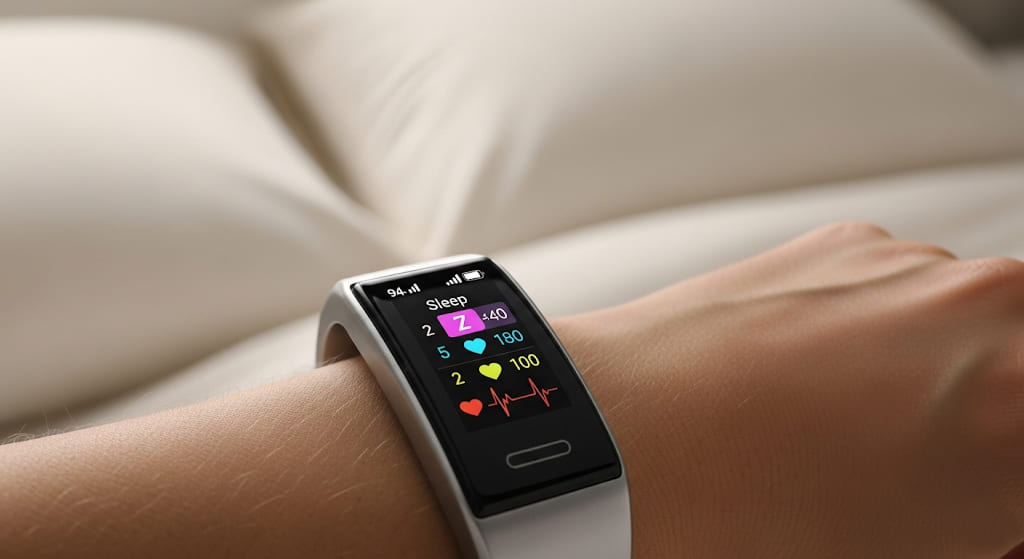
Modern technology offers convenient tools for monitoring sleep. Sleep trackers, such as smartwatches, fitness bands, and specialized rings (like the Oura Ring), allow you to track various sleep parameters, providing objective data on its quality. They record sleep stages (REM and deep sleep, awakenings), heart rate, heart rate variability, movements during sleep, and even blood oxygen levels. This data helps identify patterns that may negatively affect your night’s rest. Using these devices is a crucial step in modern sleep biohacking.
Analyzing the data from trackers helps you better understand your sleep and determine which factors contribute to its improvement or decline. For example, you might notice that a late dinner or an evening workout negatively impacts your deep sleep phase. Based on these insights, you can adjust your lifestyle, optimize your daily routine, and evaluate the effectiveness of supplements or other changes. Using sleep trackers is a powerful tool for personalized sleep biohacking.
- Sleep trackers as tools for objective monitoring (smartwatches, rings).
- Parameters tracked: sleep stages, heart rate, heart rate variability.
- Using data to adjust your lifestyle and evaluate effectiveness.
Integration and Personalization: The Path to Ideal Sleep
Sleep biohacking is not a one-time action but a continuous process of experimentation and adaptation. Integrating supplements and using sleep trackers should be part of a comprehensive strategy that also includes optimizing your sleep environment, maintaining a regular sleep schedule, and practicing good sleep hygiene. Start small, implementing changes gradually and monitoring their effect on your well-being and tracker data. It’s important to listen to your body and adjust your approach as needed.
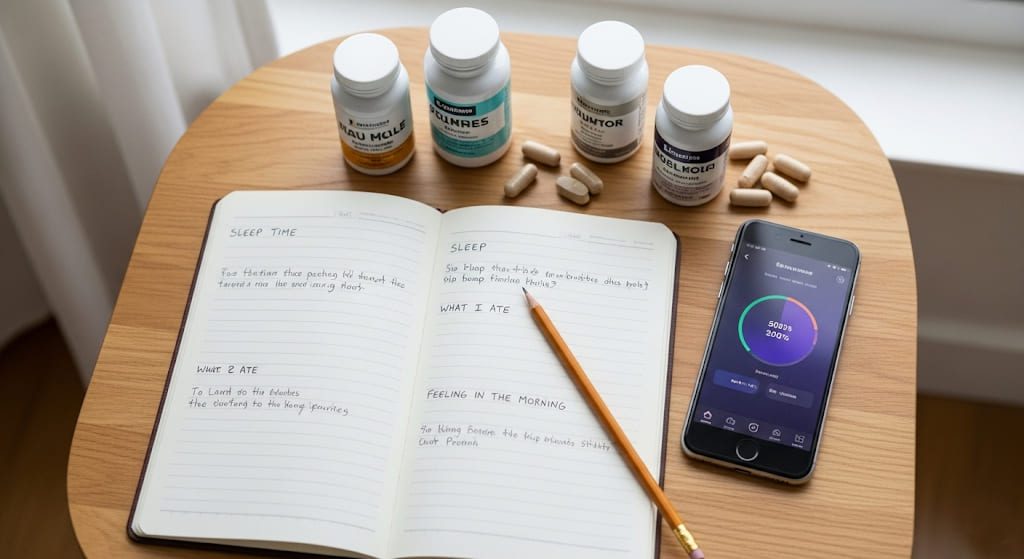
Personalization plays a key role in successful sleep biohacking. What works perfectly for one person might be ineffective or even harmful for another. For example, the dosage of melatonin or the choice of adaptogen can vary significantly. Keeping a sleep diary where you note not only the time you go to bed and wake up but also any supplements you take, stress levels, and daytime activity, can help you identify individual patterns. Consulting a sleep specialist or a doctor can provide additional guidance and ensure safety when taking supplements, especially if you have chronic health conditions.
- Sleep biohacking as a continuous process of experimentation and adaptation.
- The importance of integrating supplements, trackers, and sleep hygiene.
- The key role of personalization and keeping a sleep diary.