
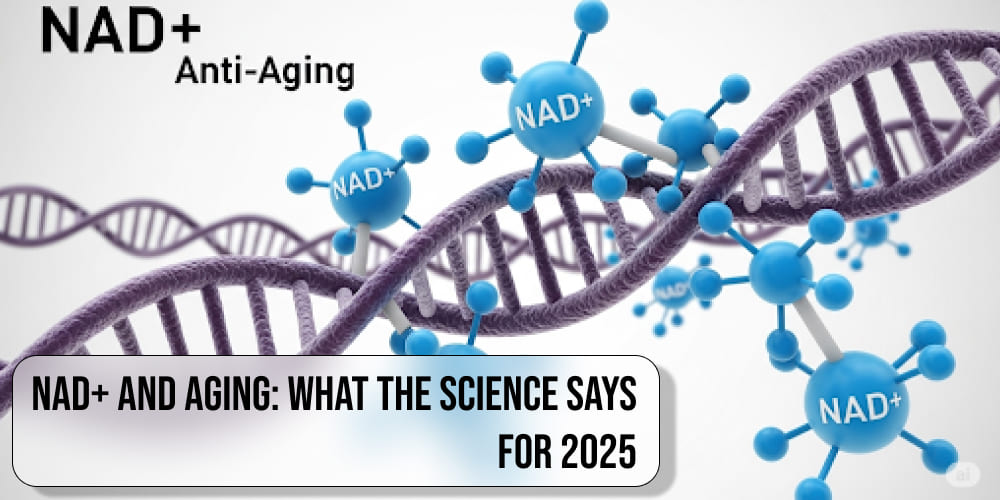
For centuries, humanity has sought the key to eternal youth. While we haven’t found a single magic bullet, modern science has uncovered a crucial player in the aging process: NAD+ (nicotinamide adenine dinucleotide). This little-known molecule is a vital coenzyme found in every cell of your body, and its levels naturally decline as you get older. This decline isn’t just a minor detail; it’s a major factor in the cellular dysfunction that drives many of the signs of aging. The exciting part is that the scientific community is now shedding light on how we might combat this decline, and the future looks promising. This article will explore what NAD+ and Aging: What the Science Says for 2025 means for you.
The drop in NAD+ is directly linked to a range of age-related conditions, from metabolic syndrome to neurodegenerative diseases. It’s a key marker of biological aging, and researchers are racing to understand why. They’re exploring the intricate ways that NAD+ loss impacts cellular health and how we can reverse this process. The latest research indicates that maintaining higher NAD+ levels could be a game-changer for slowing down aging and enhancing our quality of life. This is the core of what the scientific consensus on NAD+ and Aging: What the Science Says for 2025 is revealing.
Here are three core functions of NAD+ in your body:
- Regulating your body’s circadian rhythms.
- Powering hundreds of metabolic reactions.
- Activating sirtuins, a family of “longevity proteins.”
The Impact of NAD+ on Cellular Health
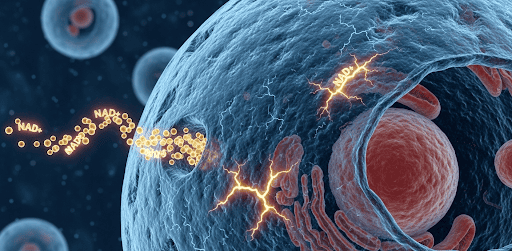
Our cells are constantly under attack from internal and external stressors. Think of everything from UV radiation to the natural byproducts of our own metabolism. NAD+ is your cell’s first line of defense. It’s an essential co-factor for enzymes that repair damaged DNA and protect mitochondria—the powerhouses of your cells. As NAD+ levels fall, your cells become more vulnerable, accelerating aging and leading to an accumulation of cellular damage. This is a critical point when discussing NAD+ and Aging: What the Science Says for 2025.
Recent studies are showing that NAD+ isn’t just a repair molecule; it also acts as a crucial regulator for your cell’s protective systems. These systems are managed by proteins known as sirtuins, which are completely dependent on NAD+ to function. When NAD+ levels drop, sirtuins become less active, reducing the cell’s ability to fight off inflammation and oxidative stress. Therefore, maintaining adequate NAD+ levels isn’t just about energy production; it’s about the very survival and stability of your cells.
Three key mechanisms through which NAD+ supports cellular health:
- Repairing damaged DNA to prevent mutations.
- Protecting mitochondria from oxidative stress.
- Activating vital cellular signaling pathways.
NAD+ and the Power of Your Mitochondria
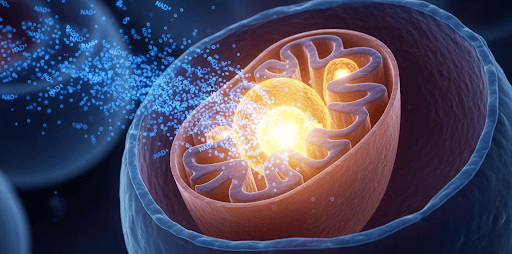
Mitochondria are the energy-producing factories in your cells, generating the majority of the energy (ATP) your body needs. The efficiency of these factories is directly tied to NAD+ levels. This coenzyme is a fundamental part of the electron transport chain, a complex biochemical process within the mitochondria that generates energy. The age-related drop in NAD+ disrupts this chain, leading to a decrease in energy production and making your mitochondria less efficient. When we talk about NAD+ and Aging: What the Science Says for 2025, this mitochondrial dysfunction is a central theme.
Mitochondrial dysfunction is a hallmark of aging. It manifests as a decline in physical endurance, mental fatigue, and a sluggish metabolism. The latest science suggests that restoring NAD+ levels can improve mitochondrial function, increase energy output, and even encourage the creation of new mitochondria. This opens up exciting new avenues for combating age-related fatigue and boosting overall vitality. Understanding the link between NAD+ and mitochondrial health is essential for grasping the full picture of NAD+ and Aging: What the Science Says for 2025.
Three key effects of NAD+ on mitochondria:
- Boosting the efficiency of energy production.
- Shielding mitochondria from damage.
- Stimulating mitochondrial biogenesis (the creation of new mitochondria).
Sirtuins: The Longevity Proteins and Their NAD+ Link
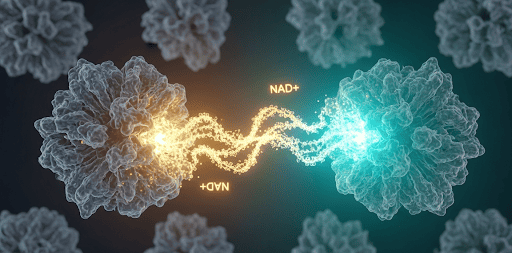
Sirtuins are often referred to as “longevity proteins” for good reason. They are a family of enzymes that play a critical role in regulating cellular processes, including metabolism, inflammation, and DNA repair. The most fascinating aspect of sirtuins is their complete dependence on NAD+. They use this coenzyme as a fuel to power their work. As your NAD+ levels decline, sirtuins become less active, which, in turn, accelerates the aging process. This is a fundamental concept in the emerging science of NAD+ and Aging: What the Science Says for 2025.
Activating sirtuins is a major goal in the field of biohacking and longevity research. Boosting their activity could help your body better manage stress, slow down the accumulation of cellular damage, and improve your overall health. Scientists believe that maintaining a high NAD+ level is a direct path to activating sirtuins, making it one of the most promising tools in the fight against aging.
Three key functions of sirtuins that depend on NAD+:
- Regulating the expression of genes linked to aging.
- Reducing inflammation throughout the body.
- Improving insulin sensitivity for better metabolic health.
How to Boost Your NAD+ Levels
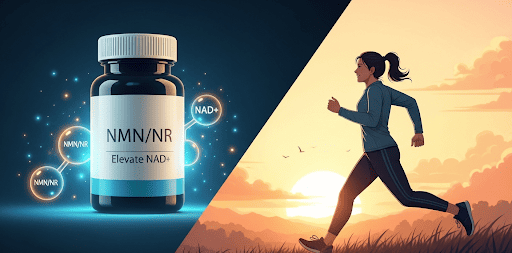
The good news is that there are several ways to support your body’s NAD+ levels. One of the most talked-about methods is the use of NAD+ precursors, such as nicotinamide riboside (NR) and nicotinamide mononucleotide (NMN). These compounds act as “building blocks” for NAD+, helping your body produce more of the coenzyme. Studies on animals have shown that NR and NMN supplementation can improve metabolism, increase physical endurance, and even extend lifespan. These findings are a cornerstone of the current discussion around NAD+ and Aging: What the Science Says for 2025.
Beyond supplements, lifestyle choices also play a huge role. Regular exercise, particularly high-intensity interval training, can naturally increase NAD+ levels in your muscles. Furthermore, caloric restriction and intermittent fasting are known to activate enzymes that are involved in NAD+ synthesis. Combining a smart diet, consistent physical activity, and targeted supplements can be a powerful strategy for maintaining high NAD+ levels.
Three ways to boost your NAD+ levels:
- Supplementing with precursors like NMN and NR.
- Engaging in regular physical activity.
- Practicing intermittent fasting or caloric restriction.
The Outlook: What Science Says for 2025 and Beyond
Science is an ever-evolving field, and in 2025, we are seeing more in-depth research on NAD+ and Aging: What the Science Says for 2025. Researchers are not only studying the effectiveness of NAD+ precursors but also their safety, as well as optimal dosages for different groups of people. Clinical trials are currently underway to help us understand just how effective these supplements are in humans and if they can truly slow down the aging process. The results of these studies will have a massive impact on the future of biohacking and longevity medicine.
Beyond precursors, scientists are also exploring other ways to influence NAD+ levels. For example, new drugs are being developed that can inhibit the enzymes responsible for breaking down NAD+. These new drugs could be a powerful complement to existing supplements, helping the body preserve NAD+ more effectively. We are at the dawn of a new era in our understanding of aging, with NAD+ at its center, and the discoveries of 2025 promise to bring even more clarity to this exciting field. The answer to the question, NAD+ and Aging: What the Science Says for 2025, is only getting more detailed.
Three directions of research in 2025:
- Clinical trials on NMN and NR in human subjects.
- The development of inhibitors for NAD+-degrading enzymes.
- Studying individual differences in NAD+ metabolism.

NAD+ and Your Metabolic Health
Metabolic health is a comprehensive term that includes markers like blood sugar levels, insulin sensitivity, and fat metabolism. As we age, many people face metabolic issues such as type 2 diabetes and metabolic syndrome. Research indicates that NAD+ levels are closely tied to these processes. A decline in NAD+ reduces cellular insulin sensitivity, which leads to higher blood sugar levels. Restoring NAD+ levels can help improve metabolic health and potentially prevent these diseases from developing. This is a key insight from the current understanding of NAD+ and Aging: What the Science Says for 2025.
The cells in your liver, muscles, and fat tissue are particularly sensitive to NAD+ levels, as they are where the majority of metabolic processes take place. Increasing NAD+ in these cells can improve their ability to process glucose and fats, which helps maintain a healthy weight and lowers the risk of chronic diseases. These findings position NAD+ not just as a “longevity molecule,” but as an essential component for maintaining overall health.
Three key effects of NAD+ on metabolic health:
- Improving insulin sensitivity.
- Lowering blood sugar levels.
- Regulating fat metabolism.
Practical Recommendations and Final Thoughts
Given the wealth of scientific data available in 2025, it’s clear that NAD+ plays a critical role in the aging process. Maintaining a high level of this coenzyme can be a powerful tool for improving your health, boosting your energy, and slowing down age-related changes. It’s important to view NAD+ not as a cure-all, but as part of a comprehensive strategy for managing your health. This strategy should include a healthy diet, regular exercise, and, if you choose, supplements that help your body produce more NAD+. These are the takeaways from NAD+ and Aging: What the Science Says for 2025.
Today, we have access to new knowledge and tools that allow us to take a more proactive approach to aging. The science in 2025 definitively confirms that actively managing your NAD+ levels is not just a trend but a scientifically backed approach to extending your healthy, active life. Choose the methods that work for you, and remember that taking care of your health is an investment in your future.
Three key takeaways about NAD+ in 2025:
- Declining NAD+ is a primary marker of aging.
- There are scientifically proven ways to boost your NAD+ levels.
- Maintaining NAD+ is a crucial part of a comprehensive approach to longevity.