

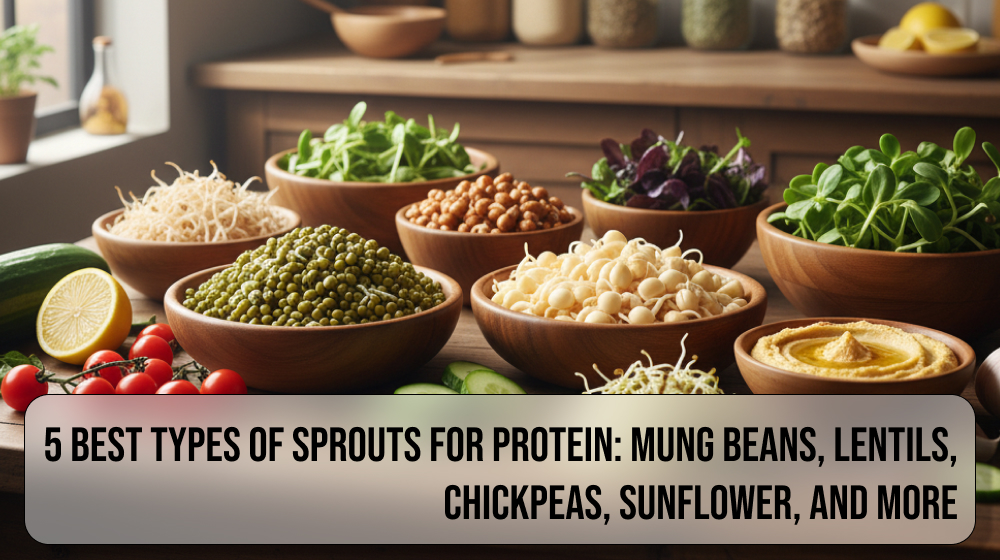
Why Sprouts Are More Than Just “Greens”
Many people think of sprouted seeds only as a garnish for salads, but in reality, they are a complete source of nutrients. During sprouting, enzymes are activated inside the seed, starting natural biochemical processes. This makes sprouted protein more available to the body and much easier to digest. Unlike dry legumes and grains, which usually require long cooking, sprouts can be eaten fresh and raw, preserving all their natural goodness.
For anyone searching for a healthy alternative to animal protein, sprouted protein is a fantastic option. Vegans and vegetarians especially benefit because sprouts provide not just protein but also essential vitamins and minerals. What’s truly amazing is how much nutrition these tiny shoots hold. And the best part — they are accessible to everyone: you can grow fresh sprouts right in your kitchen in just a few days.
- Sprouts contain easily digestible protein, vitamins, and minerals.
- They are gentler on digestion compared to dry legumes.
- You can grow them at home in just a few days.
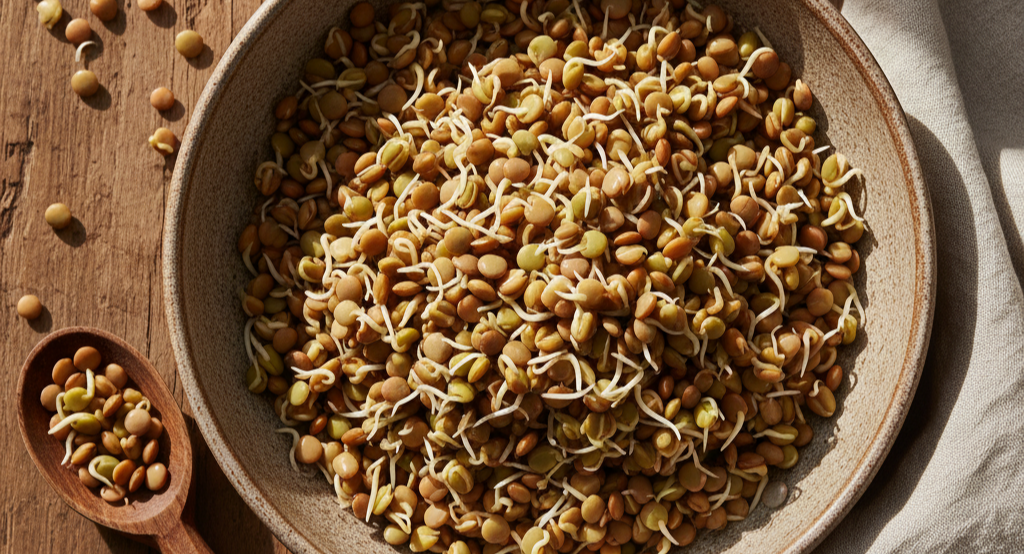
Lentils: The Champion of Sprouted Legumes
Lentil sprouts are among the most nutrient-dense and protein-rich options in the sprout world. With up to 8–9 grams of protein per 100 grams, they offer one of the highest sources of sprouted plant protein. Sprouting also enhances their digestibility and increases the availability of essential nutrients, making lentils an excellent choice for anyone seeking balanced, plant-based nutrition.
In addition to protein, lentil sprouts are rich in iron, potassium, and fiber, which support heart health, regulate blood pressure, and promote healthy digestion. Their mild, nutty flavor and slightly crunchy texture make them highly versatile — perfect for salads, grain bowls, soups, or even warm side dishes. Including lentil sprouts in daily meals is an easy way to boost protein intake while adding variety and flavor to your diet.
Sprouting lentils at home is simple and requires minimal preparation: just soak the seeds and allow them to sprout for 2–3 days. This makes fresh lentil sprouts an accessible and cost-effective way to enhance your meals with vital nutrients. They are particularly beneficial for active individuals and athletes who need more protein and minerals to support energy, recovery, and overall performance.
Key Benefits of Lentil Sprouts:
- Contain 8–9 g of protein per 100 g.
- High in iron, potassium, and fiber for heart and digestive health.
- Mild, nutty flavor suitable for salads, soups, and warm dishes.
- Quick and easy to sprout at home for daily nutrition.
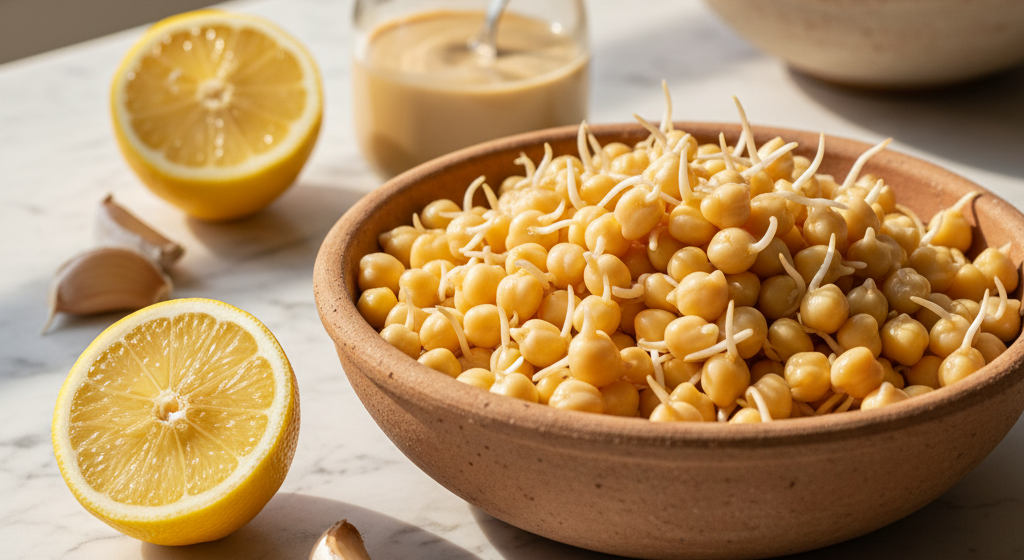
Chickpeas: Nutritious and Satisfying
Chickpeas are widely known as the main ingredient in hummus, but their sprouted form offers even more nutritional benefits. Sprouting chickpeas increases their protein digestibility, making it easier for your body to absorb essential nutrients. With 7–8 grams of protein per 100 grams, sprouted chickpeas are a substantial plant-based protein source, along with being rich in fiber, magnesium, folate, and iron. This combination of nutrients helps support digestion, heart health, and sustained energy throughout the day.
Sprouted chickpeas have a slightly sweeter, nuttier flavor compared to their dry counterparts, and the texture becomes softer and more tender. This makes them versatile in the kitchen — you can toss them into fresh salads, add them to warm grain bowls, or even make hummus from sprouted chickpeas for an extra nutritional boost. They are especially valuable for athletes or anyone looking to increase their intake of plant-based protein without relying on heavy or processed foods.
Growing chickpea sprouts at home is simple: after soaking overnight, the beans sprout in 2–3 days, providing a fresh, affordable, and convenient source of nutrition. Including sprouted chickpeas in your diet regularly can improve your protein intake while adding variety, flavor, and essential micronutrients.
Key Benefits of Chickpea Sprouts:
- Provide 7–8 g of protein per 100 g.
- High in fiber, magnesium, and iron.
- Easier to digest and softer in flavor than dry chickpeas.
- Versatile for salads, side dishes, and sprouted hummus.
Sunflower Sprouts: Nutty Flavor and Protein Power
Sunflower sprouts are more than just a crunchy addition to meals — they are a nutritional powerhouse. With around 6–7 grams of protein per 100 grams, these sprouts provide a solid plant-based protein option, along with essential minerals like zinc and magnesium, and a generous dose of vitamin E. These nutrients support immune function, muscle recovery, skin health, and overall vitality.
The sprouts have a naturally nutty flavor and tender texture, which makes them incredibly versatile in the kitchen. They can be tossed into salads, layered in sandwiches, sprinkled over grain bowls, or even blended into smoothies for an extra boost of nutrition. Beyond their protein content, sunflower sprouts are rich in antioxidants, helping to combat oxidative stress and promote long-term health.
Sprouting sunflower seeds at home is quick and easy, usually taking just 2–3 days. Once ready, they can be stored in the fridge for several days, ensuring a convenient supply of fresh, nutrient-rich sprouts for your meals. For those seeking both taste and function, sunflower sprouts are an ideal choice for everyday nutrition.
Key Benefits of Sunflower Sprouts:
- Contain 6–7 g of protein per 100 g.
- Rich in zinc, magnesium, vitamin E, and antioxidants.
- Nutty flavor and tender texture work well in both raw and cooked dishes.
- Quick to sprout at home and easy to store for daily use.
Alfalfa Sprouts: Freshness and Daily Nutrition
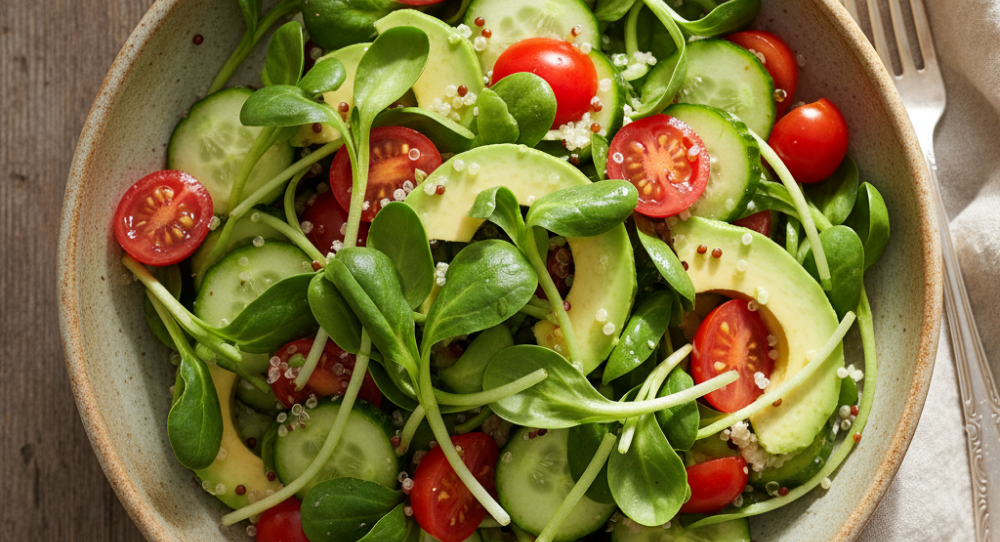
Alfalfa sprouts are one of the most widely recognized and consumed sprouts worldwide, and for good reason. While they contain a moderate 4 grams of protein per 100 grams, they are packed with vitamins A, C, and K, as well as essential minerals like calcium, magnesium, and iron. This combination makes alfalfa sprouts excellent for supporting bone health, immune function, skin vitality, and overall well-being.
With their delicate texture and mild, slightly nutty flavor, alfalfa sprouts are incredibly versatile in the kitchen. They can be added to salads for a refreshing crunch, layered in sandwiches, blended into smoothies, or used as a topping for soups and grain bowls. Their gentle taste ensures they complement a wide variety of dishes without overpowering other flavors, making them ideal for daily use.
Growing alfalfa sprouts at home is easy and requires minimal effort. With just a few days of soaking and sprouting, you can have a fresh, ready-to-eat batch at your fingertips. Incorporating them regularly into your diet is a simple way to boost nutrient intake, support digestion, and enjoy a convenient, natural source of plant-based nutrition.
Key Benefits of Alfalfa Sprouts:
- Provide about 4 g of protein per 100 g.
- Rich in vitamins A, C, and K, plus essential minerals.
- Mild flavor and delicate texture make them easy to eat daily.
- Quick and simple to grow at home for a steady supply of fresh sprouts.
How to Add Sprouts to Your Everyday Diet
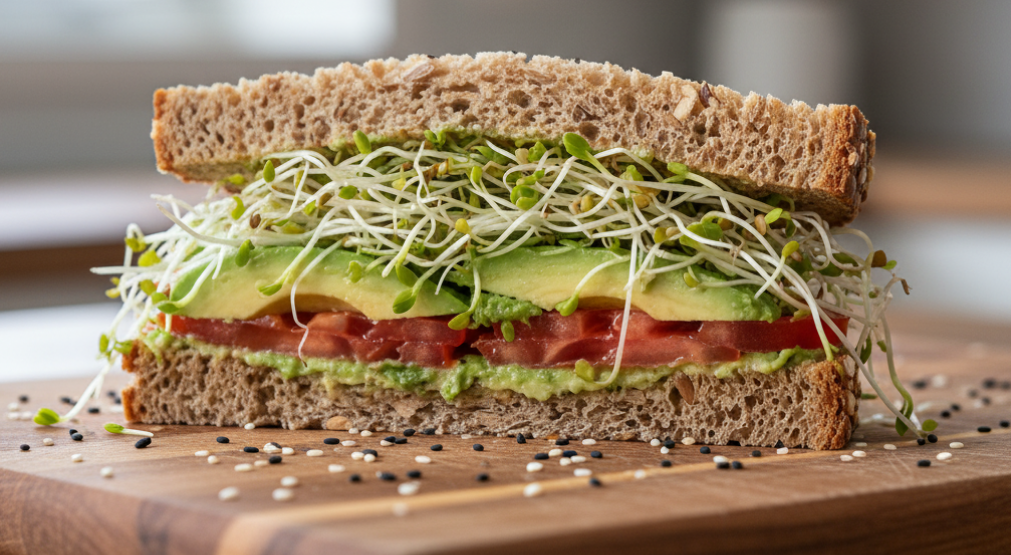
Sprouts aren’t just decorative toppings—they can be the star of your meals. Their fresh, crunchy texture and mild flavors make them incredibly versatile, allowing you to incorporate them into a wide variety of dishes. One of the easiest ways to enjoy sprouts is by adding them to salads, grain bowls, or sandwiches, where they provide both flavor and a boost of plant-based protein.
For a quick and nutritious breakfast or snack, sprouts can be blended into smoothies or mixed with yogurt for a protein-packed start to your day. Warm dishes also benefit from sprouts: you can lightly sauté or steam them to add texture and nutrients without losing their delicate flavor. Sprouts pair well with vegetables, fruits, grains, and even legumes, making it easy to include them in any meal.
If you want a constant supply of fresh sprouts, sprouting at home is simple and convenient. Most seeds and legumes sprout within 2–4 days, allowing you to maintain a rotating batch so fresh sprouts are always ready to eat. This approach not only ensures maximum nutritional value but also makes sprouted protein an affordable and sustainable part of your diet.
Key Tips for Using Sprouts Daily:
- Mix them into salads, sandwiches, or grain bowls for extra protein and crunch.
- Blend into smoothies or yogurt for a quick nutritional boost.
- Lightly sauté or steam for warm dishes without losing nutrients.
- Sprout at home in rotation for a steady supply of fresh sprouts.
Conclusion: Tiny Shoots, Big Benefits
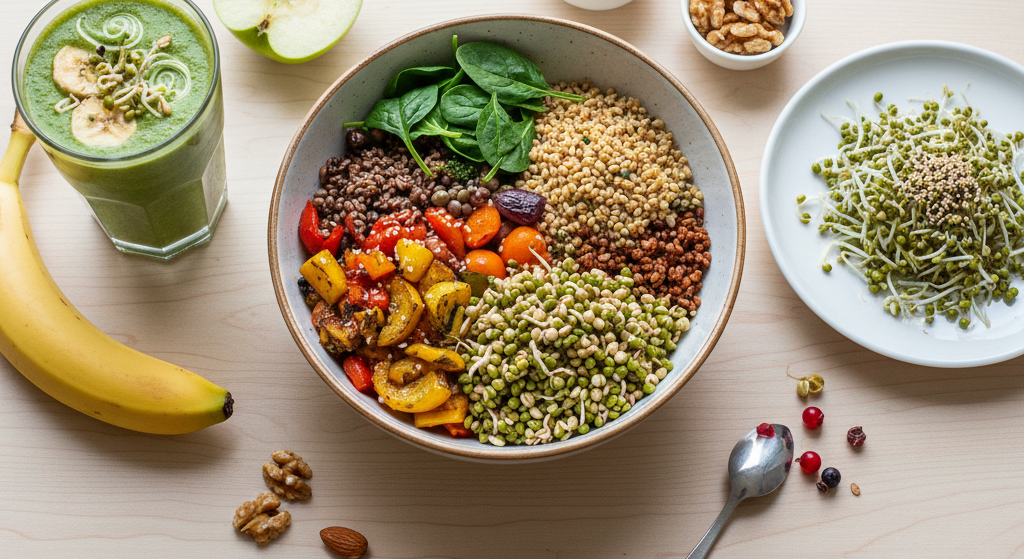
Sprouts are far more than simple garnishes—they are nutrient-dense foods that deliver high-quality plant-based protein, essential vitamins, minerals, and antioxidants. Whether you choose mung beans, lentils, chickpeas, sunflower sprouts, or alfalfa, each type offers unique health benefits while adding flavor, texture, and variety to your meals.
For vegans, vegetarians, athletes, or anyone looking to diversify their diet, sprouts provide a natural and easily digestible source of protein. They support energy, immunity, digestion, and overall well-being, making them an ideal addition to everyday nutrition. What makes sprouts even more remarkable is their accessibility: you can grow fresh sprouts at home in just a few days, ensuring a sustainable, cost-effective, and always-fresh supply.
By including sprouts in your daily routine—whether in salads, smoothies, grain bowls, or warm dishes—you’re taking a simple yet powerful step toward balanced, nutrient-rich nutrition. These tiny shoots truly prove that great things come in small packages, offering big benefits for your health, energy, and vitality.
Key Takeaways:
- Sprouts are an excellent source of plant-based protein, vitamins, and minerals.
- They support energy, immunity, digestion, and overall health.
- Easy to grow at home, making fresh, nutritious sprouts accessible year-round.
- Adding them daily is a simple and effective way to enhance your diet naturally.
Frequently Asked Questions About Sprouted Protein
What makes sprouted protein easier to digest than dry legumes?
Sprouting activates enzymes inside seeds, which begins natural biochemical processes. This breaks down some of the complex compounds in dry legumes, making the protein more bioavailable and gentler on the digestive system. As a result, sprouts can often be eaten raw without causing heaviness.
How much protein do different sprouts provide?
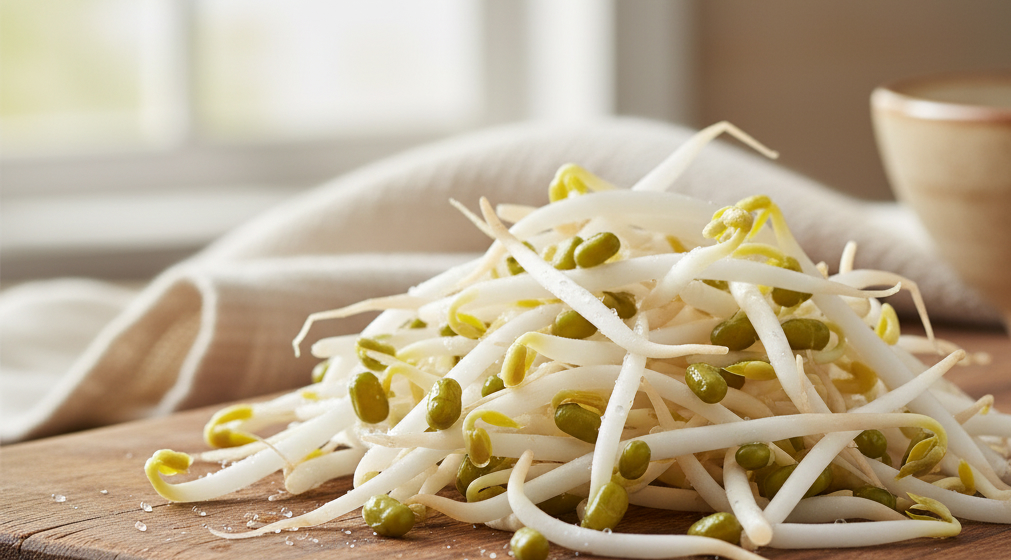
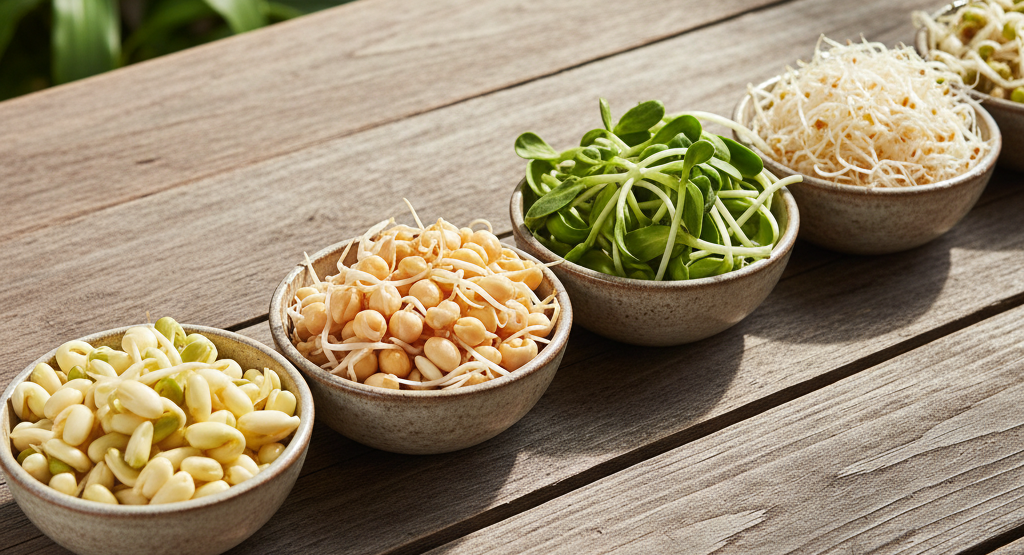
Different sprouts vary in protein content. Mung bean sprouts contain about 3 grams per 100 grams, alfalfa around 4 grams, sunflower sprouts 6–7 grams, chickpeas 7–8 grams, and lentils up to 9 grams per 100 grams. This makes them an excellent plant-based protein option.
Can I grow sprouts at home easily?
Yes! Most seeds and legumes sprout in just 2–4 days. With a simple setup, you can maintain a fresh, rotating supply of sprouts in your kitchen, ensuring you always have nutrient-rich protein ready to eat.
How can I incorporate sprouts into my daily diet?
Sprouts are versatile and can be used in many ways. They are delicious in salads, sandwiches, soups, and smoothies. You can also blend them into spreads or pastes, or combine them with grains and vegetables for nutrient-packed meals.
Are sprouts beneficial for athletes and active people?
Absolutely. Sprouts provide easily digestible plant-based protein, vitamins, and minerals, which support energy, recovery, and overall nutrition. Varieties like mung beans, lentils, and chickpeas are particularly useful for those needing extra protein for workouts or active lifestyles.