
NAD+ (nicotinamide adenine dinucleotide) is a crucial coenzyme present in all living cells. It plays a fundamental role in the biochemical processes that sustain life, especially in energy metabolism. The central question “Does NAD+ really slow down aging” revolves around how this molecule affects the body’s ability to maintain cellular health and vitality over time. NAD+ participates in numerous enzymatic reactions, including those responsible for converting food into energy in the mitochondria—the cell’s “power plants.” With age, NAD+ levels naturally decline in various tissues, which leads to a drop in cellular energy production. This decline correlates with many visible and invisible signs of aging, such as reduced stamina, cognitive decline, and decreased ability to recover from stress.
Beyond energy metabolism, NAD+ acts as a critical activator for several important enzymes, particularly sirtuins. Sirtuins regulate gene expression related to longevity, DNA repair, and inflammation. They are essential for maintaining cellular integrity and resilience in the face of environmental and metabolic stresses. When NAD+ becomes scarce, sirtuin activity diminishes, causing cells to accumulate damage more rapidly, which accelerates aging. Furthermore, NAD+ is required for the function of poly ADP ribose polymerases (PARPs), enzymes involved in detecting and repairing damaged DNA. Since DNA damage accumulation is a primary driver of aging, NAD+ plays a protective role by supporting repair processes and reducing chronic inflammation.
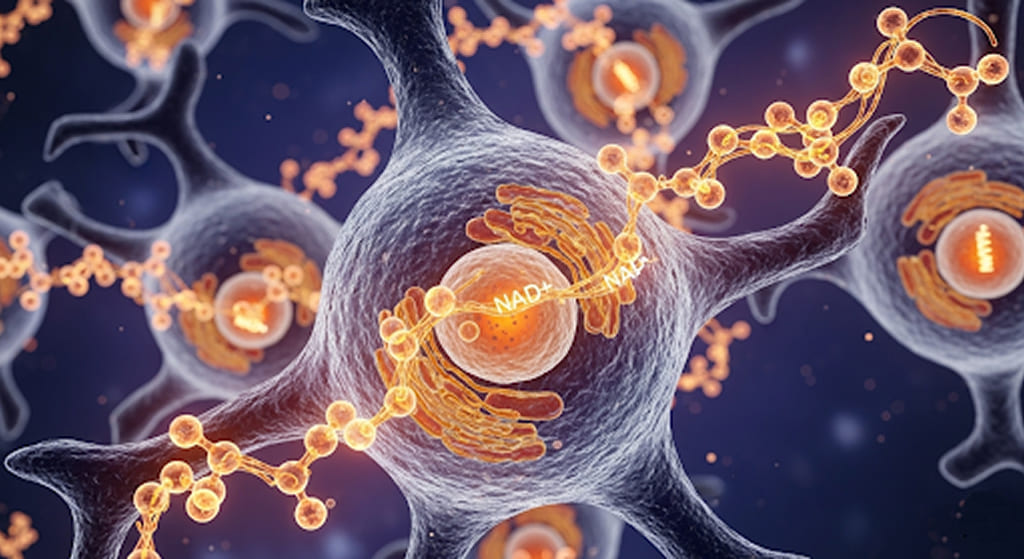
Beyond energy metabolism, NAD+ activates a class of enzymes called sirtuins. Sirtuins play a pivotal role in regulating gene expression related to DNA repair, inflammation cThus, NAD+ serves as a key molecule linking energy metabolism, genomic maintenance, and inflammation control, all of which are central to the aging process. Understanding these roles helps clarify why so many researchers focus on strategies to increase NAD+ levels as a promising avenue to slow aging and promote healthy longevity.
Key roles of NAD+ in aging include:
- Facilitating DNA repair enzymes to maintain genomic stability and prevent cellular damage accumulation.
- Supporting mitochondrial energy production, which is essential for cell function and survival;
- Activating sirtuins that regulate genes controlling DNA repair, inflammation, and metabolic health;

The Cellular Mechanics of NAD+ and Aging
Aging fundamentally results from a gradual loss of cellular function, mainly due to accumulated damage to DNA, proteins, and organelles. To answer “Does NAD+ really slow down aging”, it is essential to explore how NAD+ impacts the underlying cellular processes that determine lifespan. NAD+ serves as a cofactor for multiple classes of enzymes that protect the cell from damage and maintain its ability to function properly.
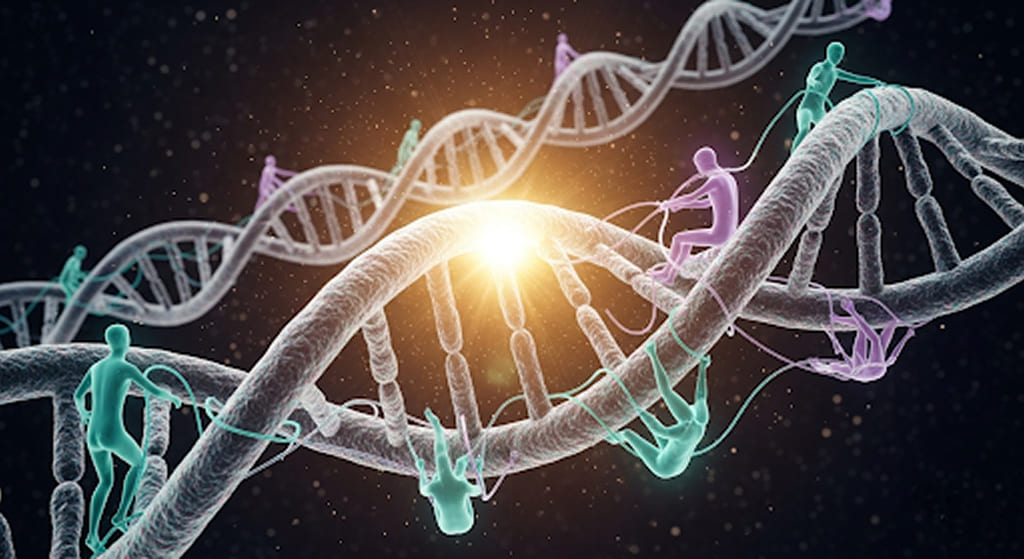
One of the most important enzyme families depending on NAD+ is PARPs (poly ADP ribose polymerases), which detect breaks in DNA strands and recruit repair machinery. DNA damage occurs naturally from metabolic processes and external stressors such as UV radiation or toxins. Without sufficient NAD+, PARPs cannot function effectively, resulting in the accumulation of DNA damage, which can trigger cellular senescence—when cells stop dividing but remain metabolically active in a harmful state.
Sirtuins are another key group of NAD+-dependent enzymes that influence aging. By deacetylating target proteins, sirtuins modulate gene expression, promote mitochondrial function, and suppress inflammatory pathways. Chronic inflammation is a well-established driver of age-related diseases, including cardiovascular disorders, neurodegeneration, and metabolic syndrome. NAD+ shortage diminishes sirtuin activity, thereby increasing inflammatory signaling and accelerating aging.
Additionally, NAD+ enhances cellular resilience to metabolic and oxidative stress. This includes maintaining the health of mitochondria and other organelles critical for energy production and waste removal. As NAD+ levels drop with age, cells become less efficient at managing stress, increasing their vulnerability to damage and apoptosis (programmed cell death).
The cellular benefits of NAD+ are summarized as:
- Enabling DNA repair enzymes to fix genomic damage and prevent mutation accumulation;
- Activating sirtuins that regulate inflammation and promote mitochondrial health;
- Supporting cellular stress resistance mechanisms to improve survival and function under adverse conditions.
Mitochondria, Energy, and Longevity: The NAD+ Link
Mitochondria are often described as the “powerhouses” of the cell because they generate the majority of cellular ATP, the primary energy currency. The efficiency of mitochondria declines with age, which is a hallmark of the aging process. NAD+ is absolutely essential for mitochondrial function, as it serves as an electron carrier in the electron transport chain—a series of reactions producing ATP. The key question “Does NAD+ really slow down aging” relates strongly to the molecule’s ability to maintain mitochondrial health and thus preserve cellular energy supply throughout life.
When NAD+ levels are sufficient, mitochondria operate efficiently, producing ample ATP while minimizing the leakage of electrons that generate reactive oxygen species (ROS). ROS are highly reactive molecules that can damage DNA, lipids, and proteins, contributing to aging and many chronic diseases. As NAD+ declines, electron transport becomes less efficient, increasing ROS production and oxidative stress. This oxidative damage further impairs mitochondrial DNA and enzymes, resulting in a downward spiral of mitochondrial dysfunction and accelerated aging.
NAD+ also supports mitophagy, the selective removal of damaged mitochondria. Mitophagy ensures that dysfunctional mitochondria are cleared and replaced with healthy ones, preserving cellular metabolism and preventing accumulation of damaged organelles. Studies in animals and cell cultures have demonstrated that boosting NAD+ levels enhances mitophagy, improves mitochondrial function, and promotes metabolic fitness, physical endurance, and even lifespan extension.
To sum up, NAD+ helps maintain mitochondrial health by:
- Supporting efficient ATP generation and reducing harmful oxidative stress;
- Promoting mitophagy to clear damaged mitochondria and sustain organelle quality;
- Maintaining metabolic homeostasis crucial for physical vitality and longevity.

Clinical Evidence: What Do Studies Say About NAD+ and Aging?
Interest in NAD+ as an anti-aging molecule has led to a surge in scientific studies evaluating whether “Does NAD+ really slow down aging” has a positive answer. Experimental data from animal models consistently show that boosting NAD+ levels via supplementation with precursors such as nicotinamide mononucleotide (NMN) or nicotinamide riboside (NR) leads to improvements in mitochondrial function, muscle strength, metabolism, and sometimes lifespan extension. For example, mice given NMN exhibit better insulin sensitivity, increased energy expenditure, and improved endurance compared to controls.
In humans, clinical trials remain in early stages but have yielded promising results. Supplementation with NAD+ precursors has been shown to increase NAD+ levels in blood cells and muscle tissues, leading to measurable improvements in biomarkers of cardiovascular and metabolic health. Some studies report enhanced mitochondrial function in muscle biopsies, improved blood pressure regulation, and reductions in inflammatory markers. Cognitive benefits such as improved attention and reduced neuroinflammation are also under investigation, though more extensive research is needed.
While results are encouraging, it is important to note that human aging is complex, and NAD+ is one of many interacting factors. Long-term, large-scale clinical trials are still required to definitively prove that raising NAD+ levels can significantly slow aging or prevent age-related diseases.
Clinical findings supporting NAD+ benefits include:
- Improved metabolic, cardiovascular, and mitochondrial biomarkers in older adults;
- Enhanced muscle function and physical performance associated with increased NAD+;
- Preliminary cognitive benefits linked to reduced neuroinflammation and improved brain metabolism.

How to Boost NAD+ Levels Naturally and Effectively
Assuming the positive implications of “Does NAD+ really slow down aging” are true, the next practical question is how to increase NAD+ levels safely and effectively. One of the most direct methods is supplementation with NAD+ precursors such as nicotinamide mononucleotide (NMN) and nicotinamide riboside (NR). These molecules are readily absorbed and converted by cells into NAD+, bypassing rate-limiting steps in NAD+ biosynthesis pathways.
However, lifestyle and dietary factors also play crucial roles in maintaining NAD+ balance. Intermittent fasting and caloric restriction are well-documented to increase NAD+ levels naturally, partly by activating sirtuins and other longevity pathways. Exercise, especially high-intensity interval training, stimulates mitochondrial biogenesis and NAD+ production, enhancing overall metabolic health. Additionally, avoiding excess alcohol consumption and managing chronic stress helps preserve NAD+ by reducing oxidative damage and inflammatory burden. Quality sleep is also important because NAD+ metabolism is linked to circadian rhythms.
Key practical ways to boost NAD+ include:
- Taking NMN or NR supplements to directly increase NAD+ levels in cells;
- Practicing intermittent fasting or caloric restriction to stimulate endogenous NAD+ production and sirtuin activation;
- Engaging in regular physical activity to improve mitochondrial function and promote NAD+ biosynthesis.

NAD+ and Brain Health: Can It Protect Against Cognitive Decline?
One of the most significant concerns with aging is the decline in cognitive function, including memory loss and reduced mental clarity. Neurons are highly dependent on mitochondrial energy, which in turn requires NAD+. The question “Does NAD+ really slow down aging” extends to brain health because NAD+ deficiency may accelerate neurodegenerative processes. Neuronal cells are particularly vulnerable to oxidative stress and DNA damage, and NAD+ plays a protective role in both.
Research suggests that NAD+ supports neuronal survival and function by promoting efficient energy metabolism and activating sirtuins that regulate inflammation and protect against neurotoxicity. In animal models of Alzheimer’s disease and other neurodegenerative conditions, increasing NAD+ levels improved cognitive performance and reduced pathological markers such as amyloid plaques. Moreover, NAD+ helps maintain the integrity of the blood-brain barrier and supports neuroplasticity—the brain’s ability to form new connections.
Although human clinical data are still limited, the connection between NAD+ and brain health is promising and under active investigation. Maintaining optimal NAD+ levels might be a viable strategy to slow cognitive decline and support healthy brain aging.
Benefits of NAD+ for brain health include:
- Supporting neuronal energy metabolism and protecting against oxidative stress;
- Activating sirtuins that reduce neuroinflammation and neurodegeneration;
- Promoting neuroplasticity and maintaining blood-brain barrier integrity.

The Bottom Line: Does NAD+ Really Slow Down Aging?
Summarizing the evidence on “Does NAD+ really slow down aging”, NAD+ is clearly a central molecule in key biological processes that influence aging. Scientific studies strongly support that NAD+ levels decline with age, and that this decline impairs mitochondrial function, DNA repair, and inflammation control. Boosting NAD+ through supplements and lifestyle changes shows promise in improving healthspan and potentially lifespan by restoring cellular vitality.
However, aging is multifactorial, and NAD+ is one important component among many. While the research is compelling, more extensive human trials are needed to confirm that NAD+ supplementation alone can significantly delay aging or prevent age-related diseases. Maintaining healthy NAD+ levels as part of a holistic approach to wellness is a sensible strategy for those interested in longevity.
In conclusion, the answer to “Does NAD+ really slow down aging” is likely yes, but it works best as part of an integrated approach that includes diet, exercise, stress management, and sleep.
Key takeaways about NAD+ and aging:
- NAD+ is essential for energy production, DNA repair, and inflammation regulation, all crucial to aging;
- Supplementation and lifestyle changes can effectively raise NAD+ and improve cellular health;
- NAD+ boosting is promising but should complement broader healthy aging practices.