

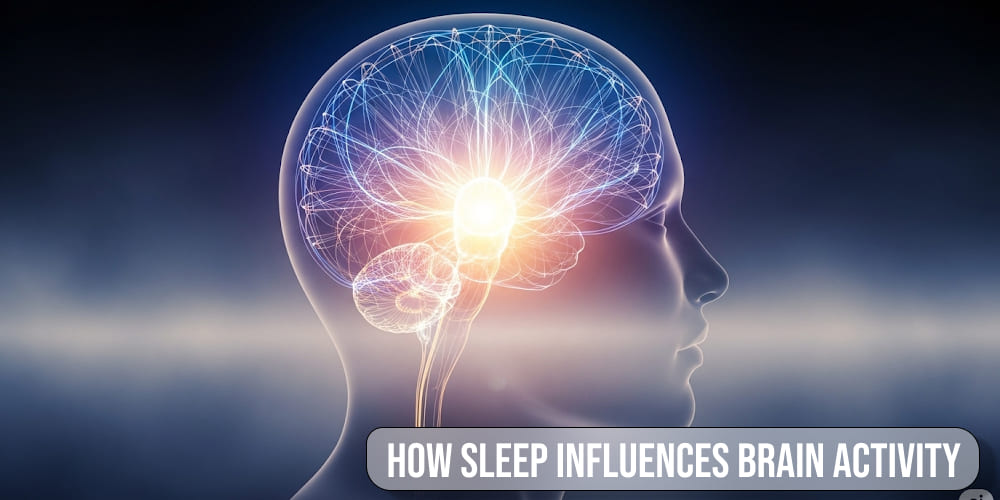
Sleep isn’t just a pause in the day’s hustle; it’s a complete system reboot for our brain, a critical process for its health and full functioning. While the body rests, the brain works non-stop, performing complex tasks that are simply impossible during wakefulness. By understanding exactly how sleep influences brain activity, we unlock doors to improving our thinking, managing emotions, and enhancing overall well-being. Conversely, chronic sleep deprivation can lead to serious problems with memory, concentration, and the ability to make sound decisions.
At the heart of sleep’s incredible impact on the brain lies its cyclical nature, which involves alternating phases of rapid eye movement (REM) and non-REM (NREM) sleep. Each of these phases plays a unique role in processing information and restoring the nervous system. Studying the intricate neural processes that occur during sleep allows us to gain a deeper appreciation for the mechanisms of learning, memory formation, and even the genesis of creative ideas. Thus, quality and sufficient sleep becomes the cornerstone for maintaining optimal brain activity throughout life.
- Restoring the brain’s energy reserves
- Memory consolidation and acquiring new knowledge
- Clearing the brain of harmful substances

Sleep Phases: Unlocking Brain Work Mysteries
Sleep is far from a monolithic state; it’s a complex mosaic of several stages, each possessing unique patterns of brain activity and fulfilling specific functions. NREM sleep is divided into stages N1, N2, and N3, with N3 being the deepest sleep. During these periods, brain waves slow down, and heart rate and breathing become more measured. Deep sleep is incredibly important for physical recovery and boosting the immune system, and it also plays a key role in the consolidation of declarative memory — our memory for facts, events, and general knowledge. This demonstrates how sleep influences brain activity in foundational ways.
The rapid eye movement (REM) sleep phase is strikingly different: brain activity during this time is almost as high as during wakefulness, eyes rapidly move under the eyelids, and body muscles are almost completely relaxed. It’s during REM sleep that we immerse ourselves in the world of vivid and often surreal dreams. This phase is critically important for emotional regulation, processing the day’s experiences, and solidifying procedural memory — our skills and abilities. Disruptions in any of these phases can seriously impact our cognitive abilities, highlighting how sleep influences brain activity across various domains.
- NREM sleep: deep recovery and strengthening of knowledge-based memory
- REM sleep: emotional balance and skill reinforcement
- Cyclical phase changes: ensuring smooth brain function

Sleep and Cognitive Functions: Memory and Learning
One of the most fascinating and well-studied functions of sleep is its direct impact on memory and learning. Imagine that during deep sleep, your brain actively “organizes” and reliably secures all the information you’ve absorbed throughout the day. This incredible process, known as memory consolidation, allows fleeting short-term memories to be transformed into robust long-term ones. Research unequivocally proves: a deficit of deep sleep significantly impairs our ability to memorize new information and recall what we’ve already learned, clearly showing how sleep influences brain activity related to memory.
But REM sleep also makes a significant contribution to learning, especially when it comes to mastering complex skills and developing creative thinking. In this phase, the brain seems to “shuffle” and integrate disparate pieces of information, creating entirely new associations and ideas. It’s no coincidence that after a good night’s sleep, those “aha!” moments often arrive, or a solution is found for a problem you’ve been grappling with for hours. It’s clear that sleep is an indispensable part of any learning process and intellectual development, profoundly illustrating how sleep influences brain activity for cognitive growth.
- Knowledge consolidation occurs during deep sleep
- REM sleep aids skill acquisition and stimulates creativity
- Sleep quality directly impacts academic performance and mental capacity

How Sleep Cleanses the Brain of Toxins
Our brain, like any high-performance machine, produces metabolic waste products during its operation. During wakefulness, these toxins gradually accumulate, which can negatively affect its functions. One of the most astonishing discoveries in recent years has been the role of the glymphatic system — a unique brain cleansing system that becomes most active precisely during sleep. This system uses cerebrospinal fluid to literally “wash away” cellular waste products, including beta-amyloid, a protein strongly linked to the development of Alzheimer’s disease, showing how sleep influences brain activity at a cellular level.
During deep sleep, the brain’s neurons seem to “shrink,” increasing the space between them. This allows cerebrospinal fluid to circulate more freely, ensuring the effective removal of toxins and maintaining an optimal environment for the uninterrupted work of nerve cells. Conversely, lack of sleep disrupts the function of this vital glymphatic system, leading to a dangerous accumulation of harmful substances and, in the long term, increasing the risk of neurodegenerative diseases. This is a critical aspect of how sleep influences brain activity.
- The glymphatic system activates during sleep
- Removal of beta-amyloid and other harmful substances
- Lack of sleep impedes the brain’s natural “cleaning” process

Sleep: Our Inner Psychologist for Emotions and Stress
Sleep plays a central role in regulating our emotions and our ability to cope with stress. During REM sleep, the brain carefully processes all emotional experiences, integrating them into the broader picture of our memory. This process helps to “discharge” the emotional load from traumatic events and contributes to overall emotional stability. If there isn’t enough sleep, the function of the amygdala — the brain region responsible for processing fear and anxiety — is disrupted, making us more reactive, irritable, and less resilient to stress, illustrating how sleep influences brain activity related to mood.
Chronic sleep deprivation also leads to an increase in cortisol levels — the well-known stress hormone. This, in turn, negatively affects the function of the prefrontal cortex, which is responsible for decision-making, self-control, and rational thinking. The result is increased irritability, constant anxiety, and even a predisposition to depressive states. Sufficient and quality sleep is a powerful, natural tool for maintaining psychological balance and our ability to withstand life’s challenges. This emphasizes how sleep influences brain activity and emotional well-being.
- Processing emotions and “emotional decompression” during REM sleep
- Amygdala dysfunction due to sleep deprivation
- Sleep as a means to reduce stress and cortisol levels

Sleep: A Source of Inspiration and Creativity
Creativity often seems like something magical, associated with sudden “aha!” moments and intuition. And indeed, sleep plays a key role in these processes! During REM sleep, the brain actively creates new associations between seemingly unrelated ideas. This happens through a deep reorganization and reinterpretation of the information we’ve received throughout the day. It’s no coincidence that many outstanding scientists, artists, and writers have noted that their most groundbreaking ideas came to them precisely after a good night’s sleep or even during dreams themselves, showcasing how sleep influences brain activity for innovation.
Research convincingly shows that individuals who got adequate sleep demonstrated significantly better results in tests for creativity and the ability to solve unconventional problems compared to those who suffered from sleep deprivation. Sleep allows our brain to break free from conventional thinking and find truly original approaches to problem-solving. This makes it an indispensable resource for anyone whose work demands imagination, innovation, and fresh ideas, further highlighting how sleep influences brain activity in creative endeavors.
- New, unexpected ideas are born in REM sleep
- Sleep improves the ability to solve complex, atypical problems
- Sleep is a powerful catalyst for creative breakthroughs

Sleep Disturbances: A Warning for the Brain
Chronic sleep deprivation and various sleep disorders, whether it’s tormenting insomnia or dangerous apnea, have truly devastating effects on the brain. A prolonged deficit of sleep inevitably leads to a noticeable decline in cognitive functions: attention worsens, concentration drops, reaction time slows down, and it becomes harder to make sound decisions. This directly impacts our productivity at work, safety on the roads, and overall quality of daily life. Understanding how sleep influences brain activity reveals the severity of these impacts.
Among other things, persistent sleep disturbances significantly increase the risk of developing serious neurodegenerative diseases, such as Alzheimer’s and Parkinson’s, due to the dangerous accumulation of toxic proteins in the brain. They can also contribute to the development or worsen the course of existing mental disorders, such as depression and anxiety disorders. That’s why timely diagnosis and treatment of any sleep disorders are critically important steps for maintaining brain health and our overall well-being, emphasizing how sleep influences brain activity and long-term health.
- Decline in cognitive abilities due to sleep deprivation
- Increased risk of neurodegenerative diseases
- Worsening of mental state during chronic sleep deprivation

How to Optimize Sleep for Improved Brain Activity
Optimizing sleep isn’t just a habit; it’s a real investment in your brain’s health and overall quality of life. First and foremost, it’s crucial to adhere to a regular sleep schedule: try to go to bed and wake up at roughly the same time every day, even on weekends. This helps to synchronize your internal biological clock and makes sleep more predictable and higher quality. Creating a comfortable, dark, and quiet bedroom, eliminating any sources of light and noise, also plays a huge role. This is key to understanding how sleep influences brain activity positively.
Try to avoid caffeine and alcohol several hours before bedtime, as they can seriously disrupt the natural structure of your sleep. Regular, but moderate, physical activity during the day promotes deeper and more restful sleep, but avoid intense workouts immediately before going to bed. Incorporating these simple yet incredibly effective habits into your daily routine will significantly improve your sleep quality and, consequently, positively impact the activity and health of your brain, illustrating practical ways how sleep influences brain activity.
- Regular sleep schedule — the foundation of brain health
- Create an ideal “cave” for sleep: darkness, silence, coolness
- Limit stimulants and exercise in moderation