


Mitochondrial Health & NAD+ Restoration. Mitochondria are the powerhouses of the cell, producing the energy molecule ATP that fuels every biological process. Maintaining mitochondrial health is essential for physical energy, cognitive function, metabolic regulation, and overall longevity. Dysfunctional mitochondria can lead to fatigue, impaired metabolism, increased oxidative stress, and accelerated aging. Mitochondrial damage is influenced by factors such as poor diet, sedentary lifestyle, chronic stress, environmental toxins, and natural aging processes.
Supporting mitochondrial health involves both lifestyle and dietary strategies. Regular exercise stimulates mitochondrial biogenesis, creating new, efficient mitochondria. Nutrient-rich foods supply essential cofactors like coenzyme Q10, magnesium, and B vitamins to support energy production. Limiting exposure to environmental toxins, reducing oxidative stress, and practicing intermittent fasting or time-restricted eating can further enhance mitochondrial efficiency. Key strategies include:
- Regular physical activity to stimulate mitochondrial growth and efficiency
- Nutrient-dense diet rich in cofactors supporting mitochondrial function
- Stress reduction and toxin minimization to prevent mitochondrial damage
By prioritizing mitochondrial health, the body maintains energy production, metabolic flexibility, and resilience against age-related decline.

The Role of NAD+ in Cellular Energy
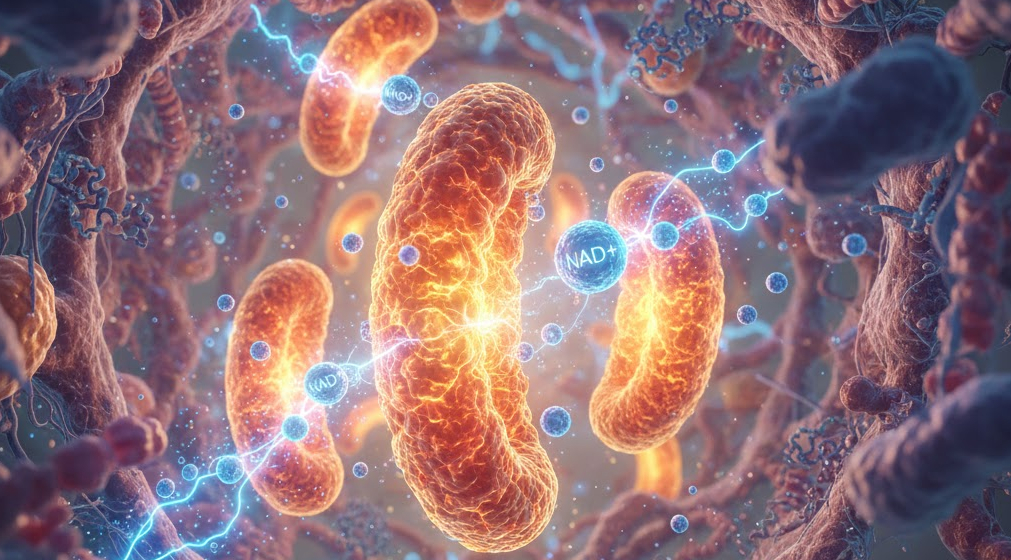
NAD+ (nicotinamide adenine dinucleotide) is a critical coenzyme involved in energy metabolism, DNA repair, and cellular signaling. NAD+ levels naturally decline with age, leading to decreased mitochondrial function, slower energy production, and increased susceptibility to metabolic and age-related diseases. Adequate NAD+ is essential for mitochondrial efficiency, as it participates in redox reactions that convert nutrients into ATP, the primary energy currency of the cell.
Factors like poor nutrition, chronic stress, excessive alcohol, and UV exposure accelerate NAD+ depletion. Restoring NAD+ levels supports energy metabolism, improves cellular repair mechanisms, and enhances resilience against oxidative stress. NAD+ restoration can be achieved through precursors like nicotinamide riboside (NR) or nicotinamide mononucleotide (NMN), calorie restriction, intermittent fasting, and regular exercise. Key strategies include:
- Supplementing with NAD+ precursors such as NR or NMN
- Engaging in regular physical activity to stimulate NAD+ regeneration
- Practicing intermittent fasting or caloric cycling to support NAD+ and mitochondrial efficiency
Maintaining NAD+ levels is crucial for energy, cellular repair, and overall mitochondrial health.

How Mitochondrial Health Enhances NAD+ Levels
Healthy mitochondria support the recycling and utilization of NAD+, creating a positive feedback loop that boosts cellular energy production. Efficient mitochondria require NAD+ for oxidative phosphorylation, converting nutrients into ATP while minimizing oxidative stress. When mitochondria are damaged or dysfunctional, NAD+ is consumed at higher rates, reducing energy availability and accelerating cellular aging. Therefore, improving mitochondrial function directly contributes to NAD+ restoration and overall cellular vitality.
Lifestyle choices can enhance both mitochondrial health and NAD+ levels. High-intensity interval training (HIIT) and endurance exercises stimulate mitochondrial biogenesis while promoting NAD+ regeneration. Nutrient-rich diets supply necessary cofactors for NAD+ synthesis, while polyphenol-rich foods like berries and green tea protect mitochondria from oxidative damage. Key strategies include:
- Exercise to promote mitochondrial biogenesis and NAD+ recycling
- Consuming nutrient- and antioxidant-rich foods for mitochondrial support
- Minimizing oxidative stress through sleep, stress management, and environmental care
Optimizing mitochondrial health not only improves energy production but also restores NAD+ levels, enhancing metabolism, cellular repair, and longevity.
Hormonal Influence on Mitochondria and NAD+
Hormones play a vital role in regulating mitochondrial function and NAD+ metabolism. Thyroid hormones, cortisol, growth hormone, and sex hormones influence mitochondrial efficiency, ATP production, and oxidative stress. Dysregulated hormonal patterns, due to poor sleep, chronic stress, or aging, can impair mitochondria and deplete NAD+ levels. Balancing hormones ensures efficient energy production, resilience against oxidative damage, and enhanced mitochondrial biogenesis.
Supporting hormonal balance involves lifestyle, nutrition, and sleep optimization. Adequate sleep enhances growth hormone release, which stimulates mitochondrial repair. Stress management reduces cortisol-induced mitochondrial damage. Nutrients like magnesium, zinc, and vitamin D support hormone synthesis, indirectly boosting mitochondrial health and NAD+ levels. Key strategies include:
- Prioritizing quality sleep to optimize hormonal influence on mitochondria
- Managing stress to prevent cortisol-induced mitochondrial damage
- Ensuring nutrient sufficiency to support hormone production and mitochondrial function
Hormonal health and mitochondrial efficiency work together to maintain cellular energy, resilience, and optimal NAD+ levels.

Environmental and Lifestyle Factors Affecting Mitochondrial Health
External factors, such as diet, activity, light exposure, and environmental toxins, influence mitochondrial health and NAD+ availability. Sedentary lifestyles, processed foods, chronic stress, pollution, and excessive UV exposure accelerate mitochondrial decline and deplete NAD+. Conversely, structured routines, clean nutrition, regular exercise, and reduced toxin exposure enhance mitochondrial function, support NAD+ levels, and improve energy metabolism.
Daily strategies to optimize mitochondria include combining movement, dietary support, and circadian-aligned routines. Morning sunlight exposure supports circadian rhythm and mitochondrial activity. Exercise and intermittent fasting stimulate mitochondrial biogenesis and NAD+ regeneration. Consuming antioxidant-rich foods reduces oxidative stress, protecting mitochondria. Key strategies include:
- Engaging in regular physical activity to stimulate mitochondria
- Eating a nutrient- and antioxidant-rich diet to protect mitochondrial function
- Minimizing exposure to toxins and UV stress for long-term mitochondrial health
Aligning lifestyle and environmental factors preserves mitochondrial function, enhances NAD+ availability, and improves cellular resilience.

Nutritional Strategies to Support Mitochondrial Function
Nutrition plays a critical role in mitochondrial efficiency and NAD+ restoration. Cofactors such as coenzyme Q10, B vitamins, magnesium, and antioxidants support ATP production and mitochondrial repair. Polyphenols from fruits, vegetables, green tea, and cocoa reduce oxidative stress, protecting mitochondria from damage. NAD+ precursors like NR or NMN boost cellular NAD+ levels, enhancing mitochondrial metabolism and energy output.
Meal timing and composition are also essential. Intermittent fasting or time-restricted eating enhances mitochondrial biogenesis and NAD+ regeneration. Nutrient-dense meals supply the building blocks needed for mitochondrial enzymes and cofactors. Key nutritional strategies include:
- Consuming NAD+ precursors: nicotinamide riboside (NR) or nicotinamide mononucleotide (NMN)
- Including antioxidant-rich foods: berries, green tea, cocoa, leafy greens
- Ensuring sufficient cofactors: B vitamins, magnesium, and coenzyme Q10
Proper nutrition enhances mitochondrial function, supports NAD+ restoration, reduces oxidative stress, and boosts cellular energy.

Tracking and Optimizing Mitochondrial Health
Monitoring mitochondrial health and NAD+ levels is increasingly recognized as a key strategy for optimizing energy, metabolism, and cellular longevity. While subjective feelings of energy and vitality provide some insight, more precise metrics allow for targeted interventions and long-term optimization. Wearable devices, metabolic testing, and biomarker analysis can reveal patterns in energy expenditure, heart rate variability, oxygen consumption, and blood markers associated with mitochondrial function. These tools help individuals identify inefficiencies, oxidative stress, or declining NAD+ levels and tailor interventions to their unique physiology.
Continuous monitoring can provide actionable insights into how diet, exercise, sleep, and stress impact mitochondrial function. For example, heart rate variability (HRV) can indicate autonomic nervous system balance, indirectly reflecting mitochondrial efficiency and cellular stress levels. Blood tests measuring NAD+ precursors, oxidative stress markers, or lactate thresholds can guide supplementation and lifestyle strategies. Tracking energy output during workouts can also help optimize training to stimulate mitochondrial biogenesis without overtaxing the system. Combining subjective measures, like fatigue or cognitive performance, with objective data enables a more holistic understanding of mitochondrial health.
Optimization strategies should integrate personalized data with practical interventions. Exercise remains a cornerstone: combining aerobic training, high-intensity interval training (HIIT), and resistance exercises stimulates mitochondrial growth and enhances NAD+ recycling. Nutritional interventions include supplementation with NAD+ precursors (NR, NMN), antioxidant-rich foods, and coenzyme Q10, while time-restricted eating or intermittent fasting further supports mitochondrial efficiency. Lifestyle factors, including stress management, circadian-aligned sleep, and environmental toxin reduction, play an equally important role in preserving mitochondrial function. Key strategies include:
- Lifestyle adjustments including sleep, stress reduction, and environmental optimization
- Tracking biomarkers and wearables to assess energy metabolism and mitochondrial efficiency
- Personalized exercise and nutrition plans to enhance biogenesis and NAD+ levels

Final Thoughts on “Mitochondrial Health & NAD+ Restoration”
Maintaining mitochondrial health and supporting NAD+ restoration are foundational strategies for optimizing energy, longevity, and overall cellular function. Mitochondria are the engines of every cell, producing ATP that powers physical activity, cognitive function, and metabolic processes. When mitochondrial efficiency declines—due to aging, poor nutrition, sedentary lifestyle, chronic stress, or environmental toxins—energy production slows, oxidative stress increases, and the risk of metabolic and age-related disorders rises.
Concurrently, NAD+, a critical coenzyme for redox reactions, DNA repair, and cellular signaling, naturally diminishes with age. Low NAD+ levels further impair mitochondrial function, reduce energy production, and compromise the body’s ability to repair and regenerate cells. Therefore, addressing both mitochondrial health and NAD+ availability creates a synergistic effect that enhances cellular resilience and overall vitality.
Practical strategies to support mitochondrial function and restore NAD+ involve a combination of lifestyle, nutrition, and environmental interventions. Regular exercise, including both aerobic and high-intensity interval training, stimulates mitochondrial biogenesis and improves NAD+ recycling. Nutrient-dense diets rich in coenzyme Q10, B vitamins, magnesium, and antioxidants provide essential cofactors for energy metabolism while protecting mitochondria from oxidative damage. Supplementing with NAD+ precursors such as nicotinamide riboside (NR) or nicotinamide mononucleotide (NMN) supports cellular energy production and DNA repair. Intermittent fasting, time-restricted eating, and strategic caloric cycling further enhance mitochondrial efficiency and NAD+ levels by activating cellular repair pathways and reducing oxidative stress.
In addition, hormonal balance, sleep quality, and stress management play critical roles in maintaining mitochondrial and NAD+ function. Adequate sleep ensures repair and regeneration, while stress reduction protects mitochondria from cortisol-induced damage. Environmental factors, including reduced exposure to toxins and optimal light exposure, reinforce circadian rhythms and metabolic processes that support mitochondrial efficiency. By combining these approaches consistently, individuals can maximize energy output, improve metabolic flexibility, reduce oxidative damage, and enhance longevity.
Ultimately, prioritizing mitochondrial health and NAD+ restoration is not only about immediate energy but also about long-term cellular resilience and vitality. This holistic approach ensures that the body maintains efficient energy production, supports repair mechanisms, and protects against age-related decline. By integrating targeted nutrition, exercise, lifestyle adjustments, and supplementation, it is possible to optimize mitochondrial function, restore NAD+ levels, and achieve sustained physical, mental, and metabolic well-being. Mitochondrial health, therefore, is a cornerstone of both vitality today and longevity tomorrow.