
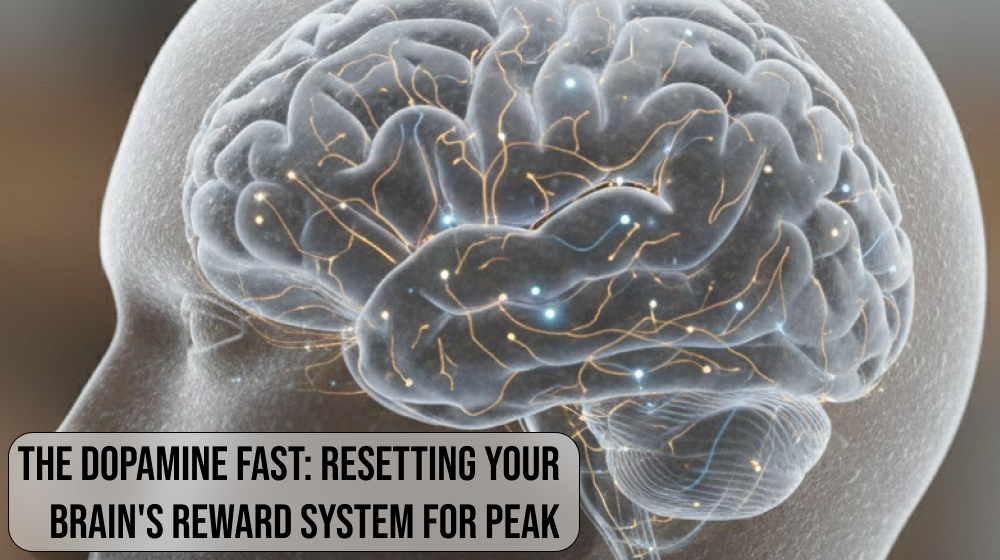
The Dopamine Fast: Resetting Your Brain’s Reward System for Peak Focus. The dopamine fast is a practical approach to restoring balance in the brain’s reward system, which is increasingly overstimulated by modern lifestyles. Dopamine is a neurotransmitter responsible for motivation, drive, learning, and the anticipation of reward. It does not create happiness directly; instead, it pushes the brain to seek experiences that promise pleasure or satisfaction. In an environment filled with social media, instant entertainment, fast food, and constant notifications, dopamine is triggered far more often than nature intended. This continuous stimulation gradually shifts the brain’s baseline, making normal, effort-based activities feel dull and unrewarding.
The importance of a dopamine fast lies in its ability to reverse this adaptation. By temporarily reducing exposure to high-dopamine stimuli, the brain is allowed to recalibrate its sensitivity. This process helps restore natural motivation, improve focus, and reduce compulsive behaviors. Instead of constantly chasing stimulation, the brain begins to respond again to meaningful effort and progress. A dopamine fast is not about deprivation, but about regaining control over attention and mental energy in a highly stimulating world.
Key reasons the dopamine fast matters:
- Restores sensitivity to natural rewards
- Improves focus and motivation without force
- Reduces dependence on instant gratification

How the Brain’s Reward System Becomes Overloaded
The brain’s reward system evolved to reinforce behaviors essential for survival, such as eating, exploration, learning, and social bonding. Dopamine is released when the brain predicts a reward, strengthening neural pathways that encourage repetition. In natural environments, these dopamine spikes were moderate and tied to effort. In contrast, modern technology delivers intense rewards instantly and repeatedly, often without any meaningful cost. This includes endless scrolling, algorithm-driven videos, and ultra-processed foods designed to maximize pleasure.
As dopamine stimulation becomes constant, the brain adapts through dopamine receptor downregulation. This means that more stimulation is required to achieve the same level of motivation or engagement. Over time, everyday responsibilities such as work, study, or exercise may feel draining or boring. This state is often misinterpreted as laziness, when it is actually a neurochemical imbalance. Dopamine fasting addresses this overload by reducing stimulation and allowing the reward system to recover its natural responsiveness.
Common contributors to dopamine overload include:
- Continuous social media scrolling and algorithm-driven content
- Highly processed foods engineered for maximum pleasure
- Persistent multitasking and constant digital interruptions

What a Dopamine Fast Actually Involves
A dopamine fast involves the deliberate reduction of behaviors that generate rapid and frequent dopamine spikes, especially those connected to instant gratification and effortless rewards. The purpose is not to eliminate enjoyment or suppress all pleasure, but to remove excessive stimulation that overwhelms the brain’s reward circuitry. During a dopamine fast, attention is shifted away from activities that constantly demand reaction, such as scrolling, clicking, or consuming highly stimulating content. This creates mental space in which the nervous system can slow down and return to a more natural rhythm. The absence of constant rewards allows the brain to notice internal states, thoughts, and impulses that are normally drowned out by stimulation.
A key aspect of dopamine fasting is intentionality. The individual consciously chooses which behaviors to pause and which low-stimulation alternatives to allow. This process strengthens self-regulation and reduces automatic, compulsive actions. Dopamine fasting can be applied flexibly, ranging from short daily windows to longer reset periods. Over time, repeated fasting trains the brain to tolerate lower stimulation levels, improving impulse control, patience, and focus. The brain gradually relearns that satisfaction can come from effort, presence, and completion rather than constant novelty.

Low-Stimulation Activities That Support Brain Reset
Replacing high-dopamine behaviors with low-stimulation activities is essential for resetting the brain’s reward system. These activities are intentionally simple, predictable, and low in novelty, which allows dopamine levels to stabilize rather than spike. In the initial phase of a dopamine fast, these behaviors may feel uncomfortable, boring, or emotionally flat. This reaction is expected and reflects the brain’s dependence on frequent stimulation. When dopamine input decreases, the brain temporarily struggles to generate motivation, signaling the beginning of neural recalibration.
Low-stimulation activities help restore the connection between effort, time, and reward. They promote sustained attention, mindfulness, and emotional regulation without overwhelming the nervous system. These behaviors also reduce cognitive load, allowing thoughts to slow down and become more organized. As dopamine sensitivity improves, the brain begins to experience satisfaction from progress, consistency, and completion. Over time, low-stimulation activities become genuinely rewarding, reinforcing healthier dopamine patterns and supporting long-term mental resilience, focus, and emotional balance.
Effective low-stimulation activities include:
- Walking outdoors without headphones, music, or phone interaction
- Reading physical books, journaling, or slow reflective writing
- Gentle movement such as stretching, yoga, or low-intensity exercise

Impact of Dopamine Fasting on Focus and Productivity
Dopamine fasting has a profound effect on focus and productivity by reducing cognitive fragmentation caused by constant stimulation. When the brain is no longer pulled toward rapid rewards, attention naturally consolidates. This makes it easier to engage deeply with tasks that require sustained concentration, planning, or problem-solving. Over time, the ability to remain focused without external stimulation increases, supporting deep work and higher-quality output.
Productivity improves because motivation becomes internally regulated rather than dependent on external triggers. Tasks that once felt tedious or overwhelming become more approachable as the brain relearns how to associate effort with reward. This reduces procrastination and impulsive task-switching. Dopamine fasting also lowers mental fatigue by decreasing decision overload and constant context switching. As a result, individuals often experience greater consistency, clearer priorities, and improved execution across both professional and personal goals.
Key productivity-related benefits include:
- Longer periods of uninterrupted concentration and deep work
- Improved task initiation, completion, and follow-through
- Reduced mental exhaustion and cognitive overload

Emotional Regulation and Mental Clarity Benefits
Excessive dopamine stimulation is closely linked to emotional volatility, including anxiety, irritability, and restlessness. Dopamine fasting supports emotional regulation by lowering baseline stimulation and calming the nervous system. As external inputs decrease, emotional reactions become less impulsive and more proportional. This improves stress tolerance and creates a more stable emotional baseline, which is essential for long-term mental health and performance.
Mental clarity increases as the brain processes fewer distractions. Thoughts become more structured, and internal awareness improves. This clarity makes it easier to recognize unhealthy patterns, emotional triggers, and automatic behaviors. Over time, dopamine fasting supports better sleep quality, improved mood stability, and a stronger sense of agency. The mind feels quieter, more focused, and better equipped to respond thoughtfully rather than reactively.

Common Misconceptions About Dopamine Fasting
One of the most widespread misconceptions about dopamine fasting is the belief that it requires total deprivation or a complete rejection of pleasure. Many assume that the practice is extreme, rigid, or designed to suppress enjoyment. In reality, a dopamine fast is a method of restoring dopamine balance, not eliminating pleasure from life. Dopamine itself is not harmful; it is essential for motivation, learning, and goal-directed behavior. The problem arises from excessive and uncontrolled stimulation, not from pleasure itself. Dopamine fasting simply reduces exposure to artificially intense rewards so the brain can regain sensitivity to natural, effort-based satisfaction.
Another common misunderstanding is the expectation of instant results. Many people believe that a single dopamine fast will immediately restore focus, motivation, and emotional stability. While some individuals notice short-term improvements, meaningful neurological change requires consistency over time. Dopamine receptors adapt gradually, and repeated periods of reduced stimulation are necessary for long-term improvement. Short, regular dopamine fasts are far more effective than rare, extreme attempts. Viewing dopamine fasting as a long-term behavioral strategy rather than a quick fix is essential for realistic expectations and sustainable results.
There is also confusion between dopamine fasting and isolation. Some believe it involves withdrawing from social interaction or avoiding all forms of engagement. In reality, dopamine fasting encourages intentional engagement rather than avoidance. Meaningful conversations, physical movement, and creative work are often encouraged because they support healthy dopamine patterns. The goal is to reduce compulsive behaviors, not human connection.
Common misconceptions include:
- Believing dopamine itself is harmful, rather than overstimulation
- Expecting immediate transformation without habit change
- Confusing intentional stimulation reduction with social withdrawal

Final Thoughts on “The Dopamine Fast: Resetting Your Brain’s Reward System for Peak Focus”
The dopamine fast is not a trend or a form of self-denial, but a practical framework for restoring balance in a world built around constant stimulation. By reducing exposure to high-dopamine triggers, the brain is given the opportunity to recalibrate its reward system and regain sensitivity to natural sources of motivation. This process supports focus, emotional stability, and long-term productivity without relying on force or willpower. Instead of chasing instant gratification, attention shifts toward effort, presence, and meaningful progress.
What makes dopamine fasting especially valuable is its flexibility and scalability. It does not require radical lifestyle changes to be effective. Even small, consistent periods of reduced stimulation can create noticeable improvements over time. As dopamine sensitivity improves, everyday activities such as work, learning, and physical movement begin to feel more rewarding. This reinforces healthier behavioral patterns and reduces dependence on compulsive habits that drain mental energy.
Ultimately, dopamine fasting is about intentional living. It encourages awareness of how modern stimuli shape behavior and offers a way to reclaim control over attention and motivation. When practiced consistently, it becomes a sustainable tool for maintaining mental clarity, emotional resilience, and peak cognitive performance in an overstimulated environment.