
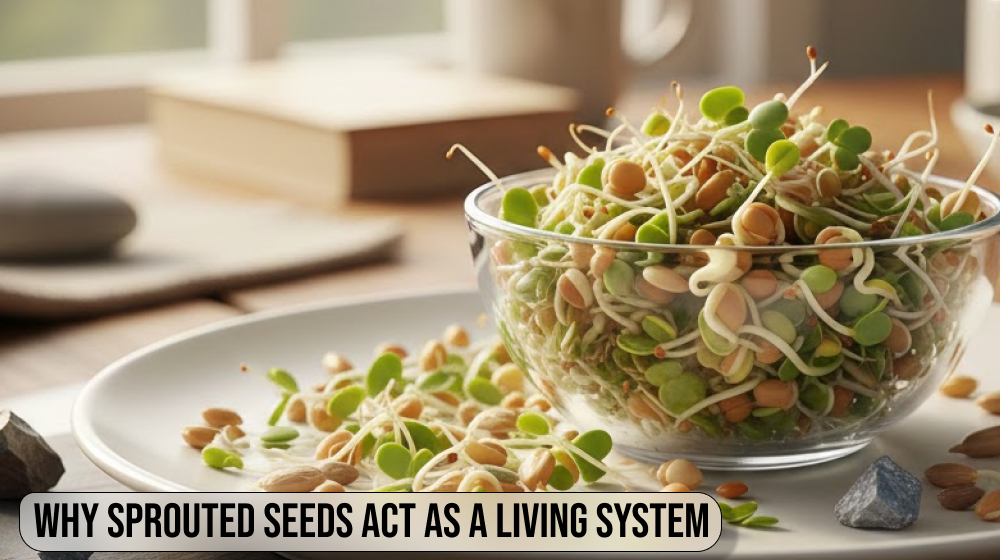
Why Sprouted Seeds Act as a Living System. Sprouted seeds are often described as more nutritious, but this explanation barely captures what actually happens during sprouting. The key reason sprouted seeds act as a living system lies in the biological transition from dormancy to activity. A dry seed is essentially a storage capsule designed to survive harsh conditions. Once sprouting begins, the seed activates internal processes meant to support growth, adaptation, and interaction with the environment. This shift transforms the seed from passive food matter into an active biological structure.

At this stage, the seed begins regulating itself. Enzymes switch on, stored nutrients are reorganized, and cellular communication pathways activate. These changes are not random; they follow precise biological programming. When consumed, sprouted seeds bring this organized activity into the human body. Instead of delivering static nutrients, they interact dynamically with digestion, metabolism, and gut signaling. This is why sprouted seeds are often described as “living food” rather than processed nutrition.
From a biohacking and functional nutrition perspective, foods that retain biological activity tend to integrate better with human physiology. They reduce friction in digestion and support natural regulatory systems instead of overwhelming them. Sprouted seeds act as a living system because their internal processes remain active and responsive, even after harvest.
Core features that define this biological shift include:
- Activation of internal metabolic pathways
- Transition from nutrient storage to nutrient signaling
- Dynamic interaction with human digestion
This transformation is the foundation of every benefit associated with sprouted seeds.
Enzymes as Active Drivers of a Living Food
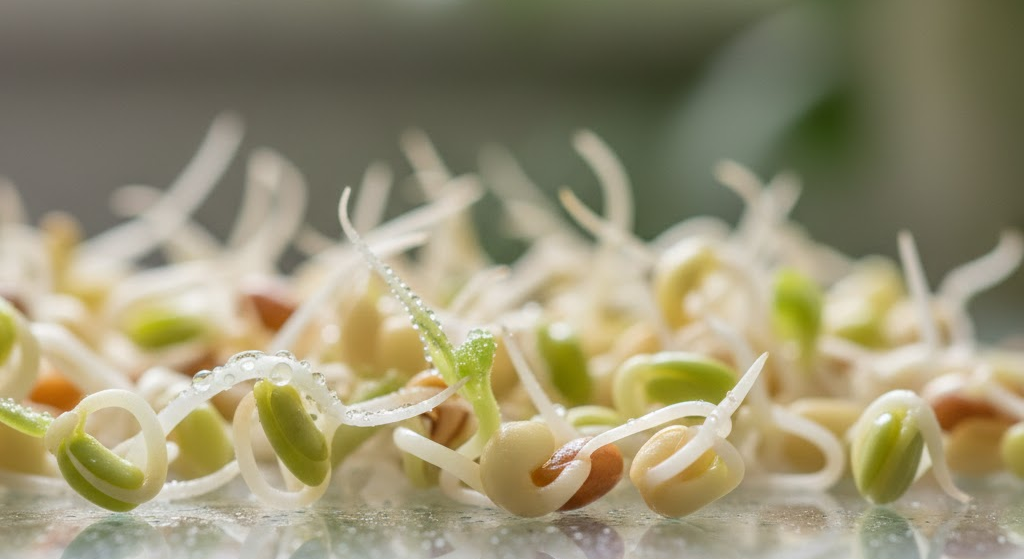
One of the strongest indicators that sprouted seeds act as a living system is enzyme activity. Enzymes are essential for all biological processes, including digestion, energy production, and cellular repair. In dry seeds, enzymes remain dormant. Once sprouting begins, enzymes such as amylase, protease, and lipase activate to convert stored compounds into usable fuel for growth.
This enzymatic activity continues to matter after consumption. When sprouted seeds are eaten, they arrive with active enzymes already present. These enzymes assist the human digestive system by beginning the breakdown of carbohydrates, proteins, and fats before the body has to intervene. As a result, digestion becomes more efficient and less energy-intensive. This efficiency is a hallmark of foods that behave as living systems rather than inert matter.
In modern diets dominated by heat-treated and ultra-processed foods, enzyme-rich foods are rare. Sprouted seeds help restore this missing biological component. They support digestive balance, reduce post-meal fatigue, and improve nutrient assimilation without forcing the body into overdrive.

Cellular Communication and Nutrient Signaling
Another reason sprouted seeds act as a living system is their ability to influence cellular communication. Nutrition is not only about what nutrients are present, but also how those nutrients signal the body. During sprouting, seeds produce bioactive compounds that act as messengers rather than simple building blocks. These compounds help regulate inflammation, metabolism, and cellular repair.
When consumed, sprouted seeds deliver nutrients in forms that cells recognize and respond to efficiently. Amino acids, minerals, and phytonutrients are released in balanced ratios, supporting coordinated cellular responses. This contrasts with isolated nutrients, which can create imbalances when consumed in excess. Living systems emphasize harmony, and sprouted seeds reflect this principle through their internal organization.
Cellular signaling is particularly important for people focused on long-term health and performance. Efficient signaling reduces unnecessary stress responses and supports adaptive metabolism. Sprouted seeds contribute to this by offering nutrients that work together rather than competing for absorption.
Cellular signaling benefits of sprouted seeds include:
- Balanced delivery of bioactive compounds
- Improved cellular response to nutrients
- Reduced metabolic stress
These effects further reinforce the concept of sprouted seeds as an integrated biological system.

Reduced Antinutrients and Adaptive Mineral Access
Seeds naturally contain antinutrients such as phytic acid to protect themselves during dormancy. While useful for the seed, these compounds interfere with mineral absorption in humans. One of the most important changes during sprouting is the breakdown of these antinutrients. This process reflects adaptive behavior, another hallmark of a living system.
As sprouting progresses, phytic acid levels decrease, releasing minerals like magnesium, zinc, iron, and calcium. This allows the seed to use these minerals for growth, but it also benefits the human body after consumption. Sprouted seeds act as a living system by regulating mineral availability instead of locking nutrients away.
Improved mineral access supports nerve function, hormonal balance, and energy metabolism. It also reduces digestive irritation often associated with raw seeds. This adaptive response demonstrates that sprouted seeds are not passive containers of nutrients, but responsive biological entities.

Interaction With the Gut Microbiome
A living system does not exist in isolation, and sprouted seeds act as a living system by interacting directly with the gut microbiome. During sprouting, fibers become more fermentable and easier for beneficial bacteria to process. Once consumed, these fibers serve as fuel for microbes that support digestion, immunity, and mental clarity.
Healthy gut bacteria produce short-chain fatty acids that regulate inflammation and support the gut-brain axis. Sprouted seeds contribute to this process without triggering excessive fermentation or bloating. Their partially broken-down structure makes them compatible with a wide range of digestive systems, including sensitive ones.
Unlike sterile or overly refined foods, sprouted seeds actively participate in microbial balance. This interaction reflects system-level behavior, where multiple biological components influence each other for mutual benefit.
Microbiome-related benefits of sprouted seeds include:
- Support for beneficial bacterial growth
- Improved gut-brain communication
- Reduced digestive discomfort
This symbiotic interaction strengthens the argument that sprouted seeds behave as living nutritional systems.
Energy Regulation and Metabolic Adaptation
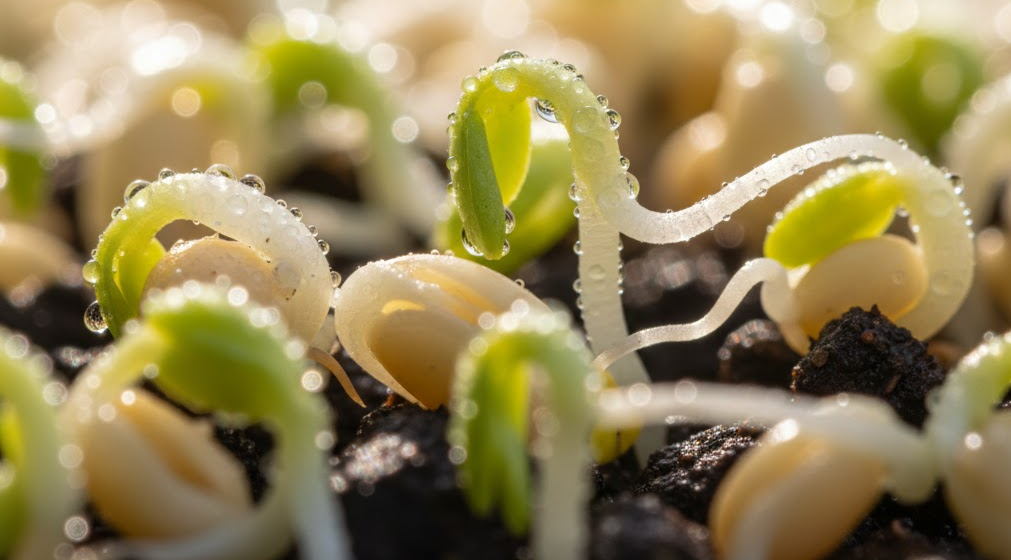
Energy regulation is one of the clearest ways to understand why sprouted seeds act as a living system rather than a static food source. In a dormant seed, energy is stored in dense, inactive forms designed for survival. During sprouting, this energy is reorganized to support growth. Complex carbohydrates begin converting into simpler sugars, proteins are broken down into amino acids, and fats become more metabolically accessible. This transformation creates a nutrient profile that releases energy gradually instead of overwhelming the body with rapid glucose spikes. As a result, sprouted seeds support metabolic balance rather than short-term stimulation.
This controlled energy release is critical for maintaining stable blood sugar levels, which directly affect focus, mood, and hormonal signaling. Foods that trigger sharp glucose fluctuations force the body into constant correction mode, increasing insulin demand and metabolic stress. Sprouted seeds, by contrast, behave predictably. They provide fuel in a rhythm that mirrors natural energy requirements. This predictability is a defining feature of living systems, which are designed to adapt energy output to environmental conditions rather than discharge it all at once.
From a deeper metabolic perspective, sprouted seeds act as a living system by supporting mitochondrial efficiency. Sprouting increases the availability of activated B vitamins, magnesium, iron, and amino acids, all of which are essential for ATP production inside the mitochondria. When these nutrients are delivered in bioavailable forms, cells can generate energy with less waste and lower oxidative stress. Over time, this improves metabolic flexibility, allowing the body to switch efficiently between carbohydrate and fat metabolism depending on demand.
Metabolic adaptation also plays a role in stress resilience and long-term health. When energy systems are stable, the body is less likely to trigger emergency responses such as cortisol spikes or cravings for fast carbohydrates. Sprouted seeds help maintain this stability by reducing digestive load while delivering usable fuel. This combination supports sustained physical endurance, mental clarity, and recovery without exhausting metabolic reserves.
Energy and metabolic benefits of sprouted seeds include:
- Gradual energy release that supports blood sugar stability
- Enhanced mitochondrial efficiency through bioavailable nutrients
- Improved metabolic flexibility under varying physical and cognitive demands
In this way, sprouted seeds demonstrate how living systems manage energy intelligently, adapting output to real needs rather than forcing constant correction.
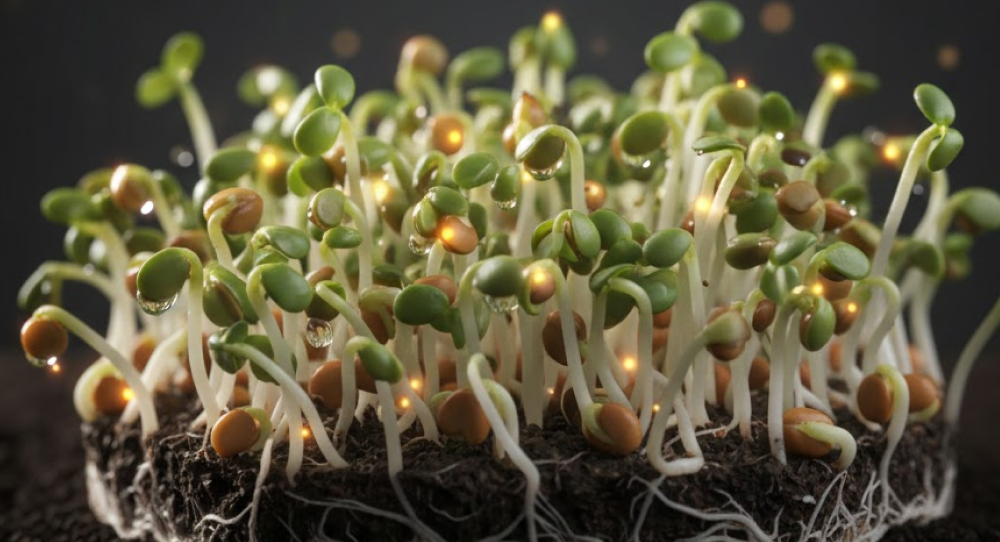
Final Thoughts: “Why Sprouted Seeds Act as a Living System”
Viewing sprouted seeds as a living system changes the way food is understood and used. Instead of acting as a static source of calories and isolated nutrients, sprouted seeds retain biological organization that continues to function even after harvest. This organization allows them to interact with digestion, metabolism, and cellular signaling in a coordinated way. Enzymatic activity, adaptive nutrient release, and bioactive compounds all work together, creating effects that extend far beyond basic nutrition.
What makes this perspective especially relevant in modern nutrition is the focus on regulation rather than stimulation. Many foods and supplements push the body toward short-term results, often at the cost of long-term balance. Sprouted seeds act as a living system by supporting stability in blood sugar, energy production, hormonal signaling, and gut function. Because they are easier to digest and more bioavailable, they reduce the need for constant metabolic correction. This allows the body to conserve energy for repair, adaptation, and cognitive performance.
Another important aspect is adaptability. Living systems respond to context, and sprouted seeds reflect this principle by delivering nutrients gradually and in balanced forms. This supports metabolic flexibility, helping the body shift smoothly between energy sources without stress. Over time, this flexibility becomes a foundation for resilience, reducing the impact of physical strain, mental load, and environmental stressors.