
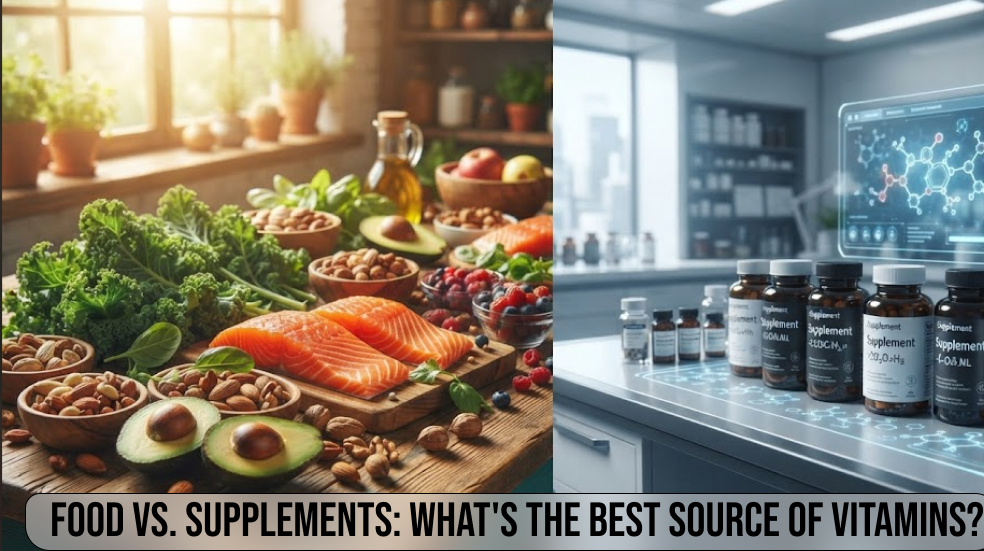
Food vs. Supplements: What’s the Best Source of Vitamins? The modern quest for optimal health often leads to a persistent dilemma: should individuals rely on whole foods or high-tech supplements to meet their micronutrient requirements? While the supplement industry promotes quick-fix solutions, the biological reality remains deeply rooted in the evolutionary history of human nutrition. Understanding the foundational differences between these sources is the first step toward effective health management.

Most people believe that a multivitamin can serve as an adequate nutritional safety net for a poor diet. However, scientific evidence consistently demonstrates that isolated nutrients rarely produce the same health outcomes as those consumed through diverse, nutrient-dense whole foods. Relying on capsules rather than caloric intake often results in a false sense of security that ignores the true drivers of systemic health.
- Whole foods provide a complex matrix of fiber, enzymes, and phytonutrients that work in unison to improve nutrient uptake.
- The bioavailability of vitamins in food is generally higher due to the presence of natural co-factors that the body recognizes and utilizes efficiently.
- Nutritional balance is best achieved through a diverse diet, which naturally prevents the toxicity risks associated with excessive, unmonitored supplement dosage.

Understanding Biological Synergy
The concept of biological synergy explains why a whole food, such as an orange, is fundamentally different from a synthetic Vitamin C tablet. In a whole food, vitamins are packaged with thousands of other compounds—including antioxidants, flavonoids, and minerals—that protect the vitamin from degradation and enhance its physiological impact. This intricate, naturally occurring system is virtually impossible for pharmaceutical laboratories to replicate accurately.
When nutrients are isolated in a laboratory, they lose the structural context that the human digestive system has evolved to process over millennia. This isolation often leads to lower absorption rates and shifts the burden of metabolic processing entirely onto the liver and kidneys. By prioritizing whole food sources, individuals ensure that their body receives the complete package of nutrients required for optimal cellular function. Understanding this synergy is critical for anyone looking to optimize their internal chemistry without relying on heavy intervention.
- Phytonutrients found in plants serve as essential signaling molecules that regulate gene expression and reduce chronic inflammation.
- Dietary fiber plays a critical role in slowing glucose absorption and supporting the gut microbiome, which is vital for overall nutrient synthesis.
- The synergistic effect of multiple vitamins acting together is significantly more potent than the individual impact of any single isolated nutrient.

The Strategic Role of Dietary Supplements
While whole foods are the foundation, dietary supplements are essential tools for addressing specific, evidence-based deficiencies that cannot be easily resolved through diet alone. Modern life often involves stressors, sub-optimal soil quality, and genetic variations that can increase the body’s need for certain minerals and vitamins far beyond standard daily requirements. Used correctly, these products act as precision instruments.
Rather than viewing pills as a replacement for real food, they should be utilized to fill identified gaps based on comprehensive laboratory data. This approach shifts the perspective from generic daily consumption to a targeted strategy that treats supplementation as a specialized intervention. When used under professional guidance, bioavailable supplements can significantly improve performance and recovery during challenging life stages. By applying this refined perspective, one can ensure that interventions are both necessary and highly effective for their specific biological state.
- Standardized dosages ensure that users receive consistent, predictable amounts of a specific nutrient to treat a confirmed clinical deficiency.
- Third-party testing is a vital filter that separates high-quality, safe supplements from mass-marketed products contaminated with fillers or heavy metals.
- Targeted interventions can overcome issues like malabsorption, ensuring that the body receives the necessary raw materials for metabolic health.

Addressing the Synthetic Vitamin Trap
A significant challenge in the current market is the prevalence of low-cost, synthetic forms of vitamins that are poorly utilized by the human body. Many generic supplements use inexpensive chemical structures—such as cyanocobalamin for B12 or magnesium oxide for magnesium—which require the body to perform extra, often inefficient, metabolic labor to convert them into active forms.
Choosing the right supplement form is as important as choosing the right supplement itself. High-quality products utilize methylated or chelated forms that bypass these metabolic bottlenecks, allowing for immediate and effective absorption. Consumers who remain unaware of these distinctions often spend money on products that offer minimal real-world health improvements while falsely believing they are optimizing their internal chemistry. By educating oneself on these chemical nuances, one can avoid the trap of ineffective supplementation and ensure better physiological returns on their health investments.
- Methylated folate provides the body with an active form of Vitamin B9 that is significantly more effective than synthetic folic acid.
- Chelated minerals, such as magnesium glycinate, offer superior absorption rates and are less likely to cause the digestive distress common with basic mineral oxides.
- Distinguishing between active and inactive chemical forms is a core requirement for anyone serious about precision supplementation and long-term health optimization.

The Myth of Energy Boosters
One of the most persistent, and dangerous, misunderstandings in the wellness world is that vitamins function like stimulants. Many consumers mistakenly expect a B-complex supplement to provide an immediate surge of energy similar to caffeine, leading to disappointment when they fail to feel a “kick”. Vitamins are not stimulants; they are the biochemical machinery that enables the body to produce energy.
Real, sustainable energy is a byproduct of efficient mitochondrial function, which relies on a constant, steady supply of specific micronutrients over time. When an individual is exhausted, the cause is often systemic—linked to sleep quality, stress, or insulin resistance—rather than a simple vitamin shortage that a single pill could fix. True optimization involves addressing these foundational issues before relying on supplemental support. By shifting focus toward underlying metabolic health, one can achieve a more reliable and lasting energy state.
- Cellular energy production requires consistent levels of B-vitamins, magnesium, and CoQ10 to maintain healthy mitochondrial membrane potential.
- Over-reliance on stimulants masks underlying fatigue, potentially leading to chronic adrenal stress and systemic exhaustion in the long term.
- Sustainable vitality is built through a consistent intake of nutrient-dense foods that stabilize blood sugar and prevent the energy crashes associated with processed diets.

The “Natural” Safety Fallacy
Marketing has created a dangerous assumption that any product labeled “natural” is inherently safe and devoid of negative side effects. Many herbal extracts and concentrated compounds have potent biological effects that can interact unpredictably with pharmaceutical medications or alter specific metabolic pathways. The label “natural” is not a substitute for rigorous toxicological research and evidence-based safety standards.
Sophisticated users must apply the same level of skepticism to “natural” products as they do to conventional medicine. Even beneficial substances can become toxic when consumed in high, unregulated dosages, placing unnecessary pressure on the liver and kidneys to detoxify the excess. A cautious, research-driven approach to concentrated extracts is the only way to avoid the hazards of the “more is better” mindset that currently plagues the wellness industry. By prioritizing scientific validity over marketing labels, one protects their systemic integrity.
- Potent botanicals like foxglove or St. John’s Wort demonstrate that “natural” origin does not equate to absolute safety or a lack of pharmacological side effects.
- Systemic toxicity can occur when fat-soluble vitamins (A, D, E, K) accumulate in tissues due to excessive, non-monitored dosage practices.
- Critical analysis of clinical literature is necessary to understand the true safety profile of any bioactive substance before adding it to a daily health routine.

Final Thoughts: Food vs. Supplements: What’s the Best Source of Vitamins?
Achieving and maintaining optimal health is rarely the result of a single, simple intervention. Instead, it is the cumulative outcome of disciplined, evidence-based habits that prioritize the body’s innate biological requirements. The debate between food and supplements is not a binary choice, but rather a spectrum of intervention strategies that should be applied with precision, logic, and a thorough understanding of human physiology.
When you prioritize the foundational importance of a diverse, nutrient-dense diet, you provide your cells with the most stable and bioavailable platform for performance. Supplements, when viewed correctly, are not replacements for a poor lifestyle but are refined tools designed to address specific, clinically identified gaps. This shift in perspective—from “pill-first” to “foundation-first”—is the hallmark of sophisticated health optimization and the cornerstone of successful, long-term biohacking.
True nutritional wisdom respects the profound complexity of human biology. By moving away from the “more is better” marketing noise and toward a strategy rooted in data-driven decision-making, you empower yourself to make better, more sustainable health choices. Every supplement or dietary change should be evaluated through the lens of its necessity and its documented impact on your unique metabolic state. As you refine your approach, remember that consistency and long-term systemic resilience are far more valuable than short-term, artificially induced sensations of wellness. By focusing on high-quality fuel and intentional, targeted supplementation, you build a robust biological framework that supports not just the absence of disease, but the presence of vibrant, sustained vitality and peak human potential for years to come.