
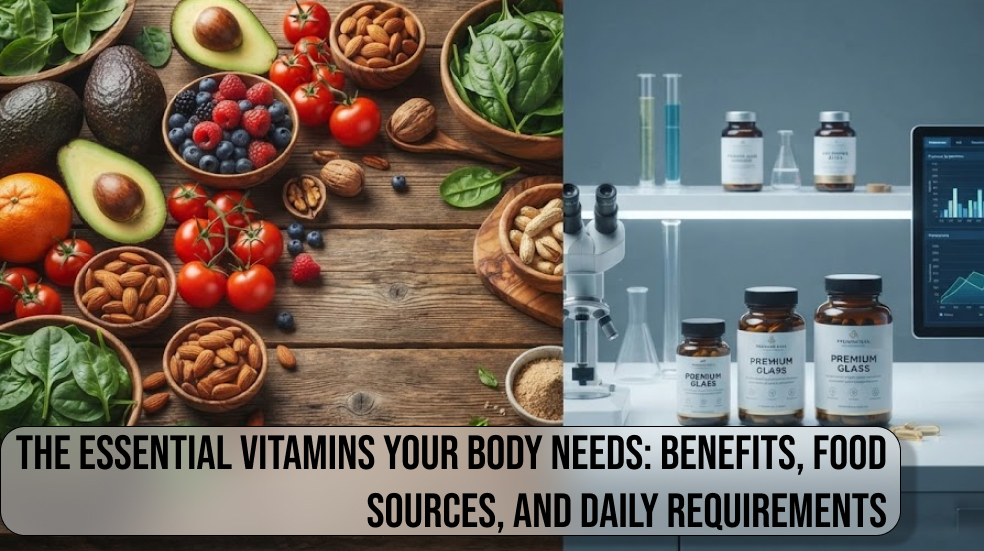
The Essential Vitamins Your Body Needs: Benefits, Food Sources, and Daily Requirements.Optimal health relies heavily on a precise intake of essential vitamins that act as the internal machinery for countless physiological processes. These organic compounds are required in small amounts but perform critical roles, from converting food into cellular energy to maintaining the structural integrity of tissues. Without these micronutrients, metabolic pathways stall, leading to suboptimal performance, fatigue, and systemic vulnerabilities. Understanding the interplay between specific vitamins and bodily functions is the first step toward effective health optimization and long-term vitality.

The human body cannot synthesize most of these nutrients in adequate quantities, making dietary sources the primary avenue for maintenance. Achieving balance requires a holistic perspective, acknowledging that vitamins rarely function in isolation; they exist within a complex food matrix where co-factors enhance their bioavailability and effectiveness. Prioritizing nutrient-dense options ensures that cells receive the exact chemical triggers necessary for homeostasis.
- Essential vitamins regulate energy production at the mitochondrial level.
- The human body depends on dietary sources to maintain metabolic balance.
- Optimizing intake prevents performance plateaus and supports overall systemic health.

The Role of Vitamin A in Cellular Integrity
Vitamin A is a fat-soluble nutrient that is fundamentally involved in maintaining the health of epithelial tissues and supporting high-level visual performance. It plays a significant role in gene expression and the development of the immune system, acting as a gatekeeper for cellular regeneration. By regulating the differentiation of stem cells, Vitamin A ensures that tissues—particularly the skin and the lining of the digestive tract—maintain their protective barrier function, which is critical for preventing pathogen infiltration.
Incorporating sufficient Vitamin A into the diet supports long-term health by optimizing immune response and protecting the delicate structures of the eyes. Because it is fat-soluble, it is best absorbed when consumed alongside healthy fats, which act as a carrier for efficient transport across the intestinal lining. Focusing on high-quality intake helps maintain structural resilience and supports robust immunological defense mechanisms.
- Vitamin A supports epithelial tissue health and vision.
- Fat-soluble intake is optimized by consuming sources with healthy fats.
- Gene expression and immune function are heavily dependent on adequate levels.

Unlocking Energy with the B-Vitamin Complex
The B-vitamin complex acts as the essential fuel system for human performance, directly facilitating the conversion of carbohydrates, fats, and proteins into usable ATP. These water-soluble compounds serve as coenzymes in various metabolic cycles, including the citric acid cycle, which drives energy production within cells. A deficiency in even one member of this family can impede the entire chain of energy synthesis, leading to brain fog, physical fatigue, and decreased endurance.
Managing B-complex vitamins requires consistent daily intake because the body does not store these nutrients in significant quantities. They are found across a wide variety of whole foods, meaning a diverse diet is the most reliable way to maintain adequate levels. By ensuring a steady supply, you support cognitive function, neurological health, and the sustained output of physical energy needed for peak performance.
- B-complex vitamins are vital coenzymes for ATP production.
- Water-soluble nature necessitates consistent daily intake through food.
- Deficiencies directly impact cognitive performance and sustained physical endurance.

The Critical Influence of Vitamin C on Immunity
Vitamin C is a potent antioxidant that supports immune defense and collagen synthesis, serving as a pillar of connective tissue stability. Its primary function involves neutralizing free radicals generated during normal metabolic activity and physical exertion. By protecting cells from oxidative stress, it preserves the integrity of blood vessels, skin, and cartilage. Furthermore, it enhances the absorption of non-heme iron from plant-based sources, significantly increasing the utility of the diet.
Maintaining optimal Vitamin C levels is essential for recovery after stress or physical strain, as high rates of oxidation can rapidly deplete circulating stores. Because the body cannot synthesize this nutrient, regular intake of fresh, whole foods is the only path to consistency. Prioritizing these sources ensures that the immune system remains alert and that structural repairs occur efficiently, which is foundational for maintaining long-term physical resilience.
- Vitamin C levels are critical for oxidative stress management.
- Antioxidant properties protect tissues and blood vessel integrity.
- Improved iron absorption is a key benefit of adequate intake.

Vitamin E and the Protection of Cellular Membranes
Vitamin E acts as a crucial fat-soluble antioxidant that shields cellular membranes from lipid peroxidation, a process where free radicals attack the fatty acid components of cell walls. By intercepting these reactive oxygen species before they can damage the structural lipids of cell membranes, Vitamin E ensures that the intracellular environment remains stable, functional, and protected from oxidative stress. This protective mechanism is especially vital for the health of red blood cells, which transport oxygen throughout the body, as well as for the integrity of nerves and muscle tissues. These specific tissues are frequently exposed to high levels of oxidative damage during intense physical training, chronic inflammation, or daily metabolic activities, making the presence of Vitamin E an essential defensive strategy for long-term physiological health.
Beyond its role in basic cellular defense, Vitamin E contributes to the modulation of signaling pathways that regulate immune function and inflammation. By maintaining the fluidity and integrity of cellular membranes, it supports the ability of cells to communicate and interact effectively, which is foundational for a robust immune response. The most effective Vitamin E sources are whole foods like almonds, sunflower seeds, spinach, and high-quality vegetable oils, which provide the nutrient alongside the dietary fats required for its proper absorption. Because it consistently protects the structural integrity of cells, it plays a long-term role in maintaining healthy aging, skin elasticity, and cardiovascular wellness. Including these nutrient-dense, whole-food options in your daily diet helps preserve the integrity of systemic pathways by preventing the progressive degradation of essential cellular components.
- Vitamin E sources are primarily found in seeds, nuts, leafy greens, and healthy plant-based oils.
- Antioxidant protection preserves cell wall integrity by neutralizing free radicals before they cause lipid peroxidation.
- Prevents cumulative oxidative damage, which is vital for maintaining long-term tissue health and nerve function.

Final Thoughts on “The Essential Vitamins Your Body Needs: Benefits, Food Sources, and Daily Requirements”
Achieving true nutritional mastery is not simply about the pursuit of isolated supplements, but rather the strategic, long-term integration of whole foods into a sustainable and data-informed lifestyle. The primary focus must remain on consistently providing the body with the full, diverse range of essential vitamins in their most bioavailable, naturally occurring forms. By developing a deeper understanding of the specific needs of the body and the complex physiological function of each individual nutrient, it becomes possible to systematically optimize every metabolic process from the inside out. This sophisticated, science-backed approach moves far beyond the temporary and often superficial fixes promised by modern fad dieting, establishing a legitimate, unbreakable foundation for enduring health.
True, lasting wellness is built upon the unrelenting consistency of these intelligent, informed choices over time, rather than relying on dramatic or short-term dietary shifts that rarely support long-term homeostasis. When the internal biological machinery is properly fueled with the correct, balanced spectrum of essential nutrients, peak performance, rapid recovery, and sharp cognitive clarity become the natural, sustainable baseline for daily living. By prioritizing high-quality, nutrient-dense sources and respecting the inherent synergy found in nature’s own complex packaging, the path to long-term vitality becomes a predictable, manageable, and highly rewarding process of intentional living. Ultimately, the goal is to fully empower the body to maintain its own innate resilience, ensuring that sustained energy and vibrant health are the inevitable, lasting results of a life lived in perfect alignment with core biological requirements. This is the essence of biological optimization: a commitment to quality, a dedication to data, and a reverence for the body’s incredible ability to thrive when provided with the precise tools it requires to function at its absolute zenith.
- Essential vitamins are most effective when sourced from whole-food matrices, ensuring optimal absorption and utility.
- Strategic nutrition establishes a reliable baseline for recovery, focus, and sustained cognitive performance.
- Consistency in dietary choices is the primary, non-negotiable driver of long-term health optimization and systemic vitality.