
Vitamin D3 and K2: Why They Work Better Together. Modern biohacking emphasizes understanding how nutrients interact inside human physiology rather than viewing individual compounds in isolation. While single-vitamin supplementation has long been standard practice, targeted clinical research reveals that certain fat-soluble vitamins operate through deeply interwoven metabolic pathways. Among these functional pairings, the vitamin D3 and K2 synergy stands out as one of the most critical mechanisms for regulating systemic mineral balance. Without proper co-factor orchestration, increasing the intake of a single high-potency micronutrient can inadvertently create biological imbalances elsewhere in the body, leading to unexpected physiological trade-offs.

Vitamin D3 functions primarily as a master hormone precursor that governs how efficiently the gastrointestinal tract pulls calcium from ingested foods into the bloodstream. However, elevating circulating calcium is only half of the biological equation required for robust health and cellular longevity. Without an explicit control mechanism to direct where that newly absorbed calcium travels, the free mineral risks accumulating in soft tissues, sensitive arterial walls, and organ parenchyma instead of strengthening the skeletal system. This is precisely where fat-soluble vitamin pairing becomes indispensable, transforming a potentially hazardous mineral surge into a targeted, highly beneficial biological asset.
- The essential necessity of moving beyond single-nutrient supplementation to harness compound metabolic synergies.
- How intestinal calcium uptake requires downstream enzymatic regulation to protect delicate vascular and soft tissues.
- The complementary physiological relationship that turns circulating minerals into lasting structural bone density.
How Vitamin D3 Enhances Calcium Absorption
Vitamin D3 cholecalciferol is naturally synthesised in the skin through exposure to ultraviolet B radiation or acquired through specific dietary sources like fatty fish, organ meats, and targeted supplementation. Once ingested or produced cutaneously, it undergoes a necessary two-step enzymatic conversion process, starting in the liver to form circulating calcediol, before receiving a final hydroxylation step inside the kidney tissues to become active calcitriol. This potent hormonal compound binds directly to nuclear vitamin D receptors located throughout the intestinal lining, triggering the rapid expression of specialized transport proteins designed to pull calcium ions across the mucosal barrier into systemic circulation.
Through this sophisticated endocrine pathway, intestinal calcium absorption increases dramatically, ensuring that the human body maintains robust circulating mineral reserves required for nerve transmission, cellular signaling, and muscular contractions. Without sufficient active vitamin D3 present, the gastrointestinal tract absorbs only a minor fraction of dietary calcium, forcing the body to mineralize skeletal reserves to preserve vital physiological functions. Maintaining a healthy circulating vitamin D status ensures that daily dietary intake translates directly into systemic mineral availability, preserving structural integrity while keeping key metabolic processes operating smoothly without metabolic strain.
- The two-stage enzymatic activation process transforming raw vitamin D3 into biologically active calcitriol hormone.
- Upregulation of mucosal transport proteins that significantly boost total mineral uptake from daily meals.
- Protection against skeletal mineral leaching by maintaining elevated, reliable baseline serum calcium availability.

The Critical Role of Vitamin K2 in Calcium Transport
Once calcium enters the bloodstream via vitamin D3 activity, vitamin K2 menaquinone takes over the vital responsibility of systemic traffic control and mineral management. Vitamin K2 acts as an indispensable enzymatic cofactor for gamma-glutamyl carboxylase, an enzyme responsible for modifying specific proteins through a chemical reaction known as carboxylation. This post-translational transformation converts dormant target proteins into active binding agents capable of latching onto free circulating calcium ions with extreme structural precision. Without this enzymatic activation, calcium floats passively in the blood without a designated destination or regulatory restraint.
The two primary functional proteins dependent on this carboxylating reaction are osteocalcin and matrix Gla protein. Activated osteocalcin binds circulating calcium directly and embeds it securely into the hydroxyapatite matrix of bones and teeth, reinforcing structural frame density. Simultaneously, matrix Gla protein activation occurs within the vascular walls, where it actively binds free calcium to prevent the mineral from crystallizing inside delicate soft tissues. Through this dual-action physiological mechanism, vitamin K2 guarantees that elevated mineral absorption leads strictly to skeletal structural reinforcement rather than dangerous cardiovascular stiffening.
- Enzymatic carboxylation mediated by vitamin K2 to activate essential mineral-binding signaling proteins.
- Targeted deposition of free circulating calcium directly into the structural skeletal hydroxyapatite matrix.
- Continuous activation of matrix Gla protein to neutralize free calcium within blood vessel lining.

Preventing the Calcium Paradox and Arterial Calcification
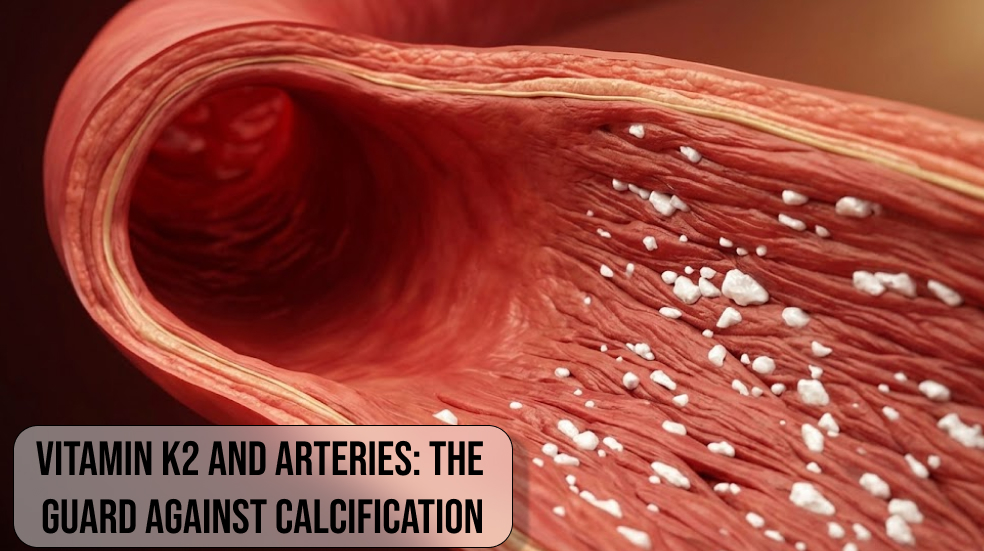
The clinical phenomenon known as the calcium paradox occurs when an individual simultaneously experiences skeletal bone loss alongside soft tissue mineral accumulation. Taking high doses of isolated vitamin D3 significantly increases calcium absorption into the bloodstream, elevating circulating mineral levels rapidly. However, if the body lacks sufficient vitamin K2 to carboxylate protective regulatory proteins, that excess calcium cannot be efficiently directed toward bone tissue. Over time, the unbound mineral precipitates out of solution and adheres to smooth muscle cells inside blood vessels, contributing directly to arterial calcification and progressive vascular stiffness.
Uncontrolled calcium deposition within cardiovascular tissue compromises arterial elasticity, increases peripheral vascular resistance, and places an unnecessary structural workload on the heart. By contrast, combining vitamin D3 with adequate K2 guarantees that the influx of absorbed calcium is actively managed, directed, and rapidly cleared from circulation. Maintaining vascular elasticity support through proper nutrient pairing protects the delicate endothelial lining from hard plaque formation while simultaneously ensuring that structural bones receive the exact raw materials required to remain dense, flexible, and resilient throughout the aging process.
- Understanding how high-dose vitamin D3 without K2 can accidentally promote soft tissue mineral deposition.
- Pathological consequences of unbound circulating calcium precipitating onto arterial smooth muscle structures.
- Preservation of long-term cardiovascular flexibility through active, protein-guided mineral clearance pathways.

Optimizing Bone Mineral Density and Structural Integrity
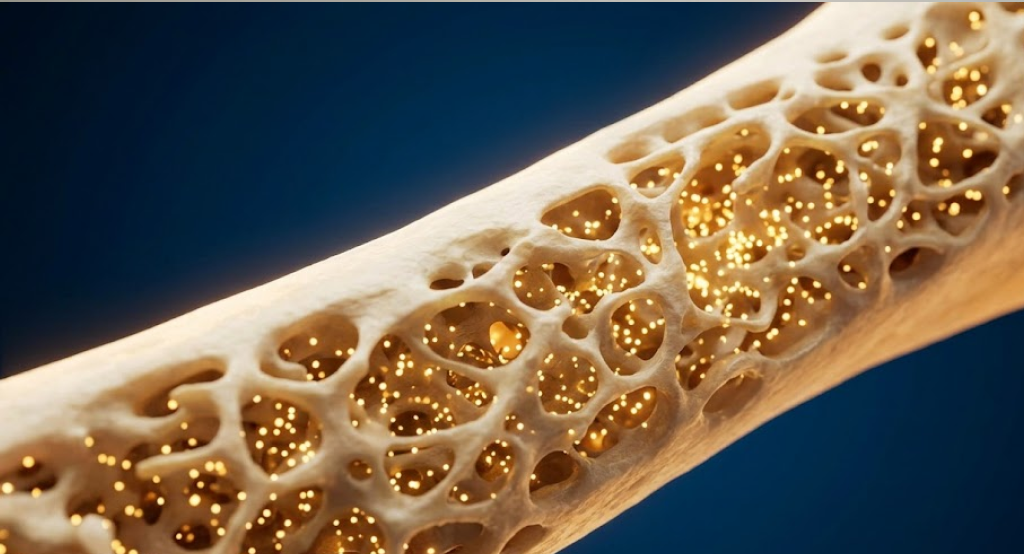
Skeletal bone tissue is not a static structural scaffold, but rather a dynamic organ undergoing continuous remodeling through the balanced activities of specialized osteoblasts and osteoclasts. Osteoblasts are cells responsible for constructing new bone matrix, and they produce the non-collagenous protein osteocalcin as part of this building process. However, newly synthesized osteocalcin remains biologically dormant until vitamin K2 completes its carboxylation. When vitamin D3 stimulates osteoblast activity and increases systemic calcium supply, vitamin K2 completes the biochemical assembly line, directly driving bone mineral density optimization and long-term durability.
Scientific literature consistently demonstrates that combining these two fat-soluble nutrients yields vastly superior skeletal outcomes compared to administering either vitamin in isolation. High concentrations of carboxylated osteocalcin correlate strongly with reduced fracture risk, superior trabecular microarchitecture, and enhanced structural resistance to mechanical stress. For individuals focused on biohacking, physical performance, and longevity, this targeted biological synergy offers an exceptionally effective defense against age-related bone density loss, ensuring that the physical frame remains structurally capable of supporting heavy athletic demands over time.
- Stimulation of osteoblast activity and osteocalcin production driven by functional vitamin D3 signaling.
- Complete enzymatic activation of skeletal proteins to weave calcium into the bone collagen matrix.
- Significant reduction in long-term fracture risk and comprehensive enhancement of structural mechanical strength.

Form Factors and Bioavailability: Choosing the Right Variants
Maximizing the practical efficacy of supplementation requires selecting specific chemical forms designed for optimal biological uptake and extended activity. When sourcing vitamin D, vitamin D3 cholecalciferol is vastly superior to plant-derived vitamin D2 ergocalciferol, as D3 elevates circulating metabolite levels far more effectively and maintains stable active concentrations over extended periods. For vitamin K2, choosing between short-chain forms like MK-4 and long-chain menaquinone variants like MK-7 dramatically influences systemic half-life, metabolic stability, and tissue distribution throughout the human body.
Among available options, vitamin K2 MK-7 bioavailability stands out due to its extended circulation time in human plasma, lasting up to several days compared to the rapid clearance of MK-4 within hours. This prolonged systemic presence guarantees consistent carboxylation of target proteins around the clock with lower, more manageable daily doses. Furthermore, because both compounds are strictly lipophilic, formulating them in an oil-based delivery system using healthy carrier lipids like medium-chain triglycerides or extra virgin olive oil ensures optimal micellar formation during digestion, maximizing intestinal absorption efficiency.
- Superior potency and circulating stability of cholecalciferol D3 compared to ergocalciferol D2 variants.
- Extended plasma half-life of menaquinone-7 providing continuous round-the-clock protein activation benefits.
- Enhancement of intestinal uptake through lipid-based carrier formulations that stimulate proper bile secretion.

Final Thoughts: “Vitamin D3 and K2: Why They Work Better Together”
At its core, smart biohacking isn’t about isolated megadosing—it’s about managing biochemical cofactors. Vitamin D3 acts as the biological accelerator for intestinal calcium uptake, while Vitamin K2 serves as the traffic controller, activating carboxylated osteocalcin to lock calcium into the bone matrix while activating matrix Gla protein to prevent arterial calcification.
To convert this physiological synergy into a high-performance daily protocol, keep these core principles in mind:
- Respect the cofactor cascade: D3 and K2 rely on magnesium cofactor availability to undergo proper enzymatic activation in the liver and kidneys. Always ensure baseline magnesium levels are optimized alongside your fat-soluble protocol.
- Prioritize bioavailability and half-life: Always select cholecalciferol D3 over D2, and pair it with menaquinone-7 (MK-7) for its superior plasma half-life. Because both compounds are lipophilic, co-ingesting them with healthy dietary fats maximizes micellar transit and intestinal uptake.
- Test, don’t guess: Avoid blind high-dose supplementation. Routinely measure baseline serum 25-hydroxyvitamin D and calcium status to fine-tune your specific D3 to K2 dosing ratio safely over time.
By aligning these inputs with your body’s natural metabolic pathways, you actively protect vascular elasticity while building lasting skeletal density.