
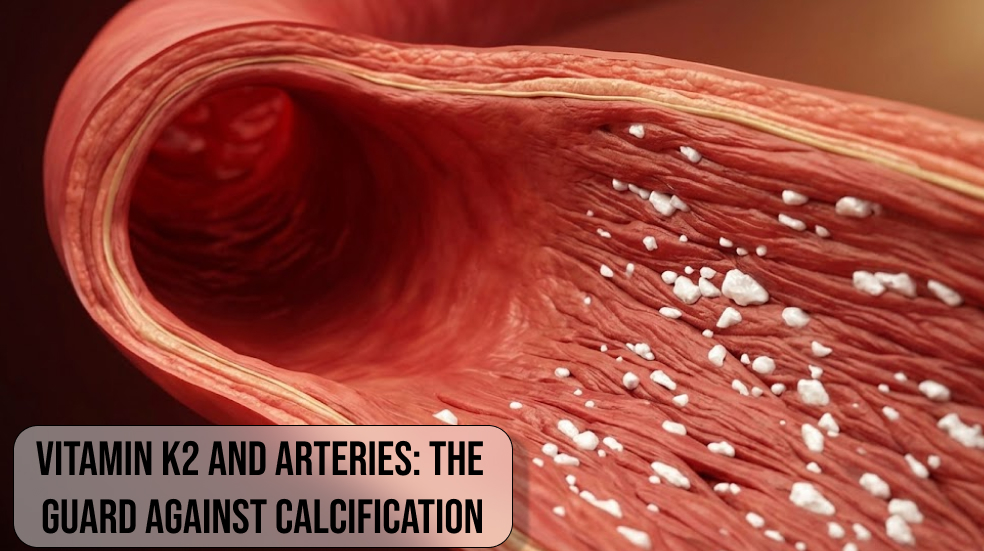
Vitamin K2 and Arteries: The Guard Against Calcification. Calcium plays an essential structural role across the human skeleton, yet its movement throughout the circulatory system requires tight biological regulation. When calcium accumulates inside vascular smooth muscle tissue rather than bone matrix, arterial calcification begins to develop. This biological misdirection transforms naturally flexible blood vessels into rigid structures, restricting smooth blood flow and forcing the heart to pump against increased resistance.
Over time, mineral deposits combine with circulating lipids and cellular debris inside the arterial wall, forming hard plaques that progressively narrow the vascular passage. Understanding this dynamic reveals why high calcium intake alone does not automatically translate into stronger bones if the body lacks active signals driven by essential Vitamin K pathways to direct mineral traffic properly across various tissue layers.
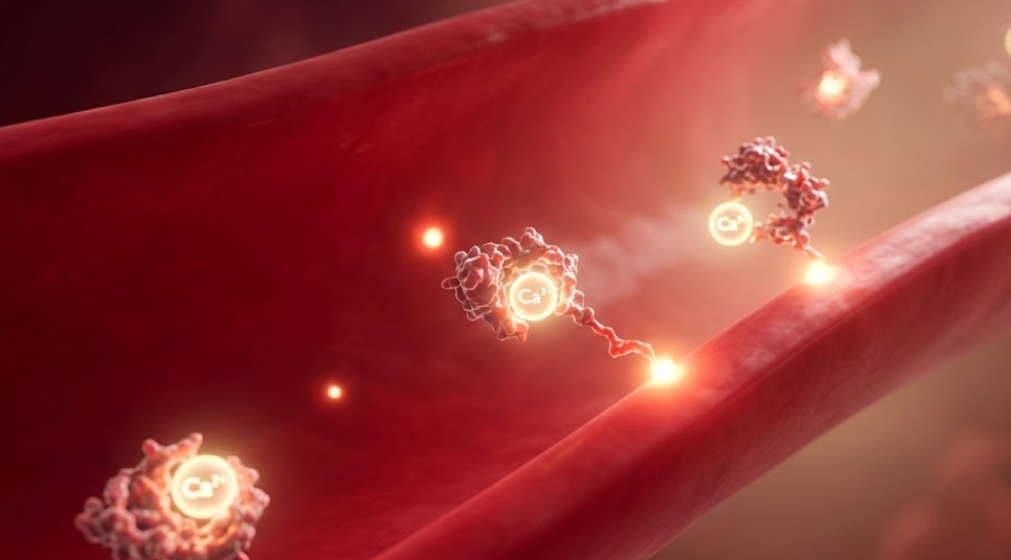
The development of vessel hardening often progresses quietly over several decades without obvious early warning signs. As smooth muscle cells in arterial walls experience oxidative stress or low-grade inflammation, they can change their cellular behavior and begin acting like bone-forming cells. These altered cells actively deposit calcium phosphate crystals directly into the vascular architecture, accelerating structural stiffness and loss of compliance. Without sufficient biological signals to inhibit this mineralization process, the body’s vascular network continuously loses its natural capacity to expand and contract during daily changes in blood pressure. Maintaining elastic pathways requires steady levels of Vitamin K nutrients that monitor mineral placement, prevent calcification, and protect delicate soft tissues from premature structural damage.
- Arterial calcification reduces vascular flexibility and increases workload on the cardiovascular system.
- Vitamin K serves as the primary biological signal directing calcium away from blood vessels and into bone matrix.
- Cardiovascular health depends on proper mineral distribution between soft tissue and skeletal structures.
Matrix Gla Protein Activation and Vessel Protection
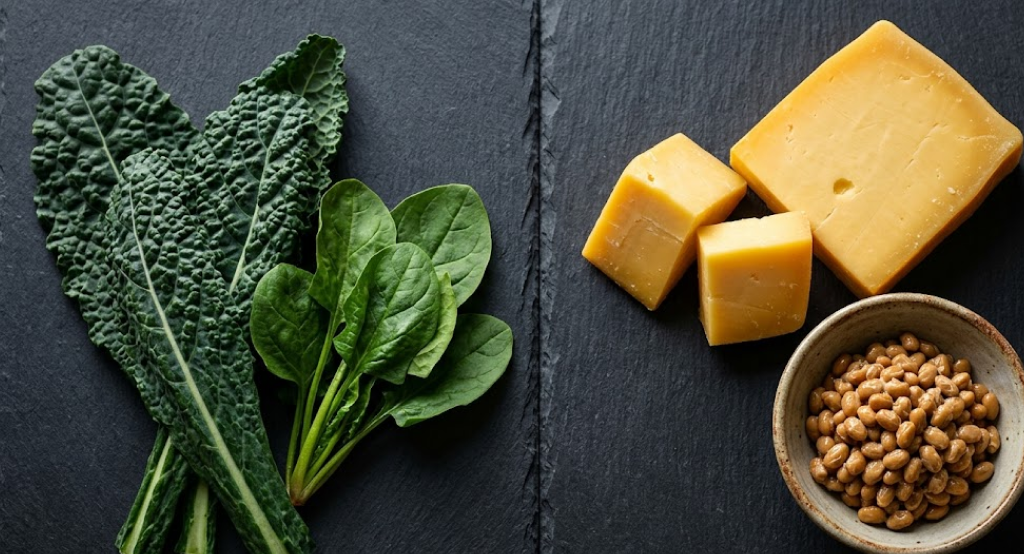
The human body relies on a specialized protective protein known as Matrix Gla Protein to stop mineral buildup inside vascular tissues. Synthesized directly by vascular smooth muscle cells, this protein acts as a primary defense shield against calcification throughout the entire circulatory network. However, Matrix Gla Protein is initially produced in an inactive state and cannot bind or transport calcium until it undergoes a specific chemical modification. Through a reaction called the carboxylation process, carboxyl groups attach to the protein structure, enabling it to actively attract and pull calcium away from soft tissue walls. Essential Vitamin K dependent proteins depend entirely on this activation mechanism, making continuous Vitamin K availability vital for protecting arterial walls against progressive mineral encrustation.
When Matrix Gla Protein becomes fully activated, it actively clears free calcium ions from arterial walls and redirects them safely back into systemic circulation. This continuous clearing action prevents micro-calcifications from coalescing into larger, stubborn plaques that disrupt vascular integrity and blood flow. The primary vitamin K2 benefits stem from its role as an indispensable cofactor for the enzyme gamma-glutamyl carboxylase, which drives this protective reaction forward. When adequate Vitamin K levels circulate through the bloodstream, Matrix Gla Protein activation stays fully operational, establishing a robust biological shield that guards vascular walls against premature hardening, mineral accumulation, and structural degeneration over time.
- Matrix Gla Protein activation prevents calcium from binding to smooth muscle tissues in arteries.
- Vitamin K benefits center on converting inactive vascular proteins into functional mineral guardians.
- Carboxylation process serves as the chemical switch that enables protective proteins to bind free calcium.
Distinct Functions of Vitamin K1 and Vitamin K2
While Vitamin K is frequently discussed as a single compound, it actually consists of distinct molecular forms with dramatically different responsibilities in human physiology. Vitamin K1, or phylloquinone, is primarily found in green leafy vegetables and concentrates mainly within the liver, where it supports normal blood coagulation pathways. In contrast, Vitamin K2, known collectively as menaquinones, travels far beyond hepatic tissue to reach peripheral structures, including bone matrix and arterial walls. The structural differences between these molecules dictate how long they remain active in the bloodstream, making a direct comparison of vitamin K1 vs vitamin K2 essential for understanding systemic distribution and long-term vascular protection.
The most clinically effective form of K2 for sustained cardiovascular support is menaquinone 7, which features a long side chain that allows it to circulate for days after ingestion. This extended presence in the bloodstream ensures that peripheral vascular tissues receive a constant supply of the cofactors required for protein carboxylation. While Vitamin K1 is rapidly cleared by the liver within a few hours, long-chain menaquinones maintain continuous tissue saturation over extended periods. Evaluating overall Vitamin K intake shows that choosing the correct menaquinone form is essential for anyone seeking to prevent arterial stiffness, as K1 contributes minimally to activating protective proteins in vascular walls.
- Vitamin K1 vs vitamin K2 highlights a fundamental functional difference between liver coagulation and vascular protection.
- Menaquinone 7 offers an extended biological half-life that maintains consistent vascular coverage throughout the day.
- Arterial stiffness develops more readily when extrahepatic tissues experience chronic Vitamin K deficiency.

The Synergistic Bond Between Vitamin D3 and Vitamin K
Vitamin D3 and Vitamin K operate as a closely coordinated team to manage calcium balance throughout the human body. Vitamin D3 stimulates the synthesis of calcium-transporting proteins and significantly increases overall calcium absorption from the intestinal tract into the bloodstream. While elevated calcium intake is intended to support bone density, higher circulating calcium levels also raise the risk of accidental deposition within soft tissues if directional control is missing. Without a complementary signal to manage where this newly absorbed mineral settles, high-dose Vitamin D3 intake can inadvertently accelerate mineral accumulation inside delicate blood vessels, creating potential cardiovascular stress over time.
This biological relationship illustrates the profound vitamin D3 and K2 synergy required for comprehensive cardiovascular and skeletal health optimization. Vitamin D3 triggers the body to produce both osteocalcin in bones and Matrix Gla Protein in blood vessels, but both proteins remain completely inactive without sufficient Vitamin K2. Once adequate Vitamin K carboxylates these proteins, osteocalcin binds calcium firmly into the bone matrix while Matrix Gla Protein keeps vascular walls clear. This two-part collaborative mechanism plays a decisive role in arterial plaque prevention, allowing individuals to maximize the immune and bone-building benefits of Vitamin D3 while maintaining completely flexible, clear, and resilient blood vessels.
- Vitamin D3 and K2 synergy ensures that absorbed calcium is safely directed away from arterial walls into bone.
- Calcium absorption increased by Vitamin D3 requires Vitamin K to manage final tissue destination.
- Arterial plaque prevention relies on pairing calcium-absorbing nutrients with carboxylating cofactors.
Reversing Vascular Stiffness and Improving Blood Circulation
Maintaining flexible blood vessels is fundamental to preserving long-term circulatory function and protecting overall organ health as the body ages. As arteries harden due to progressive calcification, pulse wave velocity increases, signaling that the vessel walls have lost their natural elastic dampening capacity. This elevated stiffness forces the heart muscle to exert significantly greater pressure with every contraction, contributing to elevated systolic pressure and microvascular wear in sensitive organs like the kidneys and brain. Restoring vascular elasticity helps re-establish the cushioning effect of major arteries, allowing blood to flow smoothly throughout the entire system with far less physical resistance when supported by optimal Vitamin K status.
Clinical research demonstrates that consistent long-term Vitamin K supplementation with bioavailable menaquinone forms can produce measurable improvements in arterial compliance over time. By maintaining activated calcification inhibitors, the body can stop new mineral deposits from taking root while slowly supporting the clearance of existing micro-calcifications from vessel linings. As a result, healthy arterial walls regain their structural resilience, which directly leads to sustained blood circulation improvement across major and minor blood vessels. This gradual vascular restoration driven by targeted Vitamin K intake helps normalize pulse wave pressure, protecting delicate capillary networks and ensuring efficient oxygen delivery to vital tissues throughout the entire body.
- Vascular elasticity can be preserved and supported through targeted, daily Vitamin K interventions.
- Healthy arterial walls maintain smooth inner surfaces that support optimal hemodynamic blood flow.
- Blood circulation improvement reduces physical strain on the heart during routine physical exertion and rest.

Food Sources and Bioavailability of Menaquinones
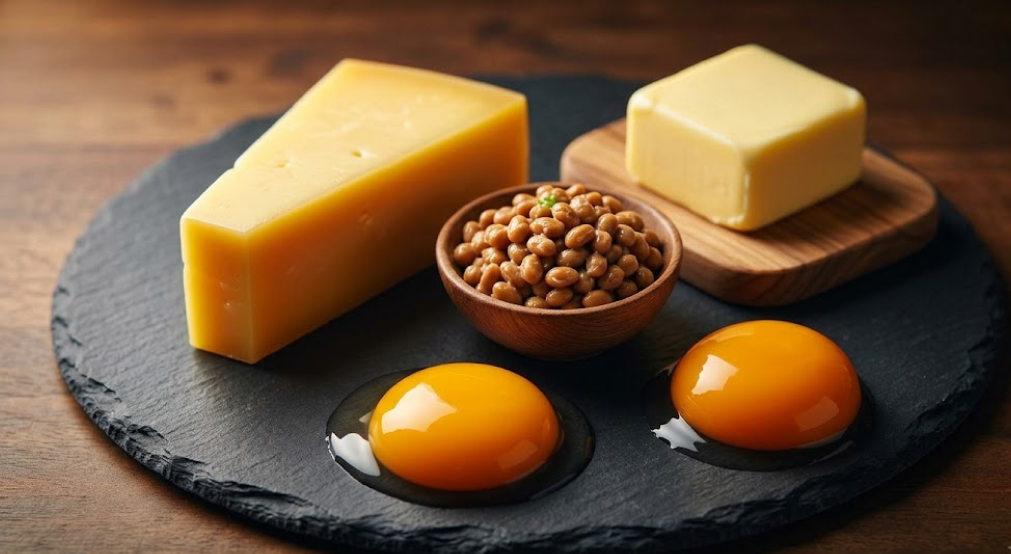
Obtaining sufficient Vitamin K through modern dietary habits can be challenging due to widespread shifts in agricultural practices and food processing methods. The richest natural source of long-chain menaquinones is natto, a traditional Japanese food made from fermented soybeans, which contains exceptionally high concentrations of menaquinone 7. In typical Western diets, K2 is primarily present in fermented foods like aged cheeses, as well as fat-containing animal products derived from grass-fed livestock, including butter, egg yolks, and organ meats. Identifying rich vitamin K2 food sources helps ensure that the body receives a diverse spectrum of bioavailable menaquinone subtypes for daily systemic utilization.
The biological activity of dietary Vitamin K depends heavily on its specific chemical structure and how efficiently the human digestive system absorbs it. While short-chain forms like MK-4 are found in animal tissues, long-chain forms like MK-7 from fermented foods offer superior intestinal absorption and extended circulation times. Realizing the full range of natto benefits or dietary K2 requires consuming these fat-soluble molecules alongside healthy dietary lipids to facilitate proper lymphatic absorption. Prioritizing bioavailable menaquinones in daily nutrition provides a natural foundation for maintaining continuous vascular protein activation and reliable, round-the-clock arterial protection against calcification.
- Vitamin K2 food sources include traditional fermented foods and full-fat dairy from grass-fed animals.
- Natto benefits stem from its unmatched concentration of highly bioavailable menaquinone 7.
- Bioavailable menaquinones require dietary fats for efficient uptake and transport through the lymphatic system.

Final Thoughts on Vitamin K2 and Arteries: The Guard Against Calcification
Protecting long-term cardiovascular performance requires shifting the conversation from simply managing blood pressure or cholesterol to actively guarding against arterial calcification. As scientific understanding evolves, it becomes increasingly clear that calcium accumulation in blood vessels is not an inevitable consequence of aging, but rather a regulatory breakdown that can be actively managed. Consistently maintaining adequate Vitamin K levels provides the biological machinery needed to keep protective proteins fully activated throughout the circulatory system. By directing minerals into the skeletal matrix while preventing them from settling inside vascular smooth muscle cells, targeted Vitamin K2 intake acts as a non-negotiable safeguard for maintaining smooth, clear, and resilient blood vessels over a lifetime.
Integrating this fundamental nutrient into a broader health optimization strategy is both straightforward and remarkably impactful for overall longevity. Whether achieved through menaquinone-rich fermented foods like natto or high-quality dietary supplements paired with healthy fats, optimizing Vitamin K status works synergistically with nutrients like Vitamin D3 to maintain optimal mineral balance. Taking proactive steps today to preserve vascular elasticity ensures that vital organs receive steady, unimpeded blood flow for decades to come. Prioritizing extrahepatic protein activation through smart daily habits offers a simple, science-backed approach to protecting heart health, enhancing physical stamina, and supporting sustainable cardiovascular longevity well into the future.
- Vitamin K serves as the critical biological switch that prevents calcium from accumulating in soft vascular tissues.
- Maintaining vascular elasticity through targeted nutrition protects overall heart performance and systemic blood circulation.
- Combining Vitamin K2 with fat-soluble nutrients creates a comprehensive foundation for lifelong cardiovascular health.