
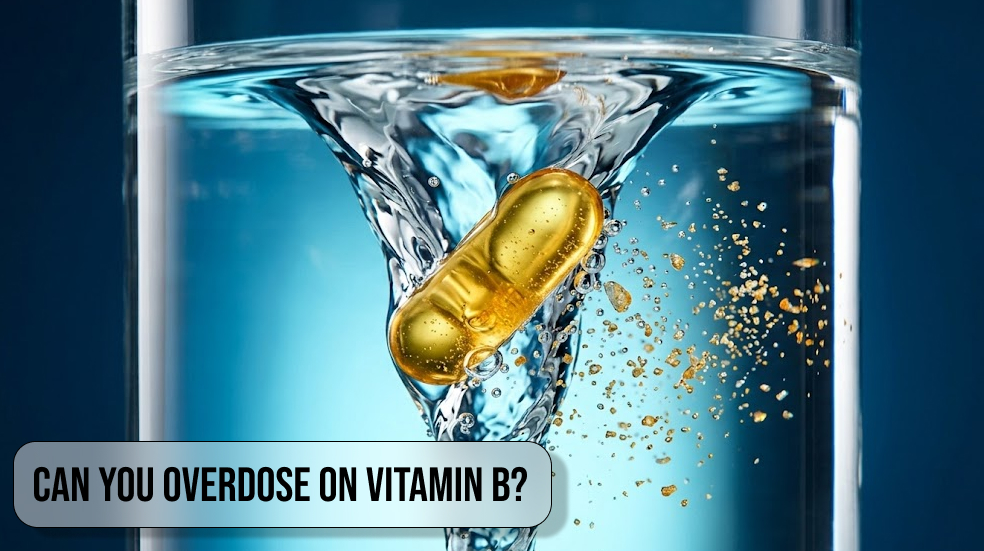
Can You Overdose on Vitamin B? The vitamin B complex represents an essential family of eight water-soluble micronutrients that orchestrate mitochondrial energy production, DNA synthesis, red blood cell formation, and neurotransmitter balance. Unlike fat-soluble compounds that accumulate extensively in adipose tissue, each vitamin B cofactor dissolves readily in water and circulates freely through the bloodstream. Because the body maintains relatively small cellular reserves of most vitamin B molecules, the renal system constantly filters and excretes unbound amounts through the urine. This rapid metabolic clearance has fostered a widespread belief that experiencing a vitamin B overdose is biologically impossible, prompting many people to assume that taking massive doses of any vitamin B supplement carries zero physiological risk.

However, water solubility alone does not provide complete immunity from adverse reactions when taking concentrated vitamin B supplements. While the kidneys operate with impressive efficiency, cellular transport channels and enzymatic pathways can quickly become saturated when exposed to extreme concentrations of synthetic vitamin B isolates. When the rate of vitamin B absorption outpaces the rate of renal elimination or cellular utilization, circulating metabolites can place unexpected stress on hepatic tissues and peripheral nerves. Understanding how the body processes each vitamin B nutrient allows health enthusiasts and biohackers to enjoy the revitalizing benefits of targeted vitamin B supplementation without triggering cellular toxicity or metabolic imbalance.
- Renal clearance mechanisms: The kidneys actively filter and eliminate excess vitamin B compounds once plasma concentrations surpass cellular saturation thresholds.
- Cellular transport limits: Specific carrier proteins manage vitamin B uptake, meaning excessive intake can saturate absorption channels and reduce metabolic efficiency.
- Metabolic conversion capacity: Liver enzymes require adequate cofactors to transform raw vitamin B isolates into biologically active, usable coenzyme forms.

Daily Requirements, Safe Limits, and Vitamin B Mega-Dosing Realities
Nutritional guidelines establish the Recommended Dietary Allowance (RDA) to define the baseline vitamin B intake required to prevent clinical deficiency diseases across general populations. In contrast, modern wellness strategies often look beyond basic survival, utilizing targeted vitamin B protocols to support cognitive performance, elevate physical stamina, and optimize metabolic pathways. Because many individuals seek higher daily vitality, the consumption of high-potency vitamin B capsules, functional beverages, and fortified foods has expanded dramatically. While higher intake can support specific metabolic needs, exceeding established safety limits without proper guidance can transform a beneficial vitamin B regimen into a source of physiological stress.
To protect consumers from adverse effects, health authorities establish the Tolerable Upper Intake Level (UL) for specific members of the vitamin B family. While several vitamin B nutrients exhibit wide safety margins without an official upper limit, others carry strict thresholds based on clinical toxicity research. Complications rarely arise from a nutrient-dense whole-food diet, but rather from combining multiple fortified products with standalone vitamin B formulas. When total daily intake chronically exceeds the upper vitamin B safe limits, the body shifts from utilizing these vital micronutrients as energetic coenzymes to working overtime to neutralize and eliminate excess vitamin B metabolites.
- Established safety ceilings: Official health organizations define clear upper limits for specific vitamin B nutrients to prevent tissue and organ stress.
- Cumulative dietary intake: Fortified energy drinks, protein powders, and multivitamins frequently combine to create accidental vitamin B mega-doses.
- Receptor competition dynamics: Excessively high amounts of a single synthetic vitamin B isolate can competitively inhibit the uptake of other essential cofactors.

Vitamin B3 Toxicity Mechanisms and the Physiological Niacin Flush
Vitamin B3, commonly known as niacin or nicotinic acid, serves as a crucial precursor for NAD+ and NADP+, which drive cellular energy production and mitochondrial repair. When taken in single doses exceeding 50 milligrams, nicotinic acid can trigger an acute vascular reaction known as the vitamin B3 flush. This phenomenon occurs when vitamin B3 binds to specific G-protein-coupled receptors in the skin, releasing prostaglandins that rapidly dilate subcutaneous capillaries. The resulting sensation involves intense warmth, skin redness, tingling, and mild itching across the face, neck, and chest. Although this acute vitamin B3 reaction is generally harmless and subsides within an hour, it remains one of the most noticeable side effects of high-potency vitamin B intake.
The deeper health concerns surrounding vitamin B3 overdose develop when high doses exceeding one to three grams daily are maintained for weeks or months. Sustained mega-dosing of vitamin B3, particularly through sustained-release formulations, can place significant strain on liver function and lead to elevated hepatic transaminases. Furthermore, chronic excessive vitamin B3 intake can impair peripheral insulin sensitivity, raise fasting blood glucose levels, and inhibit the renal clearance of uric acid. Individuals experimenting with high-dose vitamin B3 protocols should always prioritize monitored dosages to avoid unwanted metabolic complications and protect long-term liver health.
- Prostaglandin-driven vasodilation: Acute vitamin B3 intake stimulates rapid capillary widening, producing temporary skin redness, tingling, and warmth.
- Hepatic transaminase elevation: Extended intake of multi-gram vitamin B3 doses can stress liver cells and alter standard functional liver panels.
- Metabolic balance shifts: Excessive long-term vitamin B3 supplementation may disrupt healthy glucose regulation and increase serum uric acid retention.
Vitamin B6 Toxicity and the Risks of Peripheral Neuropathy
Among all eight water-soluble cofactors, vitamin B6 carries the most well-documented risk of serious neurotoxicity when consumed in excessive amounts over extended periods. In supplemental form, vitamin B6 is widely used to support mood stability, cardiovascular function, and hormone regulation. However, unlike most water-soluble compounds, excessive pyridoxine hydrochloride can accumulate in bodily tissues and peripheral nerve fibers over time. When daily vitamin B6 intake exceeds 100 milligrams consistently for months, it can damage dorsal root ganglion neurons, resulting in a condition known as vitamin B6-induced peripheral neuropathy.
The symptoms of chronic vitamin B6 toxicity typically begin as mild tingling, numbness, or a burning sensation in the fingers and toes, often progressing to diminished coordination and loss of tendon reflexes. Interestingly, this neurotoxic state involves a functional paradox: massive amounts of synthetic inactive vitamin B6 saturate cellular receptors and block active vitamin B6 (pyridoxal-5-phosphate or P5P) from performing its normal biological tasks. This creates localized functional deficiencies alongside systemic accumulation. Fortunately, discontinuing high-dose vitamin B6 supplements halts further nerve irritation, allowing peripheral sensory pathways to recover gradually over time.
- Dorsal root ganglion vulnerability: Prolonged accumulation of synthetic vitamin B6 can compromise sensory nerve structures in the hands and feet.
- Competitive coenzyme inhibition: Inactive vitamin B6 molecules can block active P5P binding sites, causing functional intracellular deficiencies.
- Reversible sensory recovery: Halting excessive vitamin B6 supplementation stops ongoing nerve stress and supports natural neurological rehabilitation.

Vitamin B9 Excess, Unmetabolized Folic Acid, and Vitamin B12 Interactions
Vitamin B9, widely recognized as folate in whole foods and folic acid in supplements, plays an indispensable role in one-carbon metabolism, cellular division, and healthy red blood cell production. When synthetic vitamin B9 is consumed in high amounts exceeding the upper limit of 1000 micrograms daily, the intestinal and hepatic enzyme systems responsible for activating it can become overwhelmed. This metabolic bottleneck allows unmetabolized vitamin B9 to circulate freely in the bloodstream. Emerging research indicates that elevated levels of unmetabolized synthetic vitamin B9 may impair immune cell surveillance and disrupt balanced cellular methylation pathways.
The most critical clinical concern associated with a vitamin B9 overdose is its ability to mask the early warning signs of an underlying vitamin B12 deficiency. High doses of vitamin B9 effectively drive red blood cell synthesis, which prevents or corrects the macrocytic anemia that typically alerts healthcare providers to low vitamin B12 levels. While standard blood tests may look completely normal, the hidden vitamin B12 deficiency can quietly continue damaging myelin sheaths throughout the central and peripheral nervous systems. This unchecked demyelination can lead to permanent nerve damage, cognitive decline, and memory issues if left unaddressed.
- Hematological symptom masking: High vitamin B9 intake corrects abnormal red blood cell sizing while underlying vitamin B12 deficiency persists silently.
- Enzymatic conversion saturation: Excessive synthetic vitamin B9 intake overburdens liver enzymes, causing unreduced folic acid to enter systemic circulation.
- Cellular methylation harmony: Maintaining an optimal balance between vitamin B9 and related cofactors ensures healthy gene expression and metabolic equilibrium.

High-Tolerance Nutrients and Vitamin B7 Laboratory Interference
Several members of the vitamin B complex exhibit remarkably wide safety margins, making true toxic overdoses virtually non-existent under standard conditions. Vitamin B1 (thiamine), vitamin B2 (riboflavin), vitamin B5 (pantothenic acid), and vitamin B12 (cobalamin) are processed through highly regulated intestinal transport systems that naturally decrease absorption efficiency as intake rises. Surplus amounts of these vitamin B nutrients are rapidly cleared by the kidneys without creating cellular damage. Even massive therapeutic doses of vitamin B12 administered via intramuscular injections produce minimal adverse effects, as unbound cobalamin is effortlessly routed out of the body through normal excretion pathways.
Although direct toxicity is exceedingly rare for these nutrients, excessive intake can still produce noticeable physiological quirks and significant diagnostic complications. For example, high doses of vitamin B2 cause harmless chromaturia, turning urine a bright fluorescent yellow that often surprises new users. More critically, mega-dosing vitamin B7 (biotin) for hair and nail health can cause dangerous vitamin B7 laboratory interference. High levels of circulating vitamin B7 disrupt streptavidin-biotin technology used in hospital immunoassay machines, producing falsely low cardiac troponin readings during heart attacks and falsely elevated thyroid results that mimic severe Graves’ disease.
- Harmless fluorescent chromaturia: Rapid renal excretion of supplemental vitamin B2 changes urine color to a vibrant neon-yellow hue.
- Critical immunoassay disruption: High-dose vitamin B7 can distort emergency diagnostic blood tests for cardiac events and thyroid health.
- Self-regulating intestinal absorption: Specialized transport proteins naturally restrict the uptake of excessive vitamin B1 and vitamin B12 amounts.

Final Thoughts: Can You Overdose on Vitamin B?
The vitamin B complex remains one of the most versatile and valuable tools in modern nutritional science for optimizing cellular energy production, sharpening cognitive clarity, and supporting long-term metabolic health. While the water-soluble nature of these vital cofactors offers a natural defense mechanism against acute toxicity, true physiological optimization requires precision rather than unmeasured mega-dosing. Recognizing that an accidental vitamin B overdose is a genuine clinical reality—especially when relying on high-potency synthetic isolates—allows health-conscious individuals to navigate daily supplementation with confidence, intentionality, and respect for internal biochemical balance.
Ultimately, maximizing the daily benefits of vitamin B is about working in harmony with your unique biological demands rather than testing the limits of renal clearance. By combining a diverse whole-food diet with bioactive, bioidentical coenzyme formulas, anyone can easily stay within established vitamin B safe limits while achieving peak mental and physical stamina. Sustainable health optimization is never about chasing arbitrary high-dose numbers; it is about establishing a thoughtful vitamin B supplementation routine that steadily nourishes the nervous system, supports natural detoxification, and protects long-term cellular vitality.
- Precision over volume: Aligning your vitamin B intake with verified personal metabolic needs consistently delivers superior health outcomes compared to extreme mega-dosing.
- Whole-food and bioactive synergy: Pairing nutrient-dense nutrition with active vitamin B coenzymes provides optimal bioavailability without burdening hepatic clearance pathways.
- Proactive health awareness: Regular functional biomarker monitoring ensures that your daily vitamin B regimen actively enhances energy, vitality, and systemic balance.