

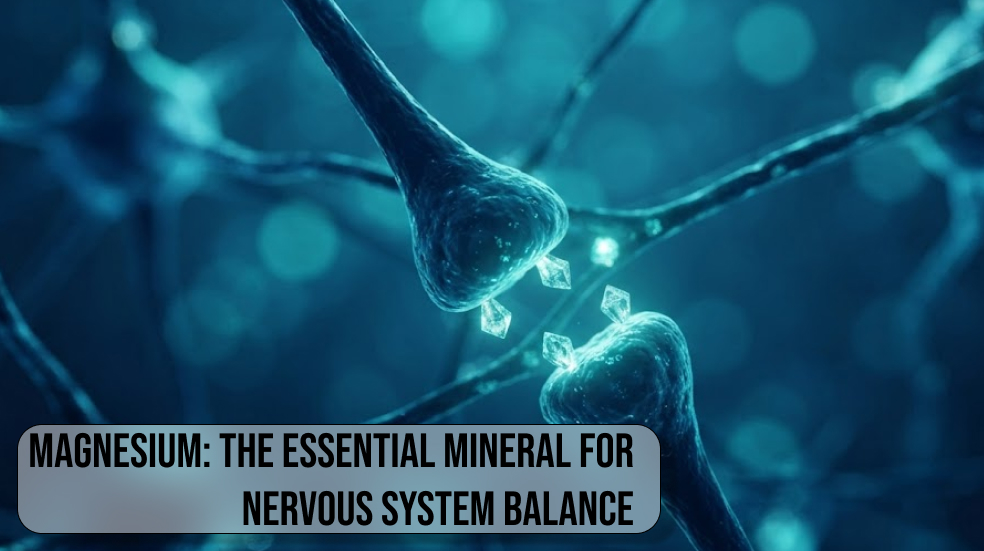
Magnesium: The Essential Mineral for Nervous System Balance. Magnesium serves as an absolute cornerstone of human physiological architecture, functioning as a vital cofactor in over 300 distinct enzymatic reactions that sustain life. Within the incredibly intricate and high-voltage network of the central nervous system, this mineral acts as a sophisticated natural gatekeeper, meticulously regulating neurotransmitter activity and maintaining the essential structural integrity of complex neural pathways. Without maintaining adequate systemic levels, the entire nervous system frequently collapses into a state of hyper-excitability, leading to persistent mental fatigue, heightened anxiety, and pervasive physical tension that relentlessly disrupts one’s daily productivity and peace of mind.

Achieving a state of total systemic balance requires a highly disciplined and consistent intake to ensure that individual neurons communicate with extreme efficiency without ever becoming overstimulated or damaged. By effectively stabilizing fragile cell membranes, Magnesium helps to actively prevent the excessive and dangerous influx of calcium ions, which otherwise leads to catastrophic neuronal damage and prolonged, maladaptive stress responses. Prioritizing this specific mineral is not merely an optional addition to a health regimen; it is about providing the mission-critical, fundamental infrastructure for a resilient, exceptionally calm, and highly functional brain capable of performing at peak levels regardless of external pressures.
- Magnesium serves as an indispensable cofactor in hundreds of vital cellular chemical reactions.
- The mineral functions to stabilize neural membranes, preventing the over-excitation of the nervous system.
- Maintaining adequate levels is essential for supporting the long-term structural integrity of brain cells.

Modulating Chronic Stress Responses and Advanced Cortisol Dynamics
Chronic, long-term stress places an immense, unsustainable burden on the entire body, rapidly depleting essential mineral reserves and leaving the delicate nervous system highly vulnerable to long-term burnout and exhaustion. Magnesium supplementation acts as a direct, biological countermeasure to this by precision-modulating the activity of the Hypothalamic-Pituitary-Adrenal (HPA) axis, which is the primary system that governs the body’s hormonal response to intense pressure. When systemic levels are truly sufficient, the human body is vastly better equipped to regulate cortisol production, effectively preventing the primitive “fight or flight” mode from becoming a permanent, physically damaging state that erodes health over time.
This complex regulatory process is absolutely essential for maintaining deep emotional stability and sharp cognitive clarity during even the most demanding professional or personal periods. By effectively dampening the excitatory signaling of glutamate—the brain’s most powerful and aggressive primary stimulant—Magnesium actively promotes the enhanced production of GABA, the critical inhibitory neurotransmitter responsible for profound feelings of relaxation and composure. Managing this intricate chemical balance ensures that the nervous system remains remarkably adaptive rather than purely reactive, fostering a stable, sustainable state of internal equilibrium that persists even when external demands increase dramatically, allowing for calm, calculated decision-making.
- Optimal Magnesium intake effectively regulates the body’s primary stress-response hormonal axis, the HPA.
- The mineral suppresses excessive glutamate activity to facilitate deep calm and laser-like cognitive focus.
- Balanced mineral status supports the natural endogenous production of GABA for long-term relaxation.

Facilitating Deep, Restorative Sleep and Circadian Rhythm Restoration
High-quality sleep is the absolute foundation of comprehensive neurological recovery, yet a vast majority of modern individuals struggle to initiate or maintain the deep, restorative rest cycles required for health. Magnesium deficiency is frequently and directly linked to chronic insomnia and fragmented, low-quality sleep patterns, primarily because the mineral is strictly required to effectively calm the nervous system before the body attempts to enter a sleep state. By facilitating the seamless physiological transition from a sympathetic (alert, high-stress) to a parasympathetic (restorative, regenerative) nervous system state, it enables the body to initiate the complex sleep process naturally, quickly, and with significantly higher efficiency.
Furthermore, its sophisticated role in regulating melatonin production ensures that the body’s internal biological clock—the circadian rhythm—remains perfectly synchronized with external environmental cues. When vital neural pathways are adequately nourished, the transition into rapid eye movement (REM) and slow-wave, deep sleep becomes significantly smoother and more consistent, allowing for comprehensive cellular repair and debris clearance during the night. Incorporating Magnesium into a structured, evidence-based nightly regimen directly addresses the root causes of nighttime restlessness, promoting not just a mere increase in the duration of sleep, but a profound improvement in the depth and sheer quality of neurological recovery experienced each night.
- Magnesium serves as a vital biological aid in the critical transition from an alert state to restorative rest.
- Sufficient mineral levels are strictly required for the natural, high-efficiency synthesis of melatonin.
- Improved mineral status leads directly to higher quality, deeper, and completely uninterrupted sleep cycles.

Driving Neuroplasticity and Maximizing Cognitive Function Optimization
The innate ability of the human brain to adapt, learn new skills, and physically reorganize—a phenomenon widely known as neuroplasticity—relies heavily on a constant, uninterrupted supply of key minerals. Magnesium plays an absolutely critical role in strengthening the synaptic connections, which serve as the fundamental, microscopic units of both learning and complex memory formation. By supporting the activation of N-methyl-D-aspartate (NMDA) receptors in a highly controlled and balanced manner, it ensures that neural circuits remain incredibly flexible and fully capable of rapid, efficient reconfiguration in response to new information or challenging problem-solving tasks.
Beyond the scope of structural adaptation, this essential mineral also facilitates highly efficient signal transduction, which directly results in noticeably improved processing speeds and elevated executive function. Individuals who maintain consistently healthy Magnesium levels often report significantly improved mental sharpness, enhanced creativity, and a much greater capacity for sustained, deep concentration during complex projects. By aggressively safeguarding these delicate pathways, the mineral acts as a powerful cognitive insurance policy, ensuring that the brain retains its functional agility throughout the natural aging process and during even the most intense periods of intellectual exertion, effectively staving off cognitive decline.
- Magnesium is essential for maintaining the physical flexibility and health of brain synaptic connections.
- Regulated receptor activity directly supports the brain’s ability to learn and encode new memories.
- Improved signal transduction pathways correlate strongly with faster mental processing and deeper concentration.

Alleviating Chronic Neuromuscular Tension and Physical Discomfort
The nervous system and the muscular system are inextricably linked in a feedback loop, and chronic neurological stress almost always manifests physically as systemic muscular tension and fatigue. Magnesium acts as a powerful, natural physiological relaxant, directly competing with calcium ions to manage the contraction and relaxation cycles of individual muscle fibers. When the nervous system is adequately supplied with this mineral, it efficiently signals muscles to release accumulated tension, effectively reducing involuntary twitching, painful cramping, and the pervasive, heavy stiffness that typically follows long, draining periods of intense mental strain or prolonged physical inactivity.
This potent relaxation effect also extends to the smooth muscles surrounding the cardiovascular system’s blood vessels, which can substantially improve systemic circulation and reduce the physical markers of stress throughout the entire body. By easing these debilitating somatic symptoms, Magnesium successfully breaks the destructive cycle where chronic physical discomfort feeds back into the nervous system, triggering further anxiety and tension. The result is a much more harmonious, pain-free physical state that allows the mind to remain focused, creative, and fully composed, entirely unburdened by the annoying and distracting physical manifestations of underlying systemic stress.
- Magnesium helps manage the critical, delicate balance between muscle fiber contraction and full, deep relaxation.
- Effective mineral levels reduce common, irritating physical symptoms like involuntary twitching and chronic stiffness.
- Improved blood vessel relaxation contributes significantly to better systemic circulation and overall stress relief.

Supporting Mitochondrial Energy Production and Metabolic Vitality
At the foundational cellular level, the nervous system requires an immense, constant supply of energy to maintain its complex firing patterns and perform critical repair processes. Magnesium is an absolute, non-negotiable requirement for the synthesis of adenosine triphosphate (ATP), the primary energy currency used by every cell in the human body. Within the mitochondria—the powerhouse of the cell—this mineral works in perfect synergy with other nutrients to ensure that energy production is as efficient as possible, providing a steady, reliable supply of fuel to power neurons and successfully prevent the sudden onset of “brain fog” or rapid, midday mental fatigue.
When mitochondrial efficiency drops due to a lack of necessary nutrients, the nervous system becomes sluggish and unresponsive, leading to significantly diminished cognitive output and poor, volatile mood regulation. By optimizing this vital metabolic process, Magnesium ensures that the brain always has the energy reserves needed to handle high-stakes or demanding tasks without suddenly succumbing to systemic exhaustion. Maintaining these energy pathways is essential for long-term brain health and the sustained, vibrant vitality of the entire nervous system, making it an irreplaceable, high-priority component of any serious, science-backed biohacking and longevity strategy.
- Magnesium is a fundamental, required component for the synthesis of cellular energy in the form of ATP.
- High-efficiency energy metabolism is the best defense against mental fatigue and chronic cognitive fog.
- Adequate mitochondrial support is essential for long-term brain vitality and consistent, high-level performance.

Final Thoughts on “Magnesium: The Essential Mineral for Nervous System Balance”
As we conclude this overview, it becomes evident that Magnesium is not merely a supplement but a foundational requirement for those seeking to master their physiology. In a world characterized by constant stimulation and chronic stress, providing the nervous system with the specific tools it requires for regulation is the hallmark of effective biohacking. By addressing the mineral status at a cellular level, one moves beyond temporary fixes and begins to cultivate a state of long-term biological resilience. The transition from a reactive state to one of sustained focus and calm is a clear marker of a well-supported nervous system, directly facilitated by the reliable intake of this essential mineral.
The journey toward cognitive optimization and metabolic vitality is built on these types of consistent, evidence-based habits. When you integrate Magnesium into your daily routine, you are making a proactive investment in your future health, ensuring that your brain remains capable, flexible, and efficient as you age. It is the subtle, daily refinement of these nutritional inputs that ultimately dictates the quality of your mental output, the depth of your recovery, and the overall trajectory of your longevity. Embrace this practice not as a chore, but as a critical component of a high-performance lifestyle designed to thrive under the pressures of the modern era.
- Consistent Magnesium intake transforms the nervous system from a reactive state into one of sustained, stable resilience.
- Proactive mineral management serves as an essential, foundational strategy for long-term cognitive health and vitality.
- Prioritizing high-quality, bioavailable sources ensures that your efforts in health optimization yield measurable and lasting results.