

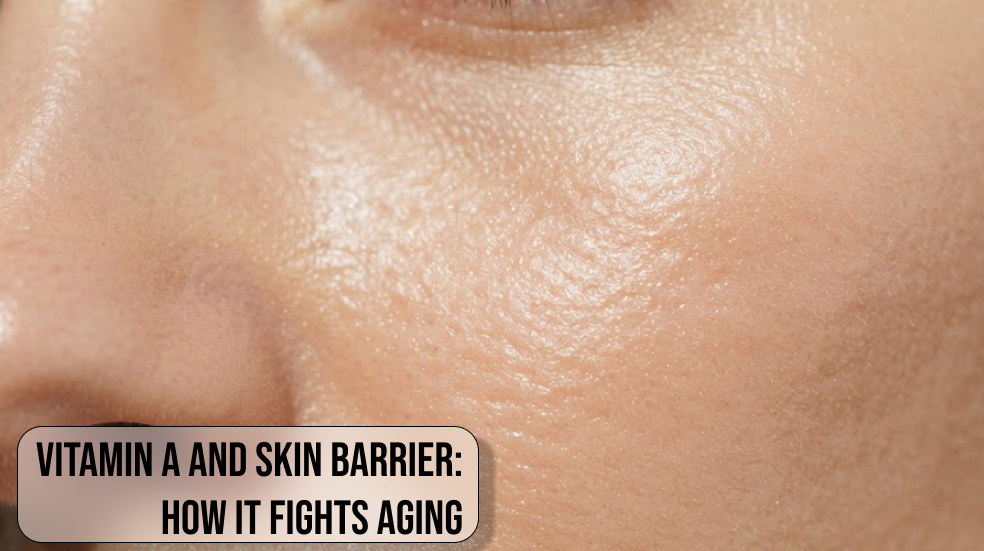
Vitamin A and Skin Barrier: How It Fights Aging. The outer layer of human skin serves as our primary defense mechanism against environmental stressors, pathogens, and moisture loss, acting as an intelligent biological shield. Maintaining this protective barrier requires a delicate, highly coordinated balance of cellular renewal, lipid synthesis, and protein cross-linking, a process heavily influenced by essential micronutrients.
Among these, Vitamin A stands out as a critical regulator of skin cell differentiation and turnover, guiding cells through their natural life cycle. When this nutrient is supplied in adequate amounts, it signals skin cells to mature properly from the deep basal layer all the way up to the stratum corneum, ensuring a resilient, smooth, and fully functioning epidermis.

Beyond structural integrity, Vitamin A and skin barrier function are deeply intertwined with natural moisture retention and intercellular lipid organization. As we age, the rate of cellular turnover slows down significantly, leading to a pathological buildup of dead cells on the surface alongside a thinning of the live epidermal layers below. This biological slowdown causes chronic dryness, dullness, and a compromised defense system that easily loses vital hydration to the atmosphere. By understanding how this compound interacts with cellular receptors, we can better appreciate its ability to restore lipid balance and reinforce the skin’s natural shield against external degradation.
- Vitamin A regulates cellular turnover to keep the epidermis thick, dense, and resilient.
- A healthy skin barrier prevents moisture loss and blocks external irritants effectively.
- Proper micronutrient signaling ensures smooth maturation of new skin cells from deep layers to the surface.
How Accelerated Cellular Turnover Defeats Premature Aging
Cellular renewal is the biological engine that keeps skin looking youthful, vibrant, and firm over time against the relentless pull of gravity and time. When fresh cells migrate upward efficiently through the epidermal layers, they replace older, damaged structures, minimizing the appearance of fine lines, shallow wrinkles, and uneven pigmentation. Retinoids for skin aging work by accelerating this migration process, effectively encouraging old cells to shed while stimulating the production of fresh structural proteins in the dermis below. This targeted acceleration forces the skin to behave in a more youthful manner, bypassing the sluggish regenerative cycles that typically accompany growing older. As new cells take the place of worn-out ones, the overall texture of the complexion undergoes a profound transformation, becoming visibly softer, more refined, and better equipped to reflect light evenly.
This sustained renewal cycle directly combats the breakdown of collagen and elastin fibers caused by ultraviolet radiation, urban pollution, and natural chronological aging processes. Instead of allowing damaged cells to accumulate and create a rough, uneven texture, Vitamin A encourages a continuous supply of fresh, healthy tissue from within the dermal matrix. The result is a visibly smoother complexion where fine lines are softened and the structural matrix remains robust against daily mechanical stress and dynamic expression lines. As collagen synthesis ramps up in response to cellular messaging, the skin regains its bounce and elasticity, effectively resisting the formation of deeper creases. Maintaining this high level of metabolic activity requires consistent care, as the skin continually benefits from the steady influx of newly formed proteins that counteract the degrading enzymes activated by sun exposure and environmental stress.
- Accelerated cell turnover helps shed damaged surface cells to reveal fresher, more evenly pigmented skin underneath.
- Stimulating collagen production maintains skin firmness and elasticity against sagging and deep wrinkle formation.
- Continuous renewal prevents the accumulation of rough patches and uneven pigmentation by encouraging steady exfoliation.
Restoring Deep Hydration and Combating Chronic Dryness at the Cellular Level
Dry skin is frequently a symptom of a disrupted protective barrier rather than just a simple lack of surface oils or natural sebum production. When the intercellular lipid matrix degrades due to aging or harsh environmental conditions, microscopic gaps form between cells, allowing vital moisture to escape continuously through a process known as transepidermal water loss. Vitamin A and skin barrier health connect directly here, as this nutrient stimulates the synthesis of essential ceramides, free fatty acids, cholesterol, and natural moisturizing factors that tightly seal those microscopic gaps shut. This biochemical repair work transforms the lipid composition of the stratum corneum, making it significantly more adept at holding onto water molecules even in low-humidity environments. Consequently, the skin stops leaking moisture and begins to build a robust internal reservoir of hydration that supports long-term comfort and tactile smoothness.
Reversing chronic dryness requires more than temporary surface occlusatives that merely sit on top of the skin; it demands a functional restructuring of the entire epidermis. By improving moisture retention from within, Vitamin A helps skin maintain optimal hydration levels throughout the day without relying entirely on heavy, pore-clogging creams that can suffocate the complexion. This internal moisture regulation ensures that even dry or mature skin types can achieve a plump, comfortable, and supple feel that lasts from morning until night. As the lipid barrier fortifies, the skin becomes naturally more capable of defending itself against harsh winds, indoor heating, and dry air conditioning units. This holistic approach addresses the root cause of flakiness and tightness, providing a permanent solution rather than a fleeting cosmetic fix for dry skin sufferers.
- Ceramides and natural moisturizing factors are synthesized more efficiently with adequate nutrient levels to repair gaps.
- Sealing microscopic gaps in the lipid matrix stops chronic transepidermal water loss and locks in hydration.
- Deep hydration improves skin suppleness from within rather than relying only on heavy surface creams for comfort.

The Precise Biological Mechanism of Retinol Action Within the Skin
At a microscopic level, Vitamin A derivatives must undergo specific enzymatic conversions within the skin cells to become biologically active and useful for structural repair. Once transformed by cellular enzymes into retinoic acid, the molecule binds securely to specialized nuclear receptors located inside the cells, which regulate gene expression related to skin growth, repair, and differentiation. This precise biochemical signaling instructs cells to behave in a younger, more orderly fashion, reducing the erratic behavior typical of damaged, photo-aged, or chronologically compromised tissue. The activation of these specific genetic pathways sets off a cascade of restorative events, instructing fibroblasts to synthesize more collagen while telling keratinocytes to organize themselves into a tighter, more protective barrier structure.
This targeted cellular communication explains why topical applications yield such profound structural improvements over extended periods of consistent, long-term use. Because the biological pathway influences both the outer epidermis and the deeper dermis, Retinoids for skin aging address multiple skin concerns simultaneously, ranging from surface texture roughness to deep structural firmness and elasticity. Understanding this intricate mechanism highlights why consistency is far more important than high-strength application when introducing these powerful compounds into a daily skincare routine. Rushing the process with overly aggressive concentrations can overwhelm cellular pathways, whereas a steady, methodical supply of the nutrient allows the cellular machinery to adapt, remodel, and strengthen itself sustainably without unnecessary inflammation or distress.
- Enzymatic conversion transforms standard nutrient forms into active retinoic acid directly within the tissue.
- Nuclear receptor binding actively regulates genes responsible for cellular repair, organization, and structural protein synthesis.
- Consistent, gentle signaling yields sustainable structural improvements across both epidermis and dermis over time.
Mitigating Environmental Stress and Oxidative Damage Through Cellular Fortification
Modern life exposes our skin to a constant barrage of environmental aggressors, including urban air pollution, blue light emissions from digital screens, and solar ultraviolet radiation. These daily stressors generate unstable, highly reactive molecules called free radicals, which relentlessly attack cellular membranes, damage DNA, and degrade structural proteins like collagen and elastin. Vitamin A and skin barrier resilience are vital here, as the nutrient acts as a supportive agent that helps fortify individual cells against oxidative stress and premature cellular degradation. By strengthening the structural integrity of the cell membrane, the tissue becomes far less susceptible to the cascading damage triggered by airborne pollutants and chemical toxins present in modern urban environments.
By strengthening the natural defense mechanisms of individual skin cells, this compound helps neutralize potential damage before it manifests as visible wrinkles, dark spots, or chronic hyperpigmentation. A reinforced barrier naturally blocks more particulate matter and chemical irritants from penetrating deep into the living tissue where they can provoke inflammatory responses. Consequently, incorporating this element into your regimen provides a robust shield against the daily wear and tear of modern environments, preserving the skin’s clarity and youthful tone. This continuous protection minimizes the cumulative burden of environmental aging, ensuring that the skin remains bright, even-toned, and structurally sound despite exposure to external elements.
- Free radical neutralization protects fragile cellular membranes from premature environmental degradation and toxin damage.
- A fortified barrier acts as a physical shield against urban pollution, particulate matter, and chemical irritants.
- Preventing micro-damage reduces the formation of sun spots, age spots, and chronic inflammation over time.

Integrating Vitamin A Safely Into Your Regimen Without Compromising Comfort
Introducing a potent active ingredient like a retinoid requires patience, careful observation, and a gradual approach to prevent irritation, redness, or peeling during the adjustment phase. Because Vitamin A accelerates cellular turnover so efficiently, the skin needs adequate time to adapt its moisture-retention capabilities and build up cellular tolerance to the active compound. Starting with lower concentrations applied just a few nights a week allows the protective barrier to adjust without becoming compromised, inflamed, or excessively dry. This measured introduction gives the enzyme systems time to ramp up their processing capacity, ensuring a smooth transition into regular use without the setback of barrier damage.
During the initial adaptation phase, pairing your active routine with soothing, barrier-supporting ingredients like hyaluronic acid, glycerin, and simple lipids is essential for maintaining comfort. If mild redness or flaking occurs, scaling back the application frequency rather than abandoning the product entirely ensures you still reap the long-term anti-aging rewards safely. Proper sun protection during the daytime is also an absolute necessity, as fresh, newly revealed skin requires shielding while it builds its own natural defenses against UV rays. By respecting the skin’s natural adaptation timeline, users can avoid the common pitfalls of over-exfoliation and establish a harmonious, highly effective routine that yields continuous improvements.
- Gradual introduction prevents excessive peeling, redness, and initial barrier disruption during the adjustment phase.
- Lower concentrations used a few times weekly allow safe cellular adaptation and enzyme upregulation.
- Pairing actives with soothing moisturizers and daily sun protection safeguards new skin cells from UV stress.

Final thoughts on “Vitamin A and Skin Barrier: How It Fights Aging”
As we conclude this comprehensive exploration into the remarkable properties of this essential nutrient, it becomes entirely clear that integrating Vitamin A into your long-term skincare philosophy represents a profound and lasting investment in the future health, vitality, and structural integrity of your complexion. Rather than relying on fleeting surface-level hydration or temporary cosmetic illusions that only mask underlying issues, working with this powerful compound allows you to influence skin biology at the most fundamental cellular level, ensuring that every layer from the basal membrane to the stratum corneum operates at peak efficiency and resilience. By encouraging orderly cell turnover, boosting the synthesis of vital structural proteins in the dermis, and tightly sealing the intercellular lipid barrier against chronic moisture loss, you establish a remarkably robust defense system that successfully defies both chronological aging and daily environmental stressors.
True skin longevity is never achieved overnight through aggressive measures; instead, it is always the cumulative, beautiful result of consistent, patient care that respects the delicate balance of the epidermis and actively supports its natural regenerative capacity for years to come. When you embrace a measured, science-backed approach to your routine, you eliminate the guesswork and allow your skin’s intrinsic machinery to adapt, strengthen, and flourish without unnecessary irritation or distress. By understanding these core biological mechanisms and committing to a balanced regimen, you empower your skin to maintain its youthful elasticity, luminous glow, and unshakeable protective barrier across every single decade of life.
- Vitamin A provides a foundational commitment to cellular longevity, structural strength, and sustained barrier resilience.
- Consistent, patient care allows the skin’s intrinsic regenerative machinery to adapt and flourish over time.
- Embracing science-backed routines ensures your complexion maintains its youthful elasticity and protective power across every decade.


